Fluffy Dinner Rolls Brushed
with Honey Butter
“The pan that empties first.”
If you can stir, wait, and shape a dough ball, you can make soft dinner rolls. Instant yeast removes the proofing ceremony, and the visual cues in this recipe make the rise easier to judge.
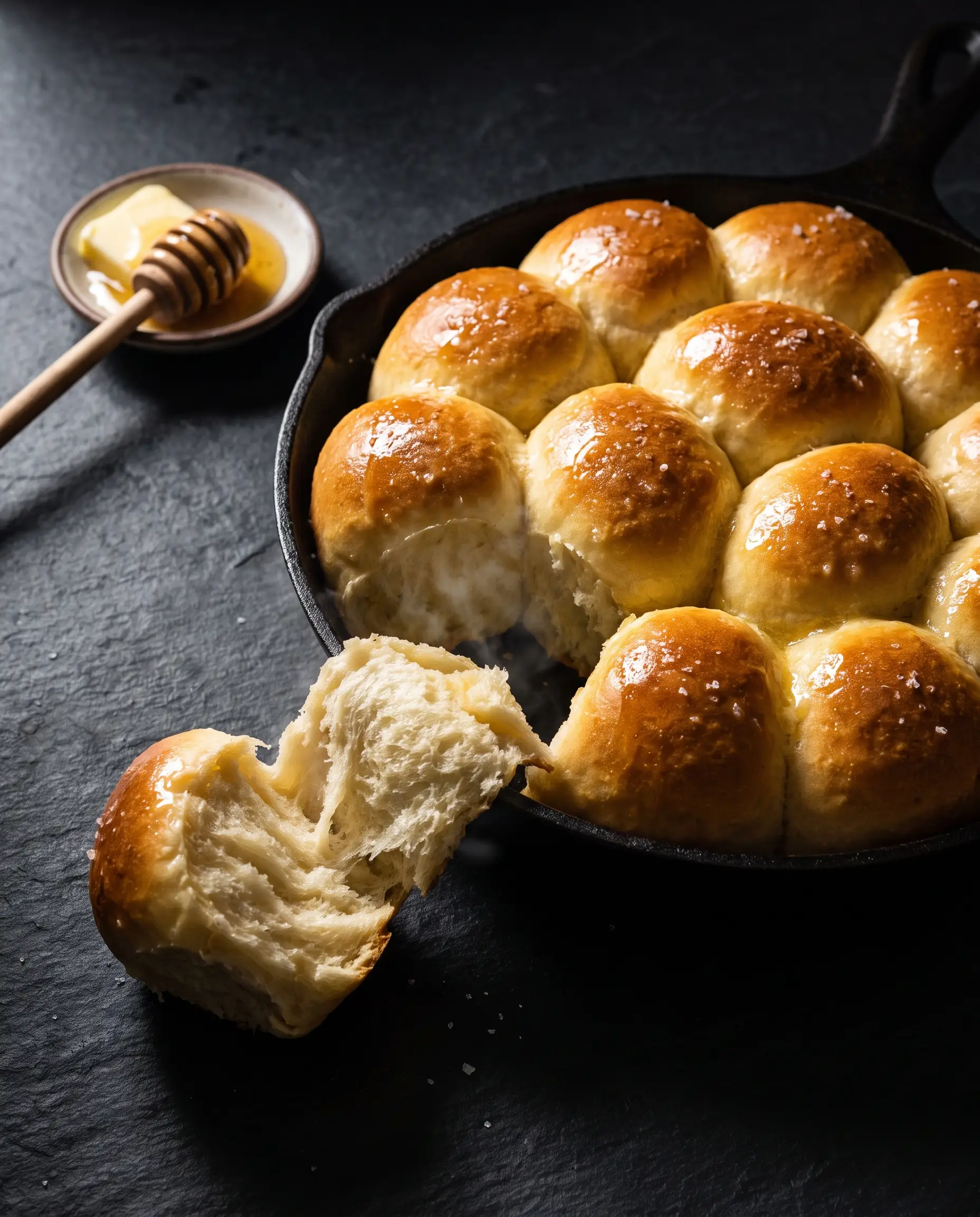
These are the soft, slightly sweet, pull-apart rolls of the American holiday table: enriched with milk, butter, and an egg, risen twice, baked shoulder-to-shoulder so the sides stay soft, and brushed with honey butter the moment they leave the oven.
The promise: about 25 minutes of hands-on work spread across two rises, and a 9x13 pan of fifteen soft, golden rolls about two and a half hours after you start.
How to make it
View ingredient overview
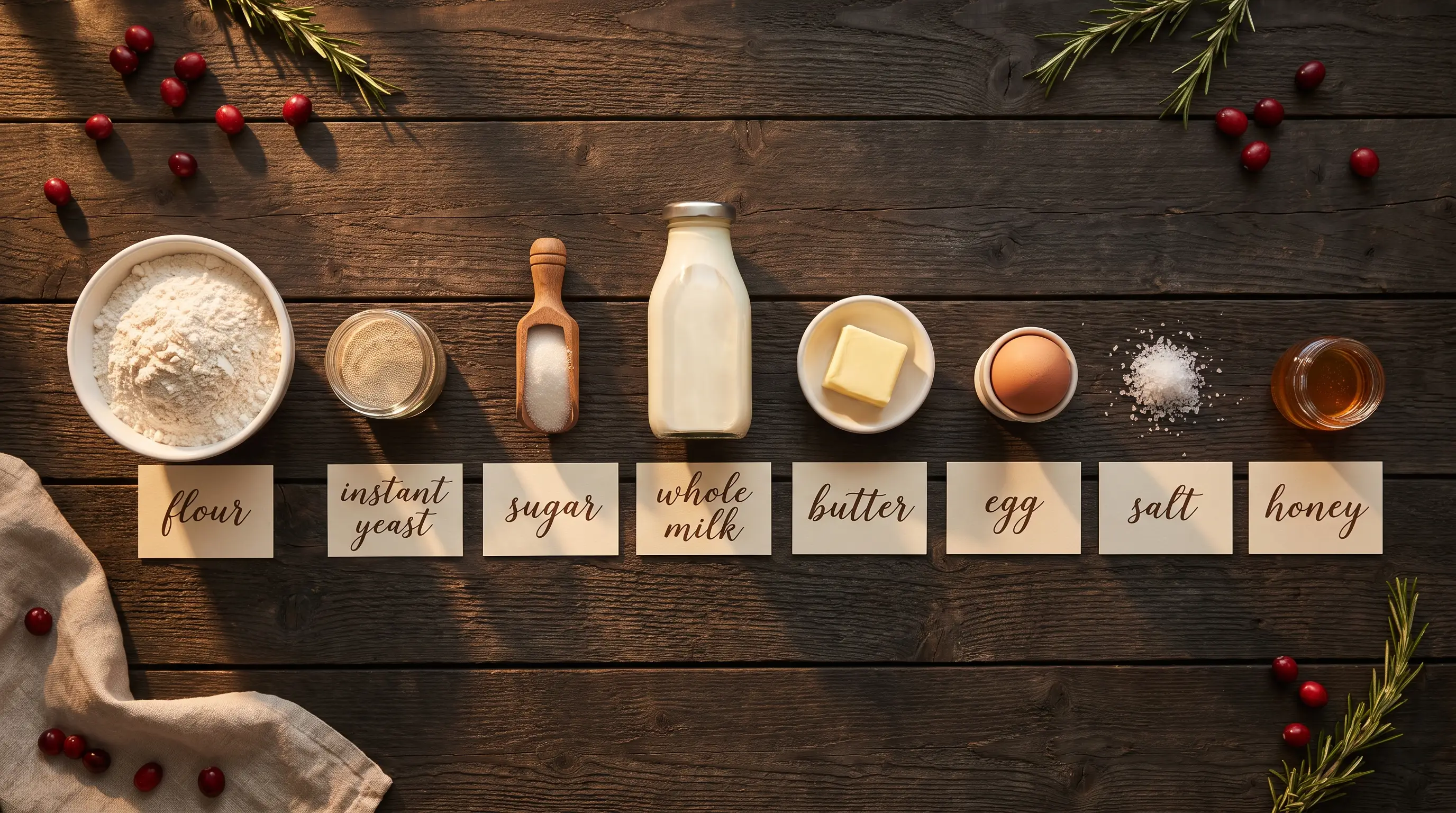
🧂 Ingredient notes & easy swaps
🍳 What you actually need (equipment)
Mix the dough. Whisk 2 cups of the flour with the yeast, sugar, and salt. Add the warm milk, softened butter, and egg and stir into a thick batter, then work in the remaining flour half a cup at a time until a soft, slightly tacky dough forms.
Knead 8 to 10 minutes on a lightly floured counter (or 5 in the mixer), until smooth and springy — it should bounce back slowly from a poke. Tacky is fine; add flour only if it's truly sticking to everything.
First rise: ball the dough into a greased bowl, cover, and let it double — about an hour somewhere warm. (Cold kitchen trick: oven OFF with just the light on is a perfect proofing box.)
Shape 15 rolls. Punch the dough down, divide into 15 even pieces (a scale makes it easy, eyeballing is traditional), and roll each into a tight ball by cupping it against the counter. Arrange 3x5 in the buttered pan — they should almost touch.
Second rise: cover and let them puff 30 to 40 minutes, until pillowy and pressed into each other. Heat the oven to 375°F (190°C) during the last ten.
Bake 16 to 19 minutes until deep golden on top. As soon as they come out, brush generously with the honey butter so the hot crust absorbs it. Let them cool 5 minutes in the pan, then pull apart and serve warm; they are softest within an hour of baking.
✅ How to know the rolls are done
Tops deep golden, sides pale and soft where the rolls touched, and the middle roll of the pan sounds faintly hollow when tapped. With a thermometer, the centre of the middle roll should read 190°F (88°C); the middle of the pan bakes slowest, so if that roll is done, the rest are. Pale tops at 16 minutes mean 2 to 3 more minutes; a pale roll is usually a doughy one inside.
💡 Practical tips (and what not to do)
- Bathwater milk — test it on your wrist. The single most common yeast failure is milk hot enough to kill it. If it would be comfortable for a baby's bath, it's perfect for yeast.
- Tacky dough makes tender rolls. Adding flour until the dough feels like play-dough is the second most common failure — stop while it still faintly sticks to a fingertip. Soft dough, soft crumb.
- Shape tight balls with a cupped hand — drag each piece in little circles against the counter until the surface is taut. Taut skins rise UP instead of out, which is where those tall bakery domes come from.
- Crowd the pan on purpose. Rolls baked shoulder-to-shoulder keep their sides steamy-soft and pull apart in sheets — spaced-out rolls bake into crusty little hamburger buns. Different recipe, different day.
- Make-ahead for the holiday: shape the rolls, cover the pan tightly, and refrigerate overnight (up to 16 hours). Next day, leave the pan on the counter until the rolls are puffed and pressed together, about 45–60 minutes, then bake as written.
💛✨ Flavor boost
Brush the honey butter on twice: half straight out of the oven, when the hot crust absorbs it, and the rest five minutes later, when it sits on the surface as a glossy layer. The first coat softens the crust; the second is what makes the tops shine. A pinch of flaky salt over the second coat is good with the honey.
🍞 What Goes Well With It
- Beside a Sunday Pot Roast with Fork-Tender Beef and Rich Gravy, for the gravy.
- The holiday table: turkey, ham, or Meatloaf with a Sticky Sweet-Savory Honey Glaze.
- Split and buttered with a bowl of soup or chili on a weeknight.
- Next morning: leftover rolls split and filled with ham and cheese for small sandwiches.
📦 Storage & Freezer Notes
- Counter: airtight bag, 3 days — ten seconds in the microwave brings back the just-baked softness.
- Freezer, baked: up to 2 months in a freezer bag. Thaw at room temperature, refresh 5 minutes in a 300°F (150°C) oven, and brush with a little melted butter.
- Freezer, unbaked: freeze the shaped dough balls solid on a tray, then bag them. To bake, arrange the frozen balls in the buttered pan, cover, and let them thaw and rise on the counter until puffed and touching, about 3 hours, then bake as written.
🧒 Serving Ideas for Kids
- Rolling the dough balls is a good job for children: give each one a row of the pan and show them the cupped-hand motion.
- Children can do the punch-down after the first rise; it is one firm press in the middle of the dough, not a pummelling.
- Serve warm rolls torn open with a small pat of butter inside for younger children, since a whole roll is a lot of bread for a small appetite.
❓ Quick answers
My dough didn't rise. What happened?
Can I make the dough in a stand mixer or bread machine?
Can I use this dough for cinnamon rolls or buns?
How do I get 15 truly even rolls?
🥗 Nutrition, roughly: about 180 calories per roll with 5g protein, 29g carbs, and 5g fat. Estimates only; brands, cuts and portion sizes change the numbers.