Sweet

Peanut Butter Cookies
with Soft Centers and Fork Marks

“The crosshatch classic, kept soft.”

Peanut butter cookies are often the first cookie people learn to bake, because the dough needs no chilling and the fork crosshatch is the only shaping. The classic version tends to bake up sandy and dry; this one is adjusted so the middles stay soft.

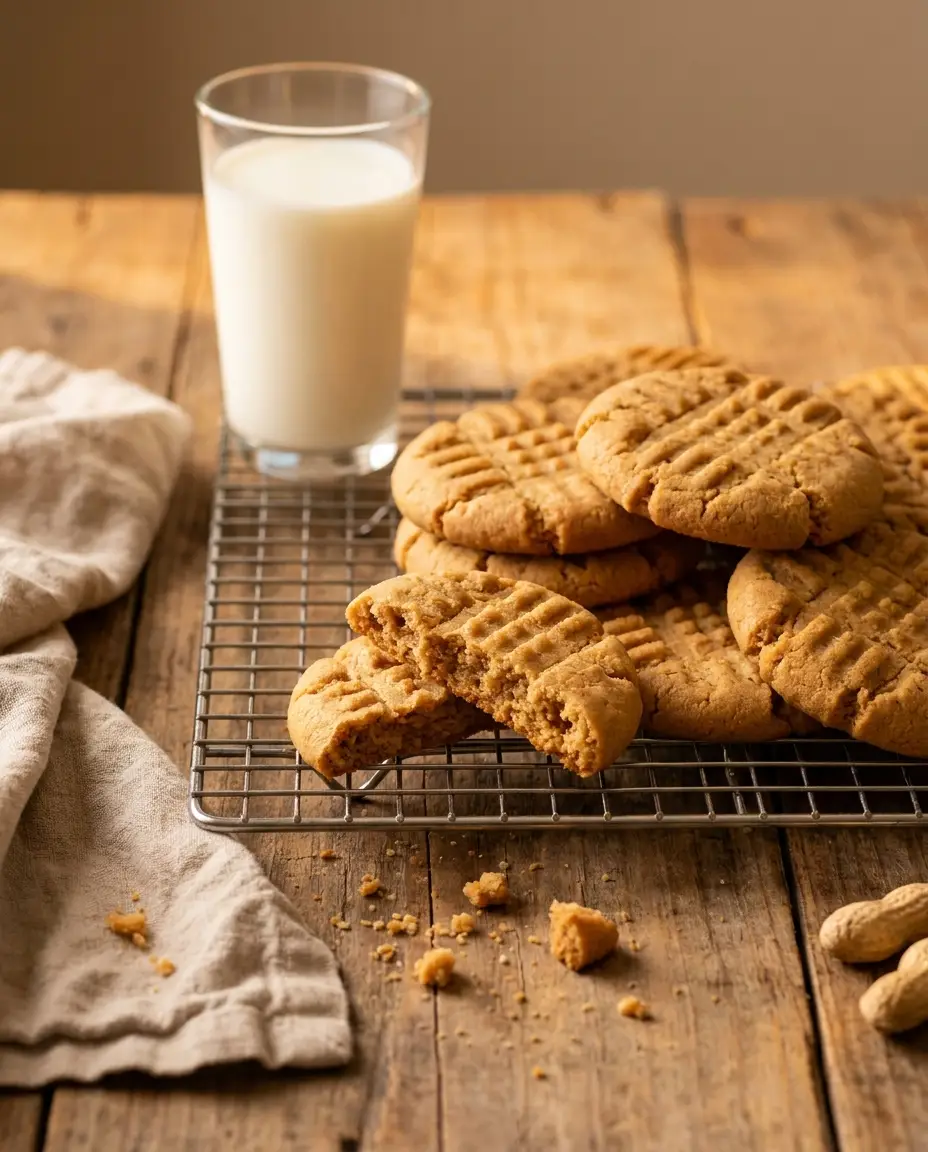
Two things do that: the sugar is mostly brown, which holds moisture, and the cookies come out of the oven while the centres still look underdone, then finish on the hot pan. One bowl, and 25 minutes from the first stir to the cooling rack.

🥜 The promise: soft, deeply peanut-buttery cookies with the classic crosshatch — one bowl, no chill time, 25 minutes total.
Prep 10 minCook 15 minTotal 25 minEasyAbout 24 cookies
← Back to recipes
Soft Peanut Butter Cookies

How to make it

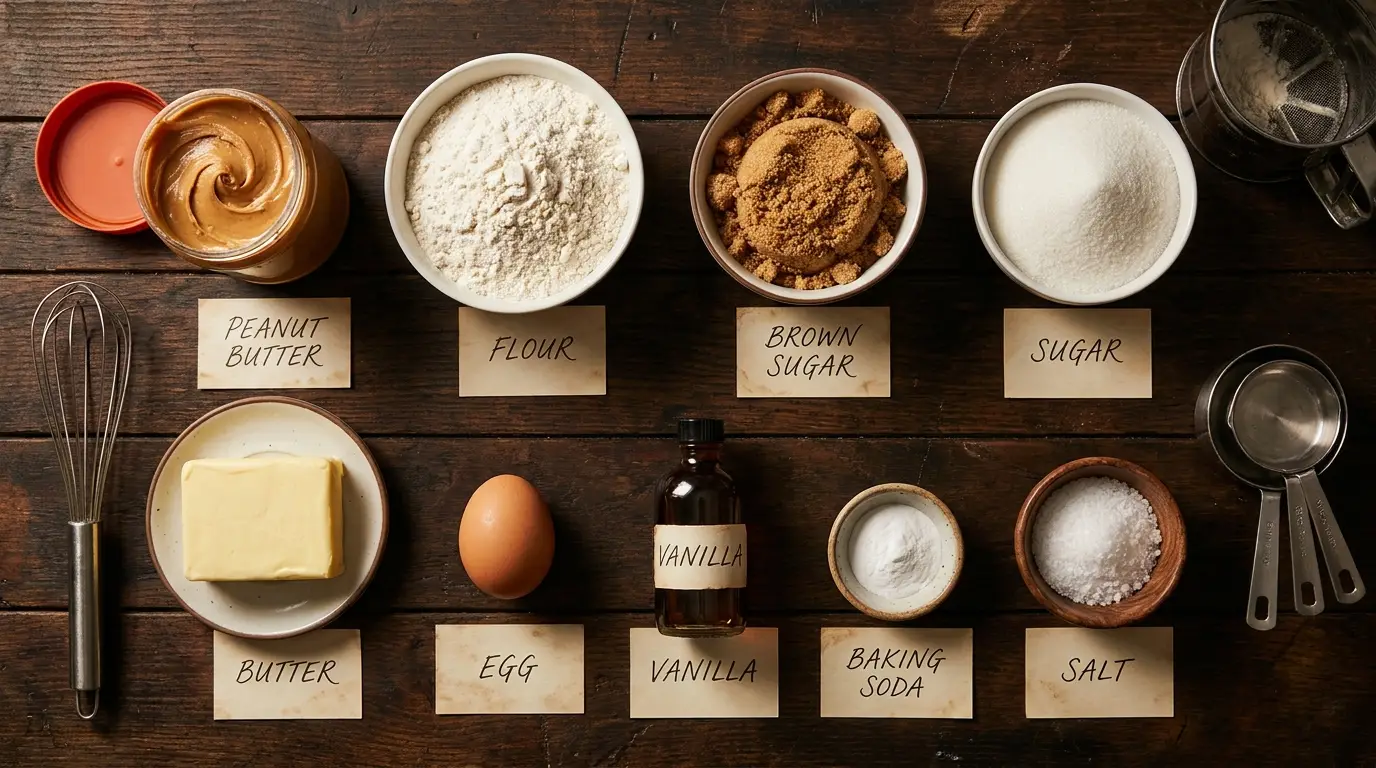
All ingredients for Soft Peanut Butter Cookies, labeled
🧺 Everything you need, all in one look
🧂 Ingredient notes & easy swaps
Use shelf-stable creamy peanut butter (the kind that does not separate); natural peanut butter has loose oil that makes the dough greasy and the cookies crumbly. The ¾ cup brown sugar to ¼ cup white is deliberate: brown sugar holds moisture, so the cookies stay soft, while white sugar alone would bake them crisp. If your peanut butter is salted, use ¼ teaspoon of salt instead of ½. The "Cook 15 min" above is 10 minutes in the oven plus 5 minutes firming up on the pan.
🍳 What you actually need (equipment)
One bowl, a wooden spoon or hand mixer, a cookie scoop or tablespoon, two sheet pans, parchment paper, and a fork for the crosshatch.
  1. Heat the oven to 350°F (175°C) and line two sheet pans with parchment.

  2. Beat the peanut butter, butter, and both sugars until creamy and lightened, about 2 minutes.

  3. Add the egg and vanilla and mix until smooth and glossy.

  4. Stir in the flour, baking soda, and salt just until no dry streaks remain. Peanut butter dough is short on liquid, and overmixing makes it crumbly rather than tough.

  5. Roll into walnut-size balls (about 1 tablespoon each, 12 per pan) and space them 2 inches apart. Press the crosshatch with a fork dipped in sugar so it does not stick, flattening each ball to about ½ inch.

  6. Bake both pans 9–11 minutes, swapping racks halfway, until the edges are set but the centres still look slightly underdone. Leave them on the hot pan 5 minutes to firm up, then move to a rack. Taking them out early is what keeps the middles soft.

✅ How to know the cookies are done

Edges set and lightly golden, centres puffed and still looking a touch underbaked, and the crosshatch lines still visible. They firm up on the pan in 5 minutes. Browned all over means the centres have dried out; they will be crunchy rather than soft, which is a different cookie.

💡 Practical tips (and what not to do)

🔁 Easy variations (budget · lighter · kids · extra flavor)
💸 Budget: store-brand shelf-stable peanut butter works the same as name brands here. 🥦 Lighter: make 36 smaller cookies (2 teaspoons each) and bake 8 minutes. 🧒 Kids: the fork press and the sugar dip are good jobs for children; the dough contains raw egg and raw flour, so it is not for tasting. ✨ Extra flavor: press a chocolate kiss into the centre of each cookie as soon as it comes out of the oven.

💛✨ Flavor boost

A small pinch of flaky salt pressed onto each cookie with the fork, before baking. Peanut butter and brown sugar are both sweet and rich, and the salt on top makes the peanut flavor read more clearly than the salt mixed into the dough can. Skip it if your peanut butter is already heavily salted.

🥛 What Goes Well With It

📦 Storage & Freezer Notes

  • Room temperature: airtight, 4–5 days. The brown sugar keeps them soft; they go dry faster in a tin that is not sealed.
  • Freeze baked cookies up to 2 months, or freeze crosshatched dough balls on a tray, bag them, and bake from frozen with 2 extra minutes.
  • A slice of sandwich bread in the container keeps the cookies soft; the cookies draw moisture from the bread instead of losing their own to the air.

🧒 Serving Ideas for Kids

  • The fork crosshatch is a good job for children: dip in sugar, press once, turn the fork, press again.
  • These are soft enough to dunk in milk without falling apart for a few seconds.
  • Frozen dough balls give fresh cookies in about 12 minutes on a rainy afternoon.

❓ Quick answers

Can I use natural peanut butter?
Not in this recipe. Its oil is not emulsified, so it leaks out during creaming and baking, and the cookies come out greasy on the pan and crumbly once cool. Shelf-stable creamy peanut butter holds its oil and gives a dough that rolls cleanly.
Why did my cookies turn out dry?
Overbaked, or too much flour. The centres should still look raw when they come out. Measure the 1¼ cups of flour by spooning it into the cup and levelling it (155 g on a scale). A packed cup can add 30 g, which is enough to turn these sandy.
Can I make the dough ahead?
Yes. Refrigerate the dough up to 3 days, or freeze scooped and crosshatched balls for up to 2 months. Bake from the fridge with 1 extra minute, or from frozen with 2 extra minutes; do not thaw first or the balls flatten.
Crunchy or creamy peanut butter?
Creamy gives the smoothest, softest cookie. Crunchy works, with peanut pieces through each cookie, but the dough is a little harder to crosshatch cleanly; press slowly.

🥗 Nutrition, roughly: about 160 calories per cookie. Estimates only; brands, cuts and portion sizes change the numbers.

Published by MommyCooking.org. This AI-assisted recipe passed automated checks for page consistency and required image files. The publisher confirms this recipe was tested before publication. The food images are AI-generated illustrations, not photographs of a cooking session. Cooking temperatures should be checked with a food thermometer; nutrition figures are estimates. How we make recipes · Report a problem with this recipe

🍽️ You might also like

← Every recipe