Written with AI assistance · Reviewed, edited, and approved by Sok Heng Oeun · Published July 20, 2026 · Updated August 10, 2026
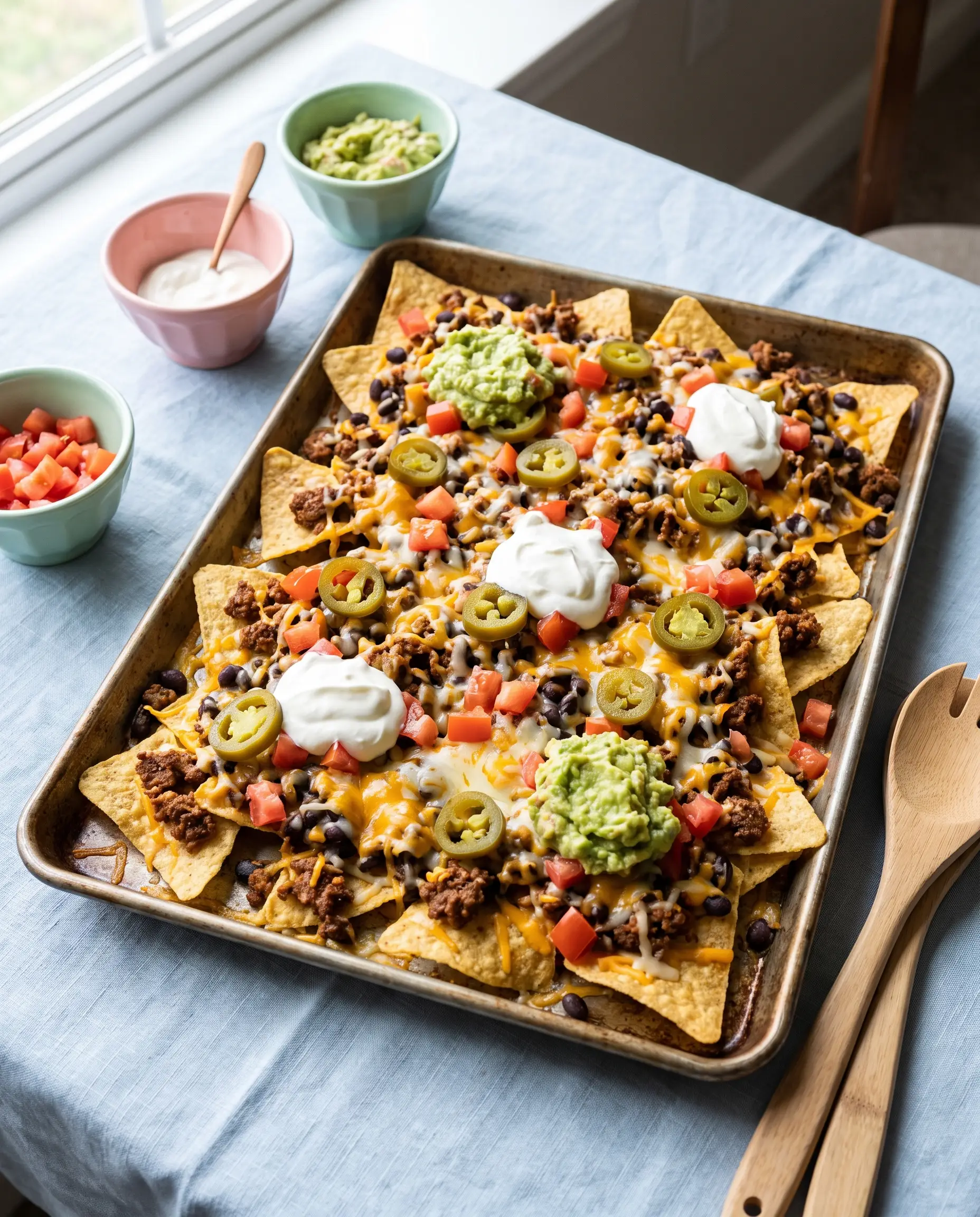
Nachos built in a tall mound leave a few overloaded chips on top, dry chips around the edges, and a soggy layer underneath. Two thin layers distribute the beef, beans, and cheese much more evenly.
Cheese works as both flavor and a barrier against moisture, while cold toppings belong on the tray only after baking. The result is a sheet pan with fewer bare chips and no salsa-soaked bottom layer.
Thirty minutes, one sheet pan, and the first nachos of your life where the last chip is as good as the first.
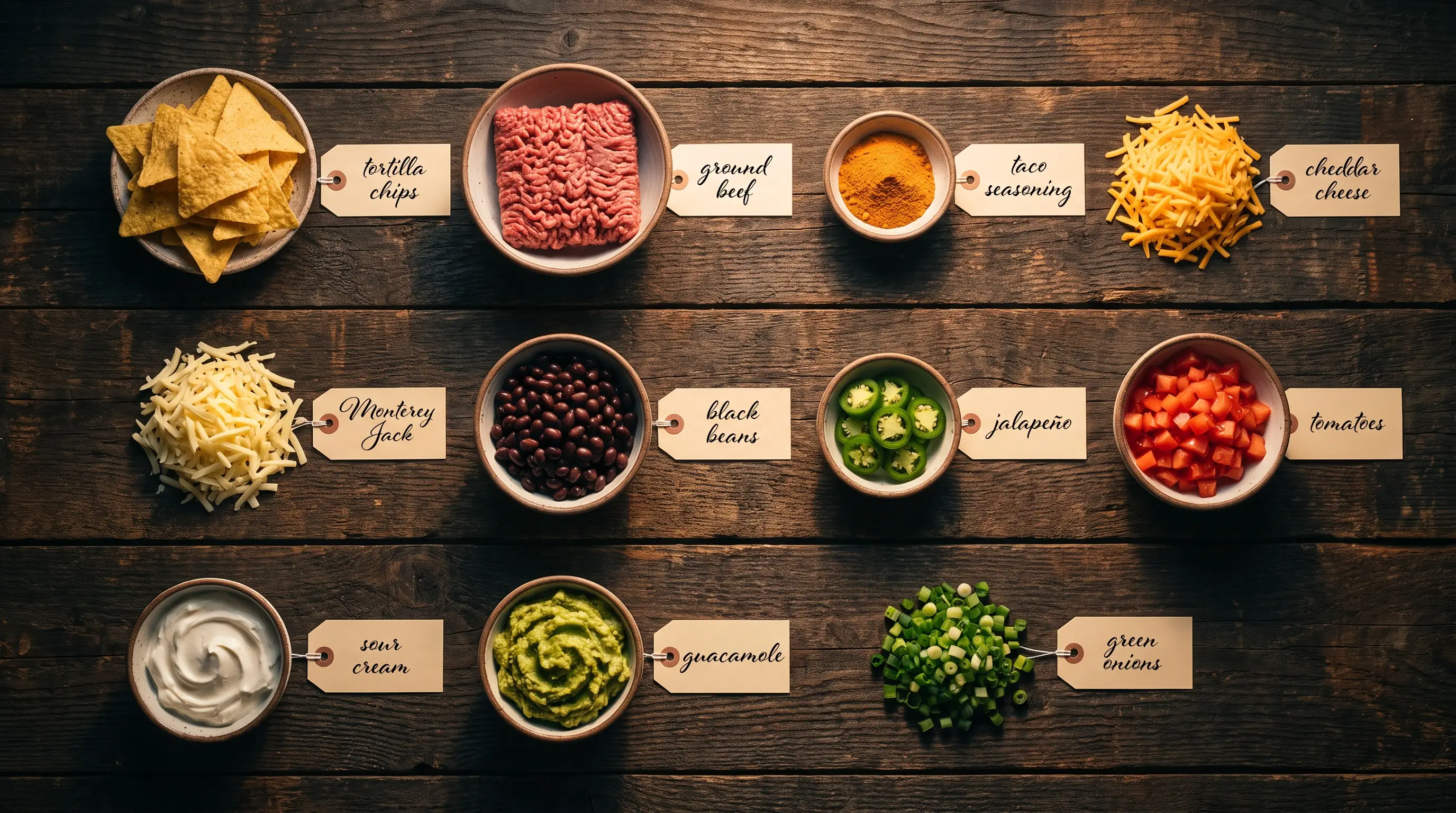
🧺 Everything you need, all in one look🧂 Ingredient notes & easy swaps
Sturdy chips are load-bearing walls — thin restaurant-style chips fold under cargo; buy the thick ones and check the bag for 'cantina' or 'restaurant strength' energy. Shred both cheeses yourself: the pre-shredded anti-caking coat resists melting into the waterproof blanket this build depends on. Hot toppings bake, cold toppings wait — sour cream, guacamole, and raw tomatoes go on AFTER the oven, always; baked dairy dollops become sad warm puddles. Seed the tomatoes — same anti-swamp rule as the seven-layer dip; the jelly stays on the cutting board.
🍳 What you actually need (equipment)
One rimmed sheet pan (parchment for easy cleanup), one skillet for the beef, and — this is real advice — serve ON the sheet pan in the middle of the table. Nacho transfer to a bowl is where loading is lost.
Brown the beef with the taco seasoning and a splash of water, breaking it fine — small crumbles ride chips better than boulders. 7 to 8 minutes. Heat the oven to 400°F (205°C).
Layer one — the foundation: HALF the chips in a single overlapping layer on the sheet pan, then half the beef, half the beans, scattered evenly to the corners — the corners are citizens too — and half of both cheeses as a full blanket.
Layer two — the penthouse: the rest of the chips, beef, and beans, then the remaining cheese edge to edge. The top blanket is both flavor and the structural roof.
Fresh jalapeño slices on top (they roast slightly and mellow) and into the oven for 10 to 12 minutes, until the cheese is fully melted and bubbling at the edges.
Cold toppings, immediately after: dollops of sour cream and guacamole distributed like you're seeding a lawn — many small dollops beat three big ones — then tomatoes and green onions scattered over all.
Serve on the pan, within five minutes. Nachos are a live event. Trivet, table, and stand back — the two-layer build means nobody has to excavate.
✅ How to know it's done
Cheese fully melted with bubbling edges and a few browned patches, chips golden at their exposed tips but not dark, and — the engineering check — a chip pulled from the BOTTOM layer comes up loaded and crisp, not soggy. If bottom chips went soft, the cold toppings went on too early or the salsa went under the cheese; both are next-time fixes.
💡 Practical tips (and what not to do)
Two thin layers beat one proud mountain — this is the whole theorem. Heat and cheese can't penetrate a chip pile more than one layer deep; every nacho failure in history is a geometry failure.
Cheese is waterproofing: the full edge-to-edge blanket on each layer seals the chips beneath from bean and beef moisture. Skimping cheese in the middle layer is how basements flood.
Hot builds, cold finishes: anything from the fridge goes on after the oven — the temperature contrast of cool guac on molten cheese is also half the pleasure.
Many small dollops, evenly distributed — sour cream applied in three central blobs serves three people; twenty small dollops serve the table. Nacho equity is dollop math.
Serve on the pan within five minutes — nachos have a golden window, and transferring them breaks the load. The pan IS the platter; own it.
Budget: skip the guac, add extra beans — still fully loaded for a few dollars a head. Lighter: ground turkey, more beans than beef, and a Greek-yogurt swap for the sour cream. Kids: build one 'mild quadrant' with no jalapeños before baking — quadrant law, same as the dip. Extra flavor: leftover pulled pork or chili instead of ground beef turns game-day nachos into an event with a name.
💛✨ Flavor boost
Building in two engineered layers with cheese as the waterproof membrane. One pile = six good chips and regret; two thin strata, each sealed edge-to-edge in cheese, means heat reaches everything, moisture reaches nothing, and the bottom layer eats as well as the top. It's not a topping problem — it never was. It's architecture.
🌟️ What Goes Well With It
Lime wedges squeezed over the top at the table — the brightness upgrade nobody expects and everybody repeats
A pot of slow-cooker beef chili nearby — chili-spooned-on-nachos is a self-governing station
Cold drinks and a big game — or a Tuesday; nachos don't check the calendar
As actual dinner with a side salad — two-layer nachos are structurally a casserole and we'll defend that
📦 Storage & Freezer Notes
Nachos do not store. This is not a flaw; it's a design constraint. Build the amount you'll finish — the recipe halves perfectly onto a quarter sheet.
Leftover components (beef, beans, toppings) keep 3 days and rebuild into fresh nachos in 12 minutes — store the parts, never the assembled pan.
The morning-after move: leftover seasoned beef + eggs in a skillet = nacho-adjacent breakfast tacos. The system wastes nothing.
🧒 Serving Ideas for Kids
Quadrant governance: each kid designs one quarter of the pan pre-bake — borders are respected with surprising diplomatic maturity.
Dollop duty with a small spoon: twenty tiny sour-cream dollops placed by a focused eight-year-old is genuinely optimal distribution.
The bottom-layer taste-test is the official quality inspection — appoint an inspector, rotate weekly.
❓ Quick answers
How do I keep nachos from going soggy?
Three rules: two thin layers instead of a pile, full cheese blankets as waterproofing, and every cold or wet topping (salsa included) added after the oven or served alongside. Follow those and the bottom chip survives to the end.
Can I make them ahead for a party?
Prep everything ahead — beef cooked, cheese shredded, toppings chopped — then assemble and bake in the 12 minutes before serving. Assembled-then-held nachos are a countdown to swamp.
What's the best cheese for nachos?
The cheddar + Monterey Jack duo: cheddar for flavor, Jack for supreme meltiness. Real queso sauce drizzled after baking is a legitimate luxury add-on, not a replacement for the baked blankets.
Can I use chicken or make them meatless?
Shredded rotisserie chicken tossed with taco seasoning works beautifully, and a double-bean version (black + pinto) with extra cheese is a fully loaded meatless build — the architecture doesn't care about the cargo.
🥗 Nutrition, roughly: about 540 calories per serving with 26g protein, 42g carbs, and 30g fat — it's loaded nachos; the name warned you.