How to make it
Start the potatoes
Heat the oven to 425°F (220°C). Toss the potatoes with 1 tablespoon oil, 1/2 teaspoon salt, and 1/4 teaspoon pepper. Arrange cut-side down on a large rimmed sheet pan and roast for 15 minutes.
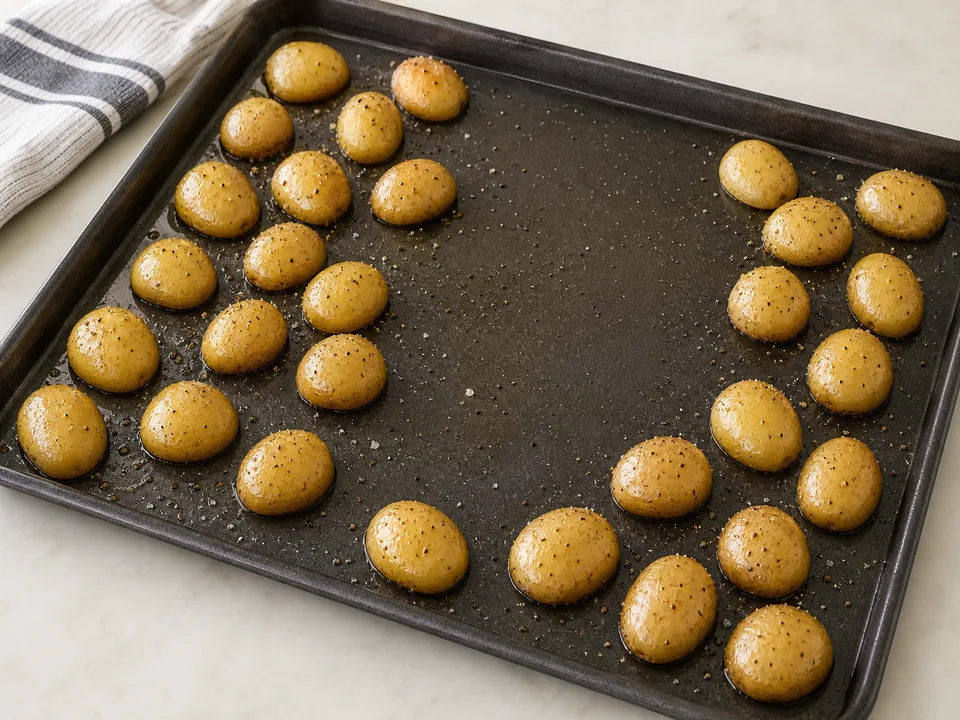
Leave open space between potatoes so hot air reaches their edges. Mix the lemon-herb oil
Stir the remaining 2 tablespoons oil with lemon zest, lemon juice, garlic, oregano, and thyme. It should smell sharply lemony before it reaches the chicken.
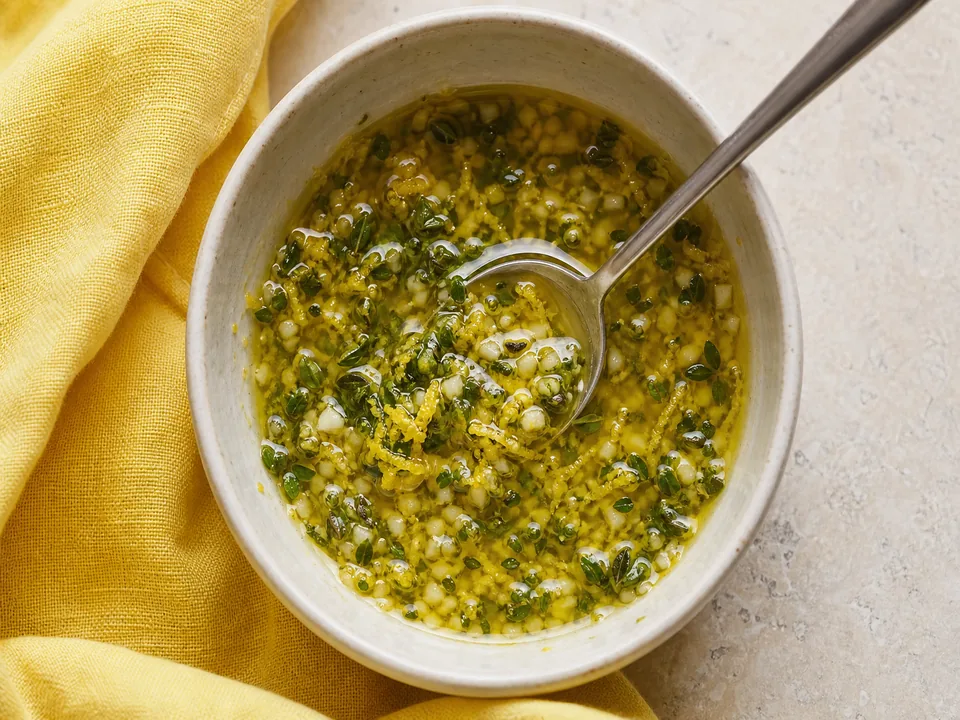
The mixture should stay loose and glossy, with the garlic evenly dispersed. Coat the chicken
Keep raw chicken and its utensils away from ready-to-eat food. Coat the thighs in the lemon-herb mixture and season with the remaining salt and pepper.
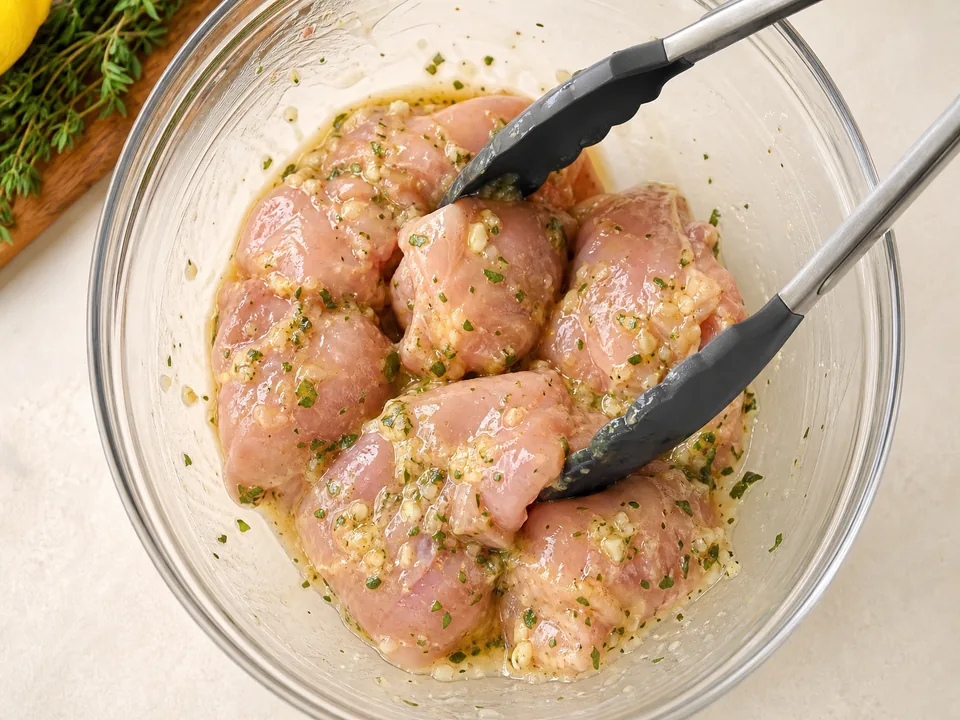
Turn each thigh until garlic and herbs cling to both sides. Add chicken after the head start
Turn the potatoes. Place chicken in the cleared spaces without overlapping. Return the pan to the oven for 12 minutes.
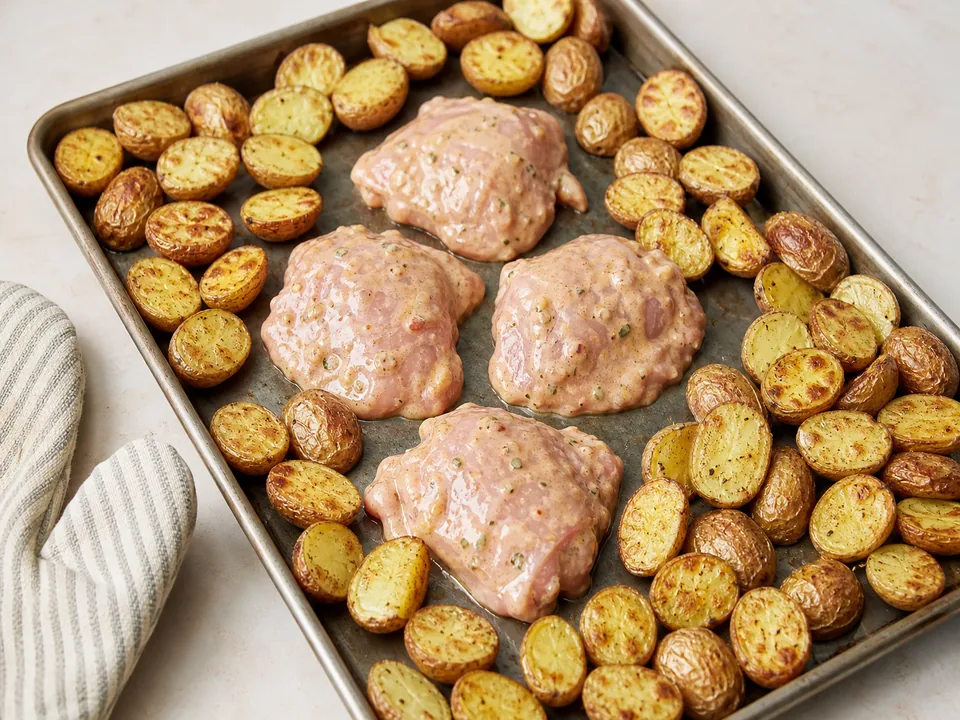
The potatoes show early browning while the chicken is still visibly raw. Add the green beans last
Toss the beans around the chicken and potatoes. Roast 8–12 minutes more, rotating the pan if your oven browns unevenly.
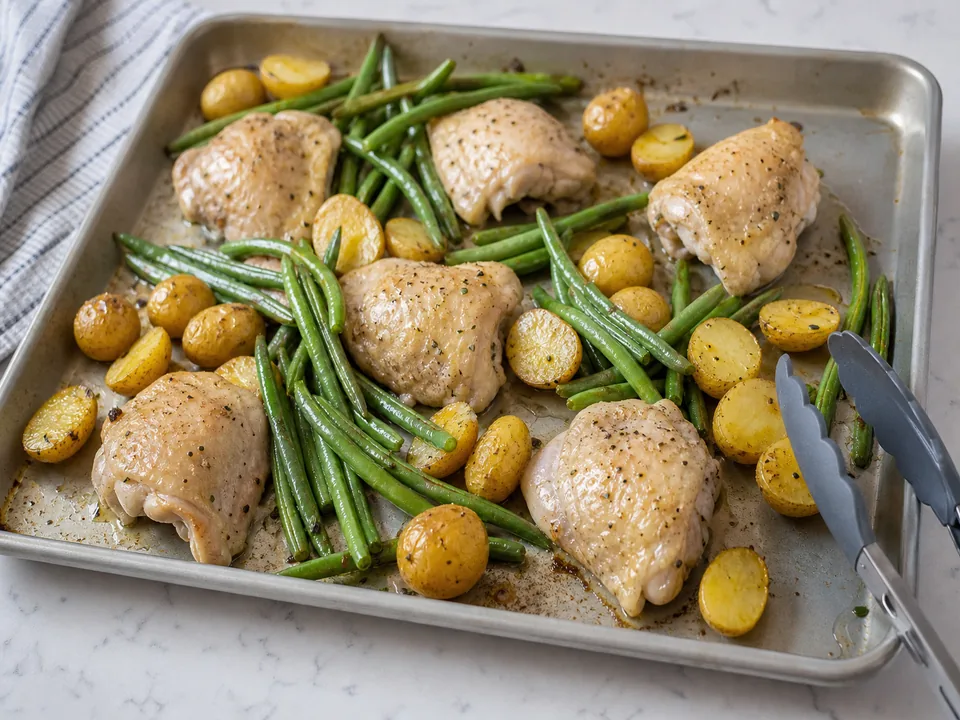
Add beans late enough that they blister without collapsing. Measure, rest, and finish
Check the thickest chicken piece with an instant-read thermometer; it must reach 165°F (74°C). Rest 5 minutes, then scatter with parsley. If the potatoes need more color, move chicken and beans to a clean platter and roast potatoes a few minutes longer.
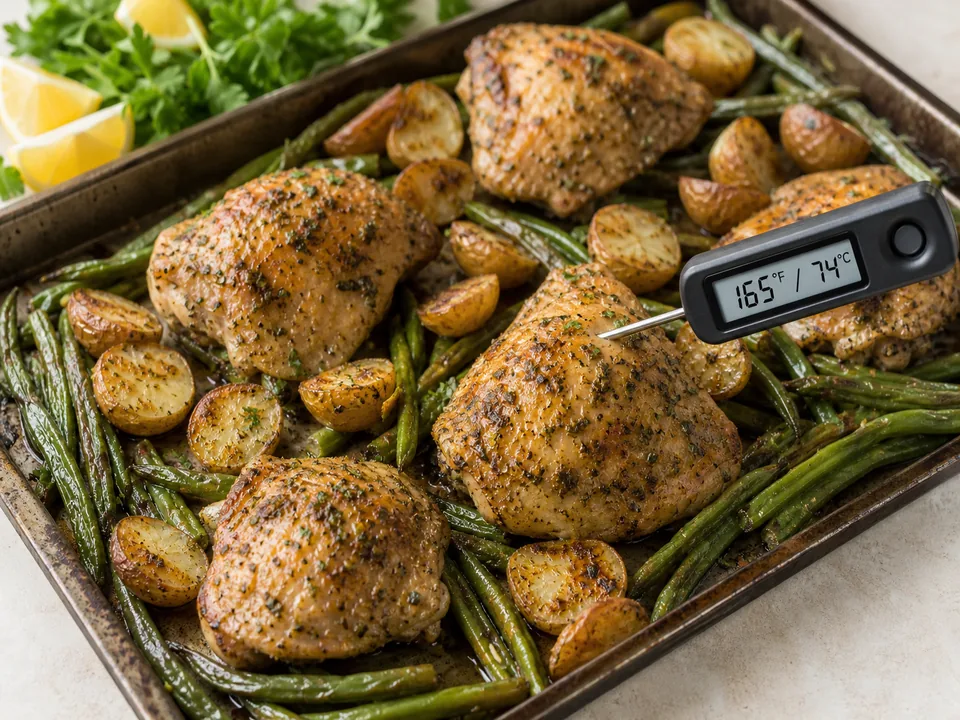
Temperature—not color—is the reliable safety check for chicken.
Make it work in your oven
- Use a large pan; crowding traps steam.
- Cut potatoes to a similar 1-inch size.
- For large thighs, expect the final roast to take longer.
Storage and reheating
Refrigerate within 2 hours in shallow containers. Keep 3–4 days. Reheat chicken and leftovers to 165°F (74°C). Freeze cooked chicken and potatoes up to 3 months; green beans soften after thawing.
Serving
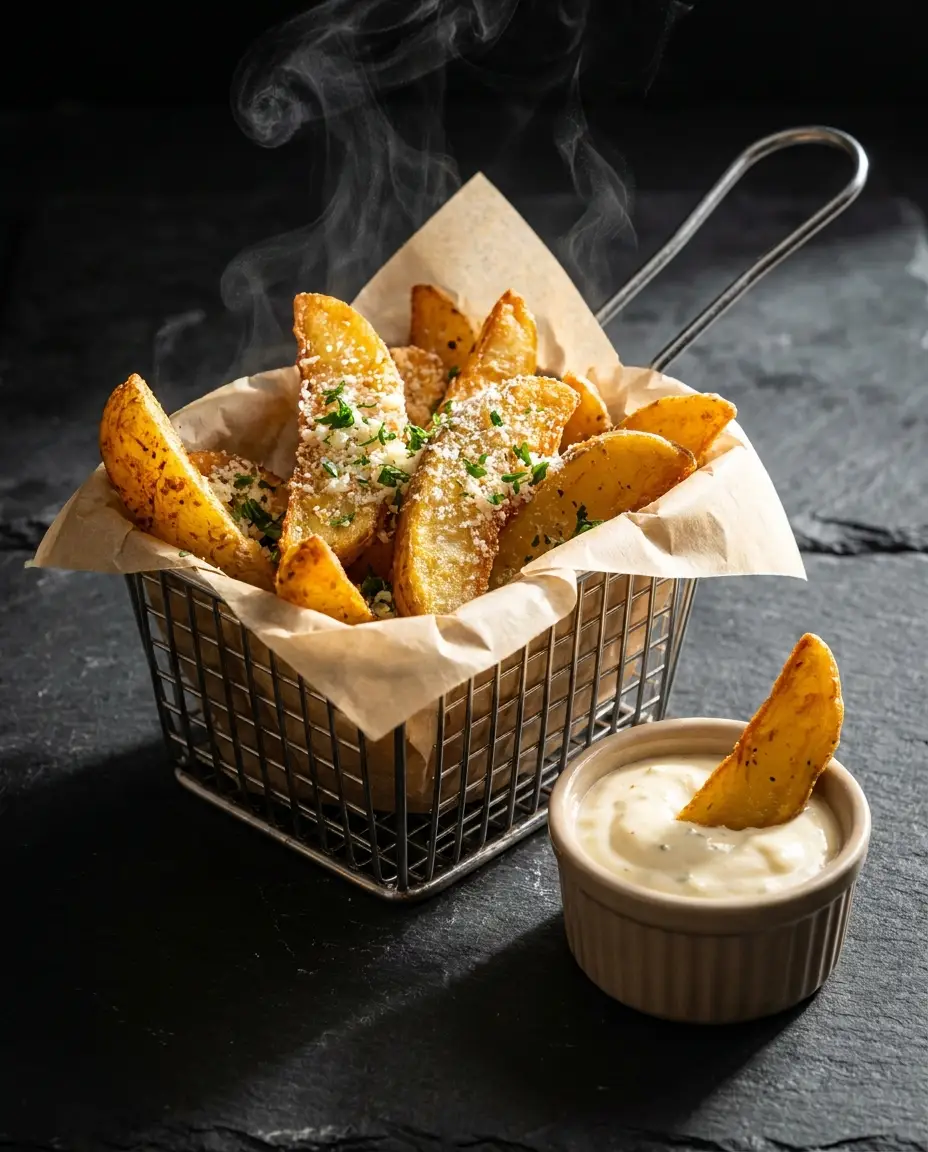
Serve directly from the pan with the warm juices spooned over the chicken. For an extra crisp side on another evening, try our garlic-Parmesan potato wedges.
Best visual cues
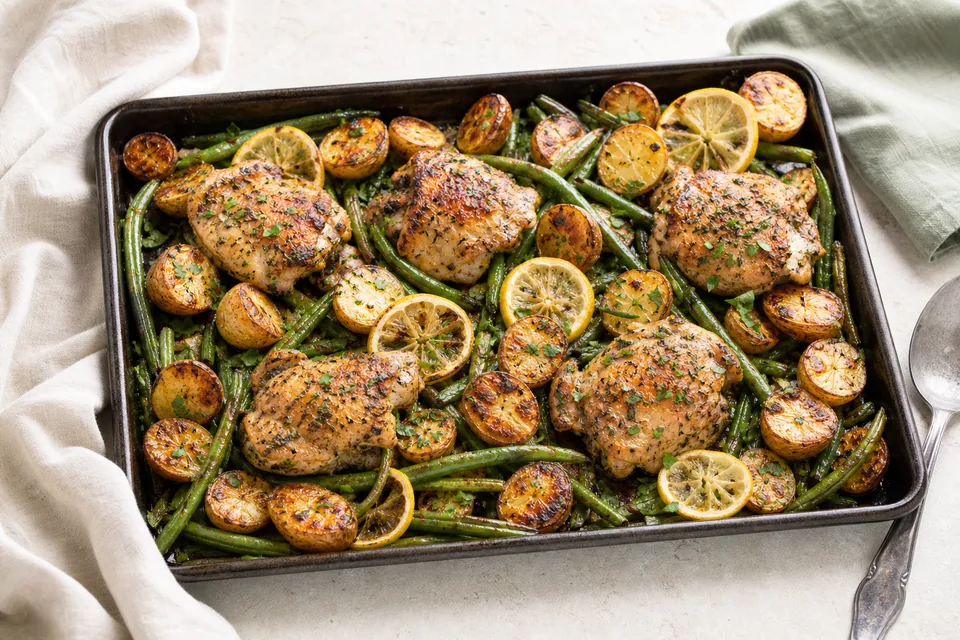
The potatoes should have browned cut sides, the green beans should be blistered but still bright, and the thickest piece of chicken must register 165°F (74°C).
Common questions
Can I use chicken breasts instead of thighs?
Yes. Use evenly sized boneless chicken breasts and begin checking their internal temperature early because lean breast meat can finish faster than thighs. Chicken must reach 165°F (74°C).
Why do the potatoes roast before the chicken is added?
Baby potatoes need more oven time than boneless chicken thighs. Their 15-minute head start encourages crisp, browned edges while keeping the chicken from overcooking.
Can I use frozen green beans?
Fresh green beans give the best blistered texture. Frozen beans can work without thawing, but they release more moisture and will be softer.
How do I keep sheet-pan chicken and potatoes from steaming?
Use a large rimmed pan, leave space between the ingredients, dry the chicken and vegetables before seasoning, and avoid letting liquid pool on the pan.
How do I know the chicken is safely cooked?
Insert an instant-read thermometer into the thickest part of the largest piece without touching the pan. It must reach 165°F (74°C), then rest for 5 minutes.
Cook next
Human editorial review: Approved for publication by the MommyCooking owner/editor after checking the ingredient-to-step flow, timing logic, accessibility, and food-safety wording. This is editorial approval; a documented real-kitchen test has not yet been recorded.
Visual transparency: All imagery on this page is AI-generated. The images add storytelling and visual guidance; they are not evidence of tasting, testing, endorsement, or approval.
Read our Editorial & AI Policy →