“One pan, zero dry salmon.”
Here's my promise: after tonight, you will never bake dry salmon again — because dry salmon isn't a skill problem, it's a timing superstition. Somewhere along the way, home cooks were taught to bake fish 'until it flakes easily,' which is like driving until you hit the wall. By the time salmon flakes EASILY, it's five minutes past its best self.
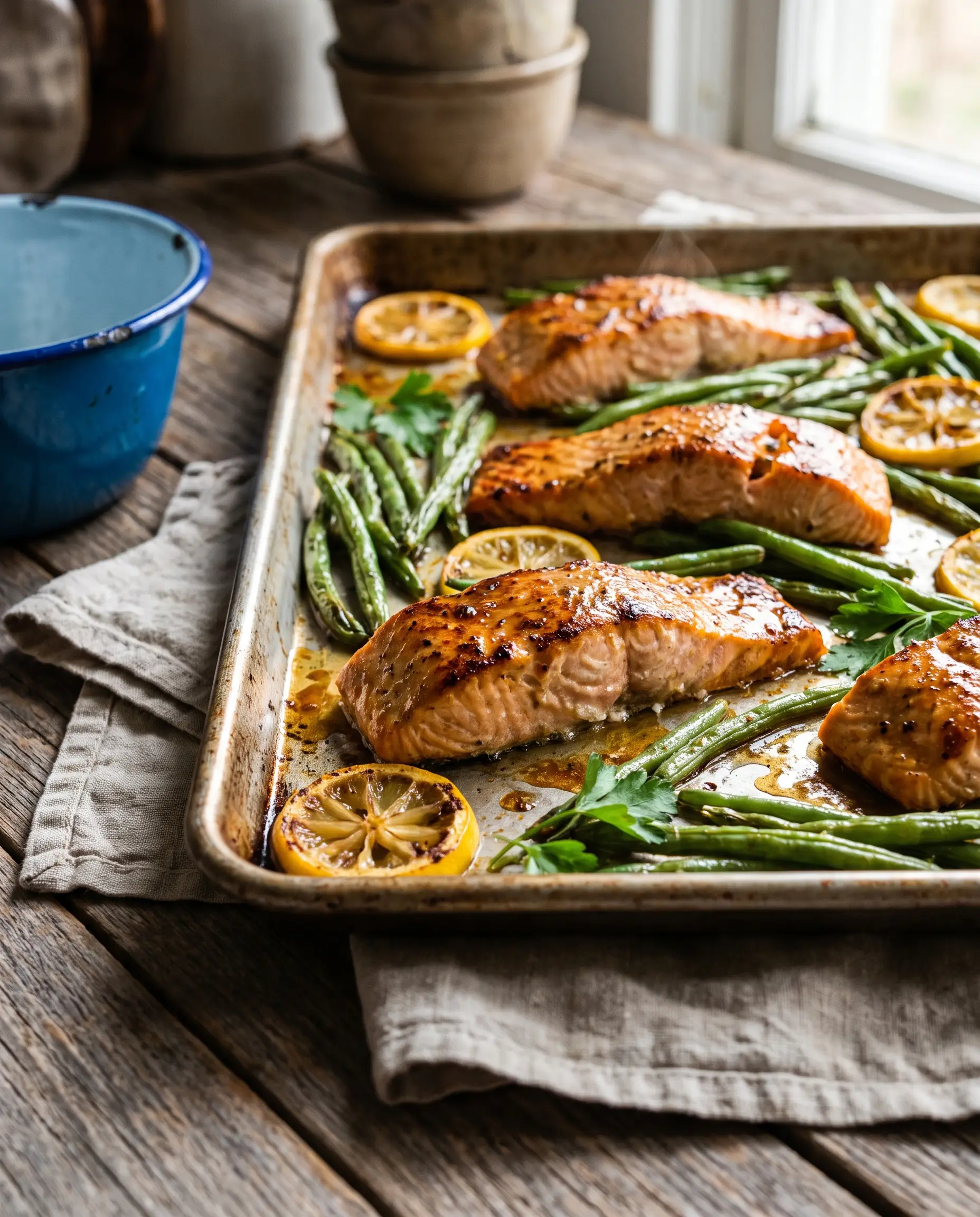
The fix is a number and a shield. The number: 400°F for 12 to 14 minutes for standard fillets — out of the oven while the center is still barely blushing, finished by its own heat on the pan. The shield: a honey-Dijon glaze painted on before baking, which caramelizes on top while quietly insulating the fish beneath. Add green beans sharing the same pan and drinking the same garlic butter, and dinner is one sheet, 25 minutes, restaurant-looking, and moist every single time.
Twenty-five minutes, one sheet pan, five pantry things in the glaze — and salmon that converts the 'I don't really like fish' delegation.
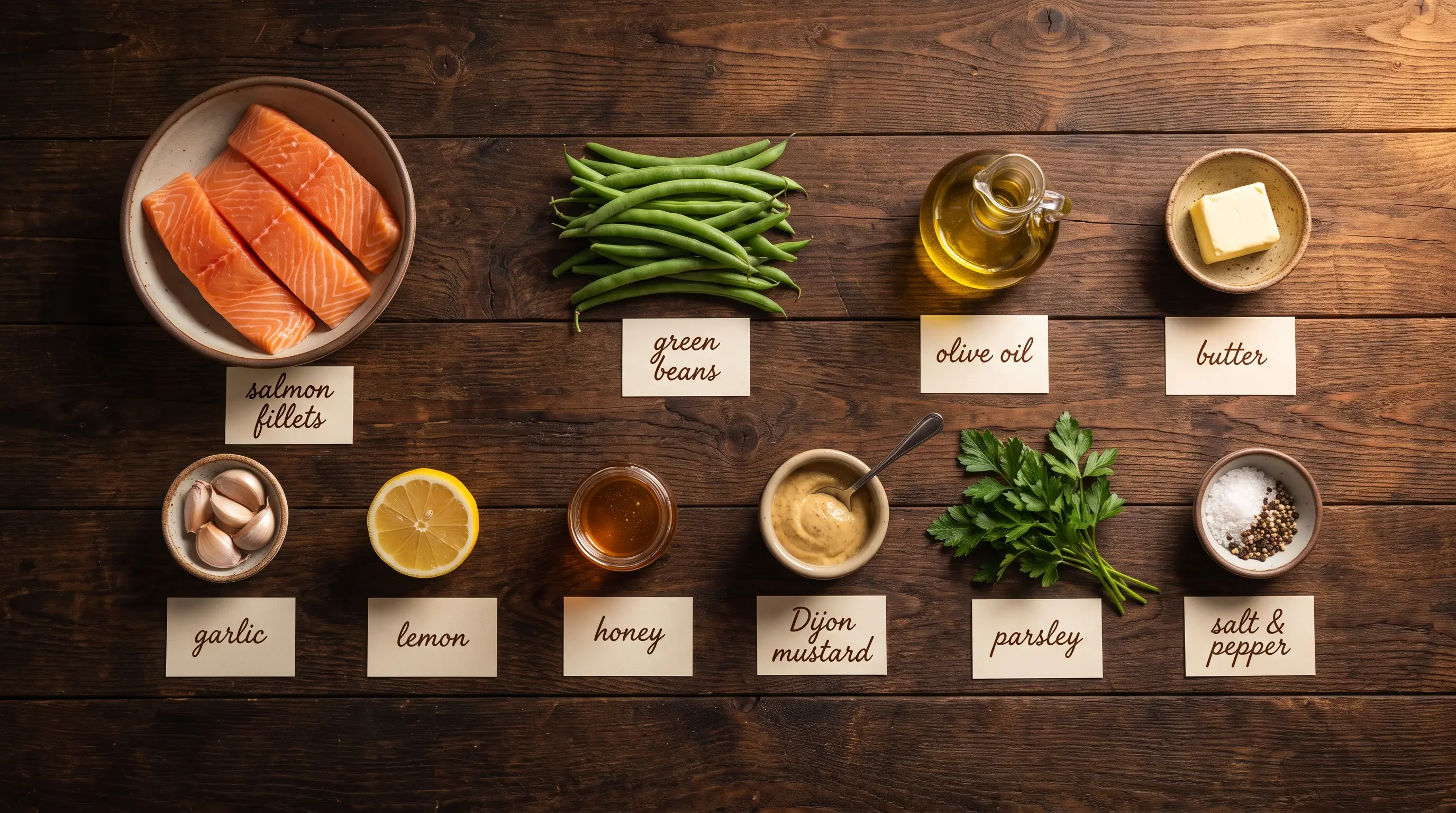
Heat the oven to 400°F (205°C) and line the sheet pan with parchment.
Beans first: toss the green beans with the olive oil, half the garlic, salt, and pepper right on the pan; spread them to the outer zones, leaving a runway down the middle. Roast alone for 8 minutes — their head start is what gets them blistered instead of squeaky.
Mix the glaze while they roast: melted butter, honey, Dijon, lemon juice, the rest of the garlic, salt, and pepper.
Salmon on the runway: pat the fillets very dry, place them down the middle of the pan, brush generously with all the glaze, and tuck the lemon slices among the beans.
Back in for 12 to 14 minutes, until the salmon centers read 125°F (or the flesh just barely resists flaking at the thickest point). The glaze will be bronzed at the edges. OUT — no 'two more minutes for safety'; the pan's heat finishes the job.
Rest 3 minutes on the pan, shower everything with parsley, and serve straight from the sheet — spatula for the salmon, tongs for the beans, and the roasted lemon squeezed over whoever asks nicely.
The salmon should separate into moist sheets with GENTLE pressure but still hold together — the center barely opaque with a blush, 125°F on a thermometer (it coasts to a perfect 130°F while resting). If it flakes apart at a touch, note the two fewer minutes for next time; the glaze keeps even that version rescueable. Beans: blistered in spots, still bright, definite bite.
Pulling at 125°F — the blushing center. Every dry salmon in history was cooked to 'flakes easily,' which is the fish announcing it's already overdone. Salmon pulled with a barely-translucent center and rested three minutes arrives at the table at a perfect, moist 130°F. The honey-Dijon glaze is the safety net; the early pull is the trick. Number beats superstition.
🥗 Nutrition, roughly: about 410 calories per serving with 36g protein, 14g carbs, and 24g fat — the good fats, as the salmon would want you to know.