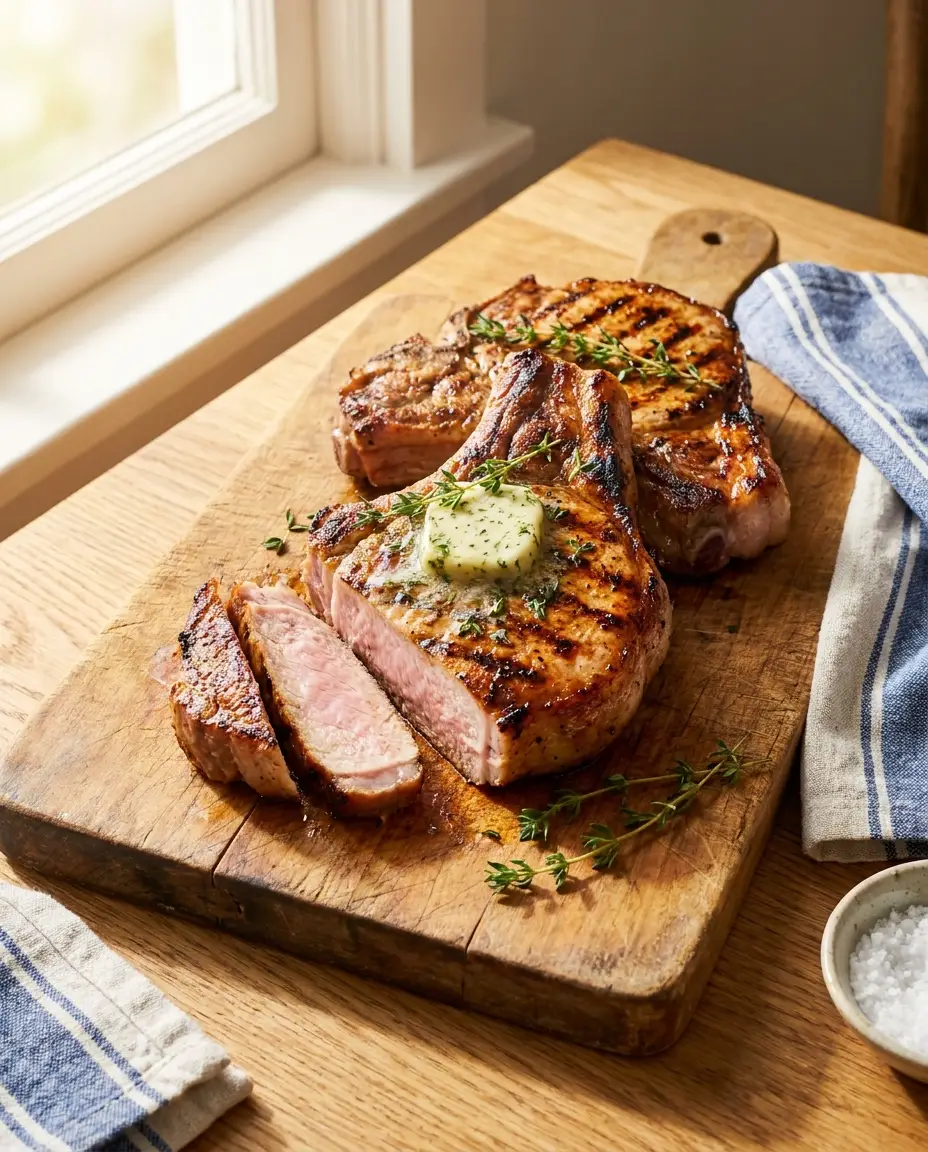
Weeknight

Pork Chops
That Stay Juicy

“Thirty minutes of salt water. Forever juicy.”

Let's name the problem: pork chops have broken more hearts than any cut in the meat case. They look magnificent, they cost real money, and twenty minutes later they're gray, squeaky, and being chewed politely by people who love you.

The heartbreak has two fixes, both free. First: a 30-minute swim in salted water — the brine loosens the meat's proteins so they hold their juices under heat instead of wringing themselves dry. Second: pork has been legally medium-pink since 2011, and 145°F (63°C) is the juicy, blush-centered truth your thermometer has been waiting to tell you.

🍖 The promise: deeply seared, blush-centered, genuinely juicy pork chops — 30 minutes of brine, 12 minutes of cooking, zero heartbreak.

Prep 10 min + 30 brineCook 12 minTotal 55 minEasyServes 2–4
← Back to recipes
Pork Chops That Stay Juicy

How to make it

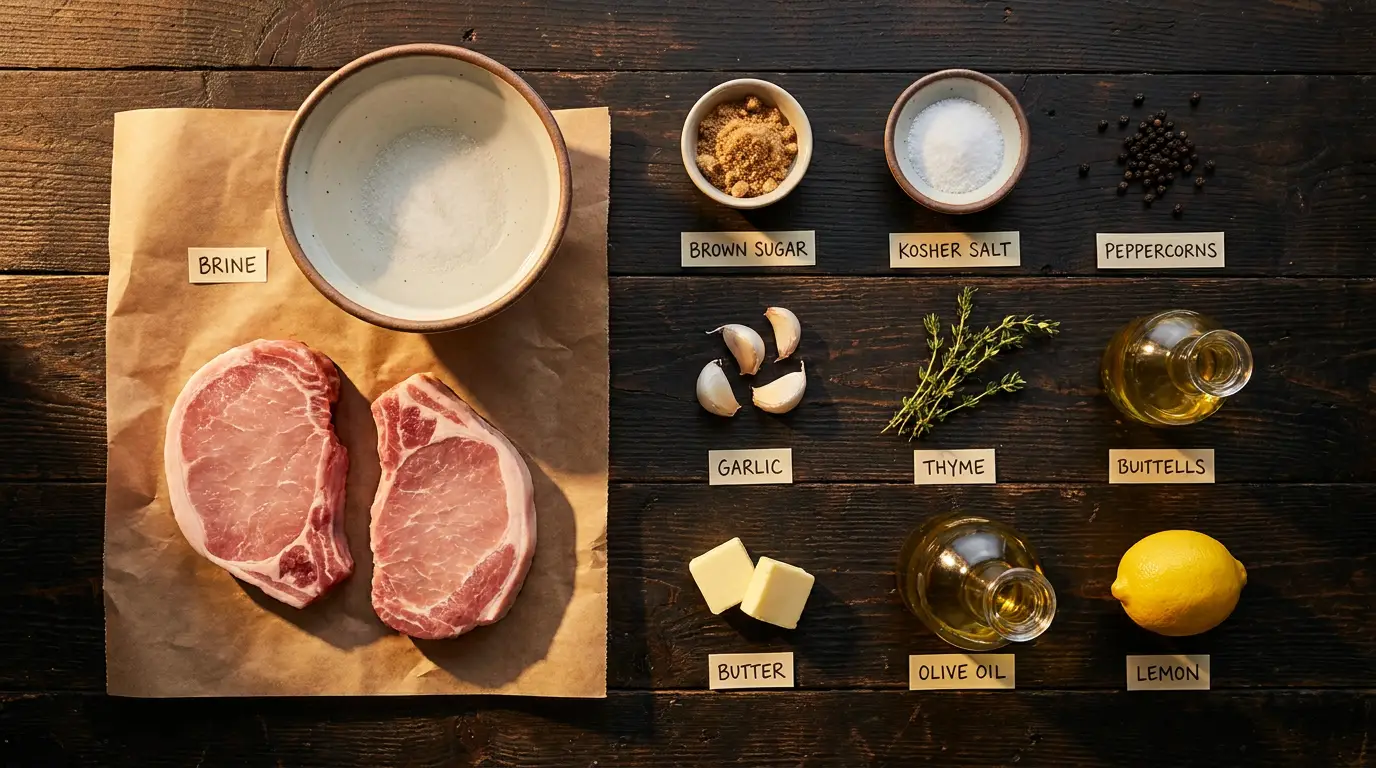
All ingredients for Pork Chops That Stay Juicy, labeled
🧺 Everything you need, all in one look
🧂 Ingredient notes & easy swaps
Thick chops only — the thin ones overcook between the flip and the plate no matter what anyone does; an inch or more gives the brine and the sear room to work. Bone-in buys extra insurance (bone slows the cooking near it). The brine math is simple: salt plus a little sugar dissolved in cold water, thirty minutes, done — longer than 2 hours actually starts to cure the texture, so this is one place MORE is not better. Rinse and dry hard after brining; a wet chop won't sear.
🍳 What you actually need (equipment)
A bowl or zip bag for the brine, your heaviest skillet (cast iron ideal), tongs, a spoon for basting, and an instant-read thermometer — the single most heartbreak-preventing tool in the kitchen.
  1. Stir the salt and sugar into the cold water until dissolved, submerge the chops, and refrigerate 30 minutes (up to 2 hours max). This is the entire insurance policy.

  2. Pull the chops, rinse them briefly, and pat them VERY dry — then let them sit 10 minutes at room temperature while the skillet heats. Season with pepper only; the brine already handled salt.

  3. Heat the oil over medium-high until the first wisp of smoke. Lay the chops in and don't touch for 3–4 minutes — a deep golden crust is forming, and moving them resets it.

  4. Flip once and give the second side 2–3 minutes, until it matches the first.

  5. Drop the heat to medium-low, add the butter, garlic, and thyme, and tilt-and-baste: spoon the foaming butter over the chops for 1–2 minutes while the inside finishes.

  6. Pull at 140°F (60°C) on the thermometer and rest 5 full minutes — carryover lands them at the juicy, blush-pink 145°F (63°C). Lemon squeeze, pan butter over the top, heartbreak officially over.

✅ How to know it's done

145°F (63°C) after resting, with a faint blush of pink at the center — that's modern pork done RIGHT, per food-safety guidance since 2011, and it's the whole difference between juicy and gray. The crust should be deep golden, the juices should pool on the cutting board slowly, and the first slice should glisten.

💡 Practical tips (and what not to do)

🔁 Easy variations (budget · lighter · kids · extra flavor)
💸 Budget: the brine performs its miracle on the cheapest chops in the case — that's rather the point. 🥦 Lighter: skip the butter baste and finish with lemon and herbs — the brine still carries the juiciness. 🧒 Kids: slice their chop against the grain into "pork fingers" with a honey-mustard dip. ✨ Extra flavor: add smashed garlic and a strip of lemon peel to the brine itself, or finish with a spoonful of the brown-sugar pan glaze from our apple-friendly playbook: butter, a pinch of brown sugar, a splash of cider vinegar, 60 seconds.

💛✨ Flavor boost

The quick brine — and understanding it's chemistry, not seasoning. Salt water partially unwinds the meat's proteins so that when heat hits, they can't contract into the tight coils that squeeze moisture out. A brined chop physically holds more juice at the same temperature than an unbrined one; no technique on the stove can compensate for skipping it. Thirty minutes, two pantry ingredients — and it works on chicken breasts and turkey too.

🍎 What Goes Well With It

  • Roasted or mashed potatoes wearing the garlic-thyme pan butter.
  • Sauteed apples or applesauce — pork's oldest and most correct friendship.
  • Green beans or a sharp arugula salad against the richness.
  • Buttered egg noodles if the table wants cozy.

📦 Storage & Freezer Notes

  • Fridge: 3 days airtight — slice before storing and the leftovers stay tender for sandwiches.
  • Freezer: cooked chops keep 2 months; the raw ones freeze beautifully IN their brine bag for a ready-to-thaw dinner kit.
  • Reheat gently, covered, with a splash of broth — or slice thin and flash it in a hot pan; slow reheating is where leftover pork goes gray.

❓ Quick answers

Is pink pork safe?
Yes — 145°F (63°C) with a 3-minute rest has been the official safe temperature since 2011, and it leaves a blush center. The old white-through standard is why everyone remembers pork as dry.
Can I brine overnight?
Not with this strength — past about 2 hours the texture starts turning ham-like. For overnight, halve the salt. Honestly, 30 minutes does the job.
Do boneless chops work?
Yes — pick thick ones and shave a minute off each side. The bone is insurance, not a requirement.
Why did my chop turn out dry anyway?
Almost always overshoot — pulled at 160°F+ instead of 140°F. The thermometer is the answer; the clock lies about chops.

🥗 Nutrition, roughly: about 420 calories per chop with the butter baste. Estimates only — the pan butter spooned over the potatoes files separately.

🍽️ You might also like

← Every recipe