By Sok Heng Oeun, Founder and Reviewer · Published July 8, 2026 · Updated September 22, 2026
School mornings don't leave room for a frying pan. These egg muffins bake twelve little breakfasts at once — eggs, cheddar, and whatever vegetables survived the week — and each one reheats in about thirty seconds.
The usual complaint about egg muffins is the texture: spongy, weepy, deflated by Tuesday. Three small moves fix all of it — a splash of milk, a gentler oven, and pulling them at just-set instead of bouncy. That's the entire science.
🥚 The promise: fluffy, cheesy egg muffins that stay tender for five days — one bowl, about 35 minutes including the rest in the tin.
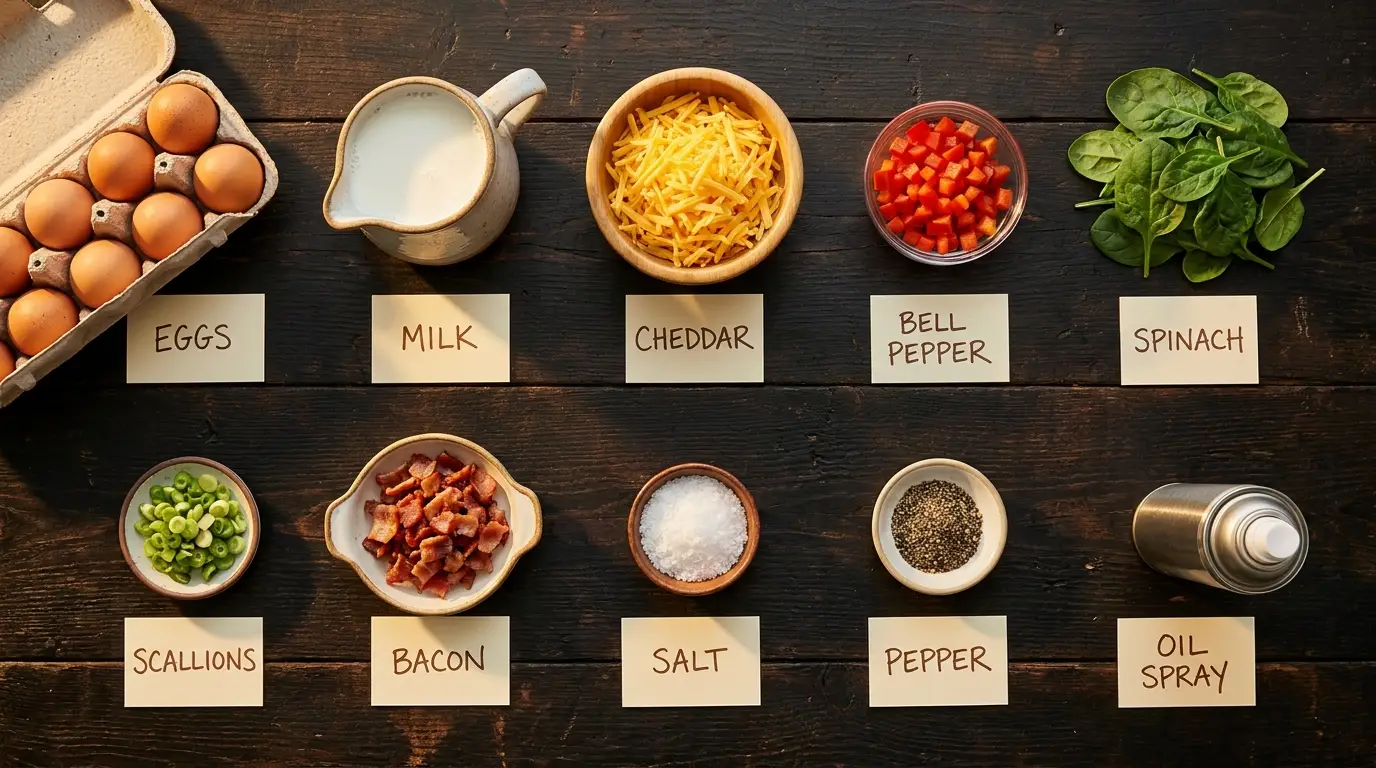
🧺 Everything you need, all in one look🧂 Ingredient notes & easy swaps
Whole milk (not cream, not water) keeps these tender: its water turns to steam and puffs the eggs, while its fat keeps them from tasting lean. Sharp cheddar is worth it; mild cheese gets lost against ten eggs. Any quick-cooking vegetable works, but watery ones need help: squeeze thawed frozen spinach dry in a clean towel, and seed and blot tomatoes on paper towels before dicing. Ham swaps for cooked bacon or crumbled cooked sausage. Any meat must already be cooked; 18 minutes at 350°F is not enough to cook raw sausage safely inside an egg cup.
🍳 What you actually need (equipment)
A standard 12-cup metal muffin tin (spray it even if it is nonstick), one big bowl with a pouring spout if you have it, and a whisk. Paper liners stick to baked egg; if your tin is scratched and things cling to it, silicone liners release cleanly.
Heat the oven to 350°F (175°C), no hotter. Spray the muffin tin generously, cups and rims both; egg sticks hard to any dry spot, even on a nonstick tin.
Whisk the eggs, milk, salt, and pepper in a large bowl until the mixture is one even yellow with no streaks of clear white; unmixed white bakes into rubbery ribbons.
Stir in the cheddar, bell pepper, spinach, and ham until the mix-ins are evenly distributed.
Stir once more (the solids sink fast) and pour into the cups about ¾ full. They puff above the rim in the oven and settle back, so filling to the top makes them spill over and stick to the pan.
Bake 16–18 minutes, until the tops are puffed and matte and the centers barely wobble when the tin is nudged. Golden edges are fine; browned tops mean they are overbaked and will be dry.
Rest 5 minutes in the tin; they pull away from the sides as they settle. Run a butter knife around each rim and lift them out onto a rack. Serve warm, or cool completely before packing them for the week.
✅ How to know the egg muffins are done
Puffed, matte tops with the faintest wobble in the center, and a knife tip slipped into the middle comes out clean but glossy. On a thermometer, the center of a muffin should read 160°F (71°C), the safe temperature for egg dishes; it will get there during the 5-minute rest in the hot tin if it was just short when you pulled them. They deflate slightly as they cool; that is steam leaving, not a fault. Still wet and shiny in the middle? Two more minutes.
💡 Practical tips (and what not to do)
Spray every surface. Cups, rims, the flat top of the tin; where the batter puffs over the rim and meets bare metal, it sticks, and the muffin tears when you lift it.
350°F, not 400°F. Egg proteins tighten and squeeze out their water when they set too fast; the gentler oven sets them slowly and keeps them tender instead of bouncy.
Squeeze the vegetables. Water hiding in spinach or tomato becomes weepy muffins by day two.
Pull at just-set. They keep cooking in the hot tin for 5 more minutes — baked to done means arriving overdone.
Keep mix-ins pea-sized. Small pieces float through every bite; big chunks sink and drag the muffin down with them.
💛✨ Flavor boost
Sauté the diced bell pepper in a small pan misted with the oil spray for 2 minutes before it goes into the eggs. Raw pepper stays slightly crunchy and leaks water into the cup as it bakes; a quick sauté softens it, cooks off that water and sweetens it, so the muffins hold together better on day four. The spinach does not need it; it wilts in the batter.
🍓 What Goes Well With It
Fresh fruit and buttered toast on the side.
A spoonful of salsa or hot sauce on top.
Tucked into a toasted English muffin with a slice of cheese for a breakfast sandwich.
Sliced avocado with salt and lemon.
📦 Storage & Freezer Notes
Fridge: airtight, up to 5 days. Cool completely first, and tuck a paper towel in the container to catch condensation so the tops do not go wet.
Freezer: wrap individually, up to 2 months. Thaw overnight in the fridge, or microwave straight from frozen.
Reheat in the microwave 20–30 seconds from the fridge (45–60 seconds from frozen) under a damp paper towel; the moisture keeps the egg from drying out and turning rubbery at the edges. Or reheat 8–10 minutes in a 300°F (150°C) oven for a firmer top.
🧒 Serving Ideas for Kids
Pour the plain egg base into the cups and let children drop their own mix-ins into their cups: cheese only, ham only, or the full set.
Serve with fruit cut into pieces they can pick up.
Tuck one into a soft dinner roll for a breakfast that can be eaten in the car.
❓ Quick answers
Why did my egg muffins deflate?
All baked egg dishes settle a little as they cool, because the steam that puffed them escapes. A muffin that sinks into a dent in the middle was overbaked: the proteins tightened and squeezed out water. Pull them when the center still wobbles slightly and they hold most of their height.
Can I use egg whites only?
Yes: about 2½ cups (600 ml) of whites in place of the 10 whole eggs, plus an extra ¼ cup of cheese to make up for the richness the yolks provide. Expect them firmer and paler, and check them at 14 minutes, since whites set faster.
Are they freezer-safe?
Yes. Cool completely, wrap individually, freeze up to 2 months, and microwave 45–60 seconds from frozen under a damp paper towel. Muffins made with tomato or raw pepper freeze less well because the vegetables release water when thawed.
Can I make them dairy-free?
Swap the milk for unsweetened oat milk (the same ⅓ cup) and use a dairy-free cheddar-style shred, or leave the cheese out and add another ¼ cup of diced ham or vegetables so the cups are still full. The lift comes from the steam, not the cheese, so they stay fluffy.
🥗 Nutrition, roughly: about 110 calories and 9 g of protein per muffin with cheddar and ham. Estimates only; brands, cuts and portion sizes change the numbers.
Published by MommyCooking.org. This AI-assisted recipe passed automated checks for page consistency and required image files. The publisher confirms this recipe was tested before publication. The food images are AI-generated illustrations, not photographs of a cooking session. Cooking temperatures should be checked with a food thermometer; nutrition figures are estimates. How we make recipes · Report a problem with this recipe