Overnight French Toast Bake with Golden Brioche Edges
“Tonight you assemble. Tomorrow you're a hero.”
By Sok Heng Oeun, Founder and Reviewer · Published July 8, 2026 · Updated September 22, 2026
There are two kinds of holiday mornings: the one where somebody stands at the stove flipping french toast slice by slice while everyone else opens presents — and this one.
Fifteen minutes of assembly before bed, a night in the fridge while the bread drinks the custard, and one hands-off bake while the coffee brews. The oven does the flipping.
🍞 The promise: custardy middles, caramelized cinnamon top, breakfast for eight — with all the work done the night before.
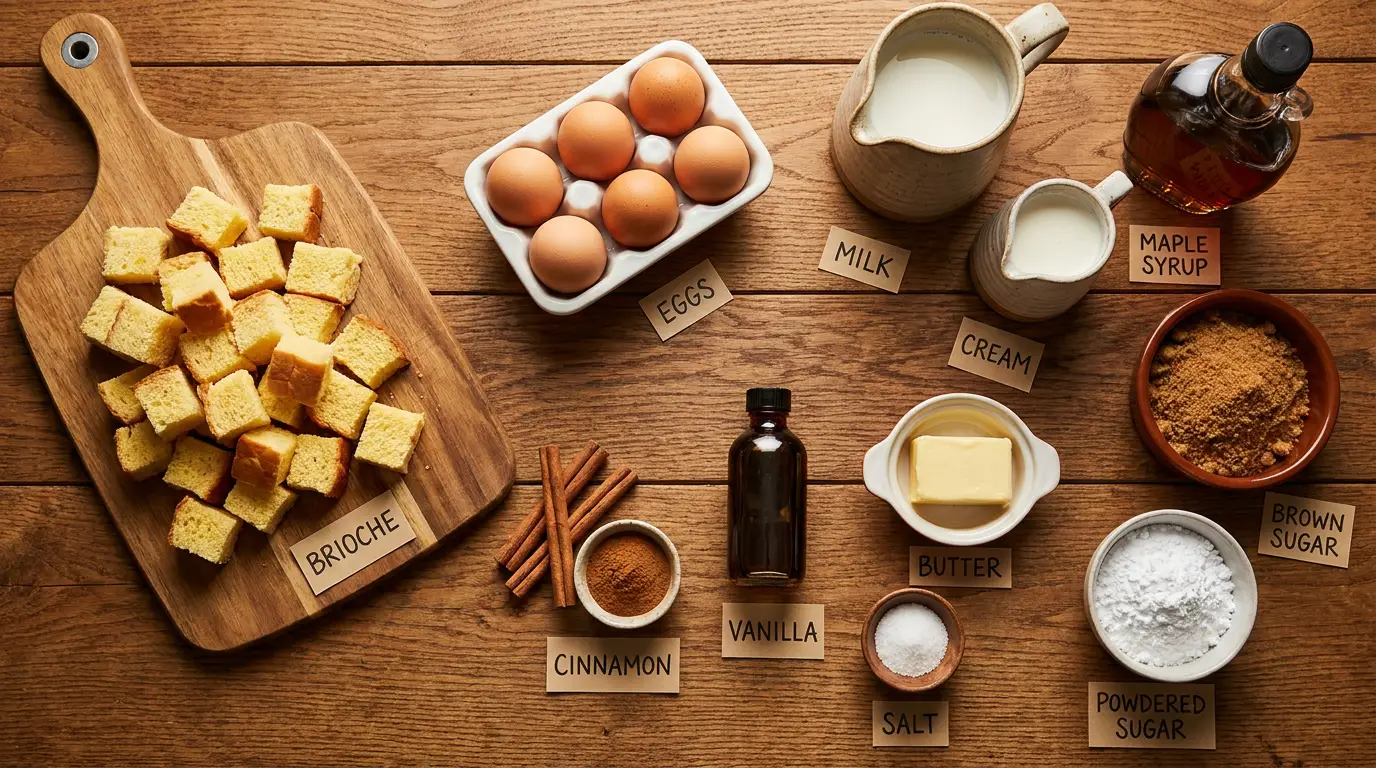
🧺 Everything you need, all in one look🧂 Ingredient notes & easy swaps
Day-old bread is the whole game — fresh brioche turns to pudding, slightly stale cubes drink the custard and keep their shape. Challah and thick white sandwich bread both work. Whole milk plus a little cream is the custard sweet spot; all milk works, all cream is a nap in casserole form.
🍳 What you actually need (equipment)
A 9×13 baking dish, one mixing bowl, a whisk, plastic wrap for the overnight rest, and foil for the first half of the bake.
The night before: butter the dish with the soft butter and spread in the bread cubes — crowded but in one rough layer, corners tucked.
Whisk the eggs, milk, cream, brown sugar, cinnamon, vanilla, and salt until no streaks of yolk remain.
Pour the custard slowly and evenly over every cube, then press the bread down gently with a spatula until it glistens. Cover and refrigerate overnight (8–12 hours).
In the morning: heat the oven to 350°F (175°C) while the dish sits out — a cold ceramic dish straight into a hot oven is how dishes crack.
Dot the top with the cold butter cubes, cover with foil, and bake 25 minutes. Uncover and bake 20–25 more, until puffed and deep golden.
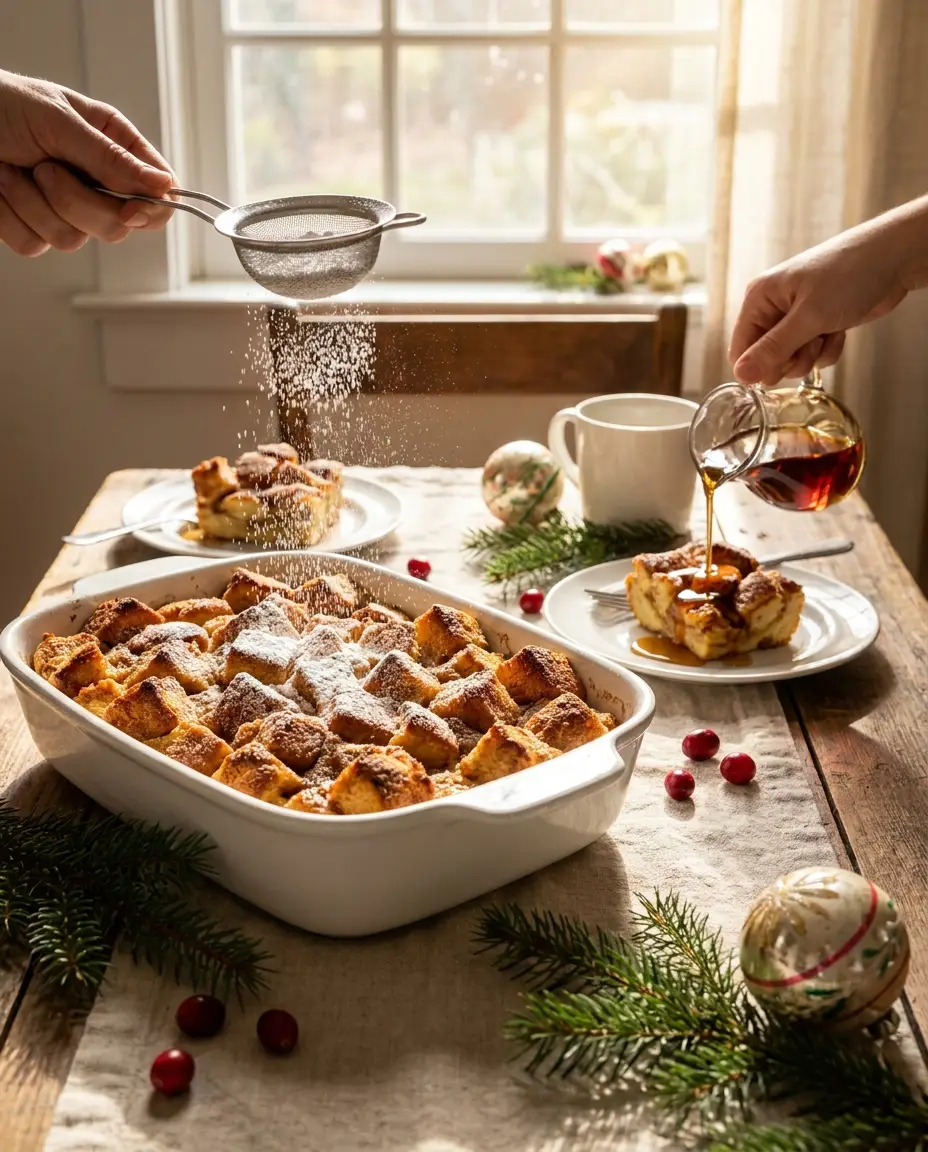
Rest 10 minutes (it settles from soufflé-proud to sliceable), then snow powdered sugar over the top and pass the warm syrup.
✅ How to know it's done
The top is puffed and deep golden with caramelized edges, the center springs back from a gentle press, and a knife slipped into the middle comes out custard-free but moist. If the center still wobbles like jelly, give it 10 more minutes with the foil loosely back on so the top doesn't over-brown. For an egg custard the safe finish is 160°F (71°C) in the middle on a thermometer.
💡 Practical tips (and what not to do)
Stale bread on purpose. Cube the loaf the day before and leave it out — dry cubes drink, fresh cubes dissolve.
Press the bread into the custard before it goes in the fridge. Floating corners bake into croutons.
Foil first, naked second. Covered sets the custard, uncovered builds the golden top — the order matters.
Let the cold dish warm up on the counter while the oven heats. Thermal shock is a real breakfast villain.
Rest before slicing. Ten minutes turns it from lava pudding into proud golden squares.
💸 Budget: thick-cut day-old sandwich bread instead of brioche — still wonderful. 🥦 Lighter: all milk, half the brown sugar, fresh berries on top instead of syrup. 🧒 Kids: a handful of chocolate chips tucked between the cubes before the custard goes on. ✨ Extra flavor: a streusel top — flour, brown sugar, cold butter, and pecans crumbled over before baking.
💛✨ Flavor boost
Optional, but worth it: a tablespoon of orange zest whisked into the custard. Nobody names it, everybody notices it — it makes the vanilla and cinnamon taste like a holiday instead of a Tuesday.
🥓 What Goes Well With It
Crispy bacon or breakfast sausage — the salty opponent this sweetness deserves.
Fresh berries and a bowl of whipped cream for build-your-own toppers.
Strong coffee for the adults, cold milk for the syrup-covered.
A fruit salad if the morning needs an alibi of virtue.
📦 Storage & Freezer Notes
Fridge: covered squares keep 3 days; the custard firms up cold, so cut them while cold and reheat as squares.
Freezer: wrap baked squares individually, up to 2 months.
Reheat: 300°F (150°C) oven for 12 minutes, uncovered, brings back the crisp top; the microwave (60–90 seconds per square) heats it through but leaves the top soft, because it steams the caramelized sugar instead of drying it.
🧒 Serving Ideas for Kids
Chocolate-chip corner: tuck chips under the cubes on one quadrant and mark it with a toothpick flag.
Let them do the powdered-sugar snowfall — over the sink, wisdom says.
Leftover squares eat like french toast sticks: cut, dip, delight.
❓ Quick answers
Do I really have to soak it overnight?
Four hours minimum works in a pinch, but overnight gives the custardy middle this casserole is famous for.
Can I bake it right away?
You can, but the center stays bready instead of custardy, because the custard only soaks about halfway into a 1-inch cube in the first hour; the rest of it pools at the bottom and bakes into a layer of scrambled egg under dry bread. Give it at least 4 hours, and overnight if you can.
What bread works best?
Brioche and challah are the gold standard; any sturdy day-old white loaf works. Thin sandwich bread disappears.
Can I assemble it two nights ahead?
One night is the sweet spot — at 48 hours the bottom crosses from custardy into soggy territory.
🥗 Nutrition, roughly: about 380 calories per square before syrup. Estimates only; brands, cuts and portion sizes change the numbers.
Published by MommyCooking.org. This AI-assisted recipe passed automated checks for page consistency and required image files. The publisher confirms this recipe was tested before publication. The food images are AI-generated illustrations, not photographs of a cooking session. Cooking temperatures should be checked with a food thermometer; nutrition figures are estimates. How we make recipes · Report a problem with this recipe