Published by MommyCooking.org · Published September 30, 2026
Gentle poaching seasons the sauce base and large flakes; a reduced sauce supports the dry, fluffy potato topping.
The sauce has to be thicker than seems right before the mash goes on. It loosens again in the oven as the peas and the fish release liquid, and a sauce that was only just pourable ends up soaking the potato from below.
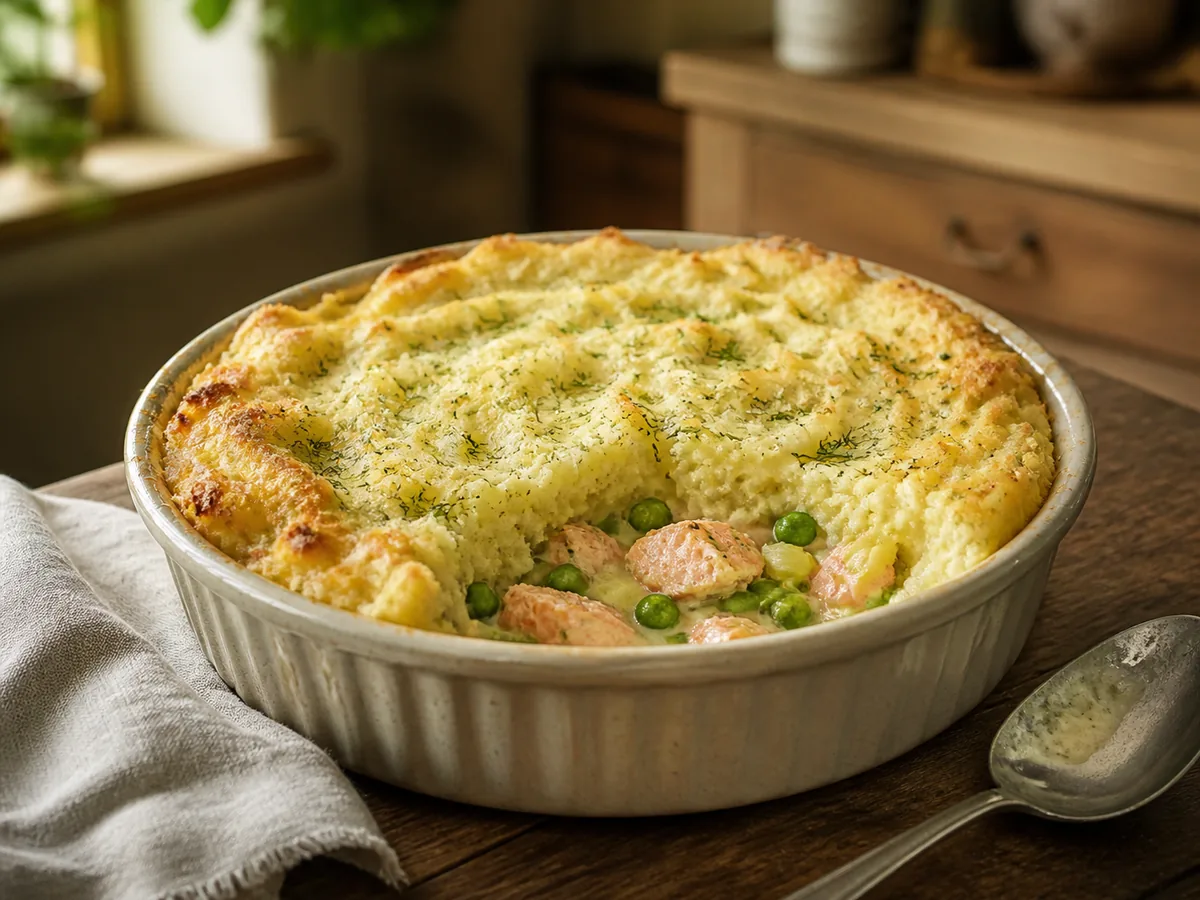
🐟 The promise: Salmon reaches 145°F (63°C), sauce is thick around whole peas, and potato topping has golden ridges without sinking.
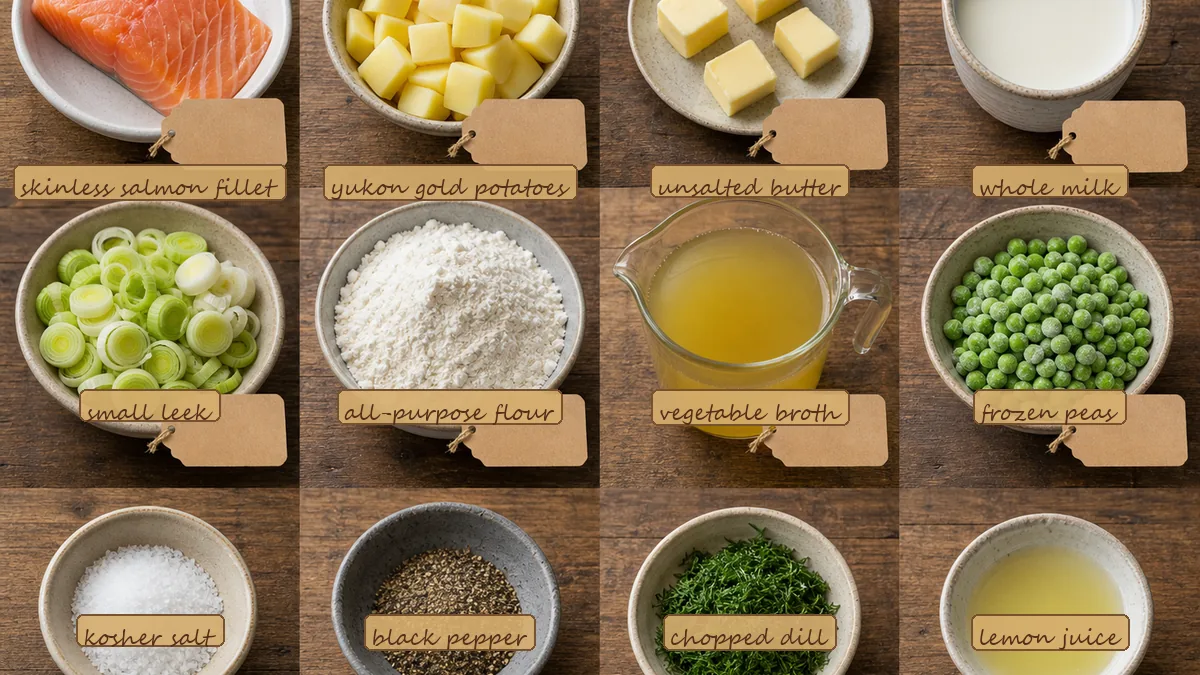
🐟 Everything you need, all in one look🧂 Ingredient notes & easy swaps
Cod can replace salmon by equal weight and should be poached to 145°F (63°C).
“Boil and mash potatoes” starts Salmon Potato Pea Pie in the 9-inch deep pie dish and saucepan: boil potatoes in water seasoned with ¾ teaspoon salt for 14–16 minutes until tender; drain, steam-dry, and mash with 1 tablespoon butter and warm milk. During “Top, bake, and brown,” spread potato to the edges, roughen with a fork, and bake at 425°F (220°C) for 20 minutes until bubbling and browned; rest 10 minutes.
“Top, bake, and brown” closes Salmon Potato Pea Pie: spread potato to the edges, roughen with a fork, and bake at 425°F (220°C) for 20 minutes until bubbling and browned; rest 10 minutes; keep assembly late so the potato, sauce, and fresh elements stay distinct.
🍳 What you actually need (equipment)
9-inch deep pie dish and saucepan.
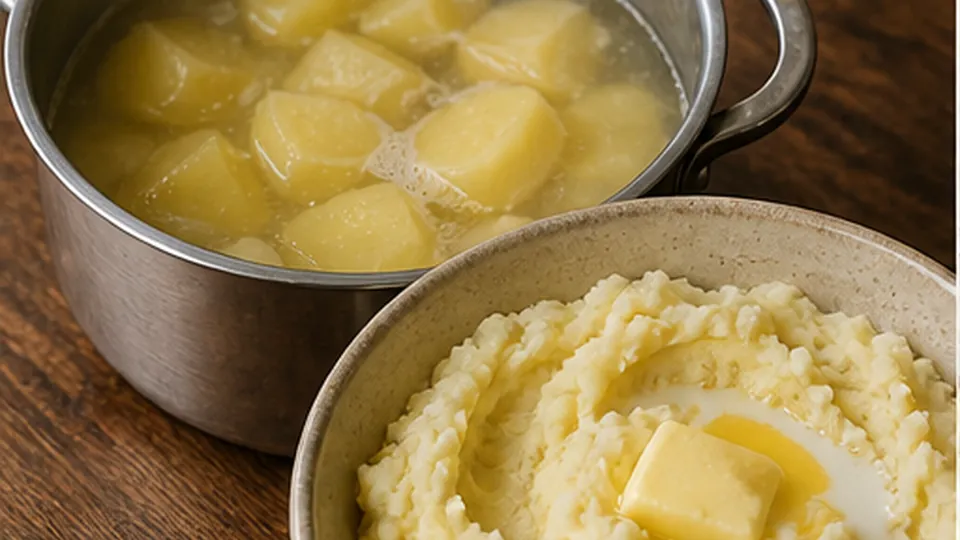
Boil the cubed Yukon Golds in water seasoned with ¾ teaspoon of the kosher salt for 14–16 minutes, until tender. Drain, let them steam dry in the hot pot, then mash with 1 tablespoon (14 g) of the butter and the warm milk.
Boil and mash the potatoes
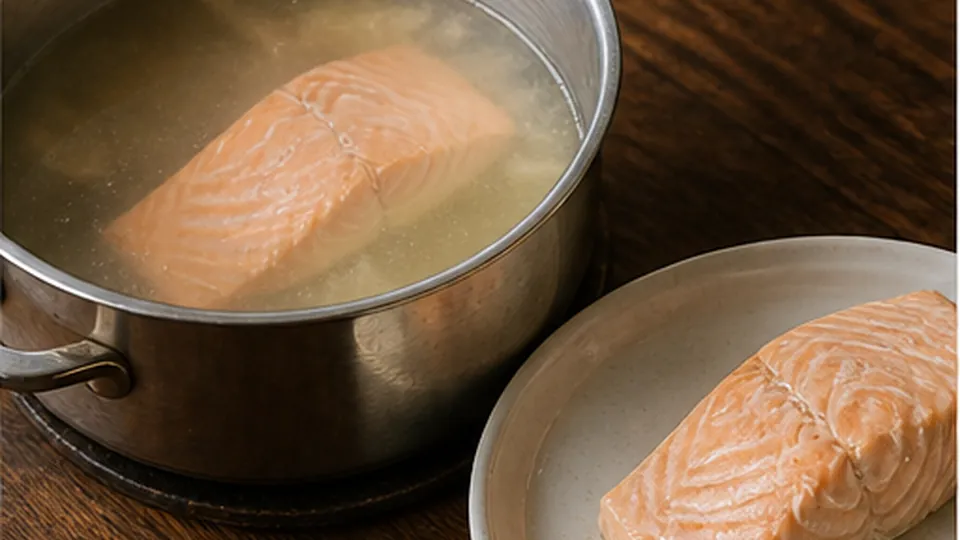
Bring the vegetable broth to a bare shiver in a saucepan, slide in the salmon fillet, cover, and poach 6–8 minutes until it reads 145°F (63°C). Lift the fish onto a clean plate and keep every drop of the broth.
Poach the salmon gently
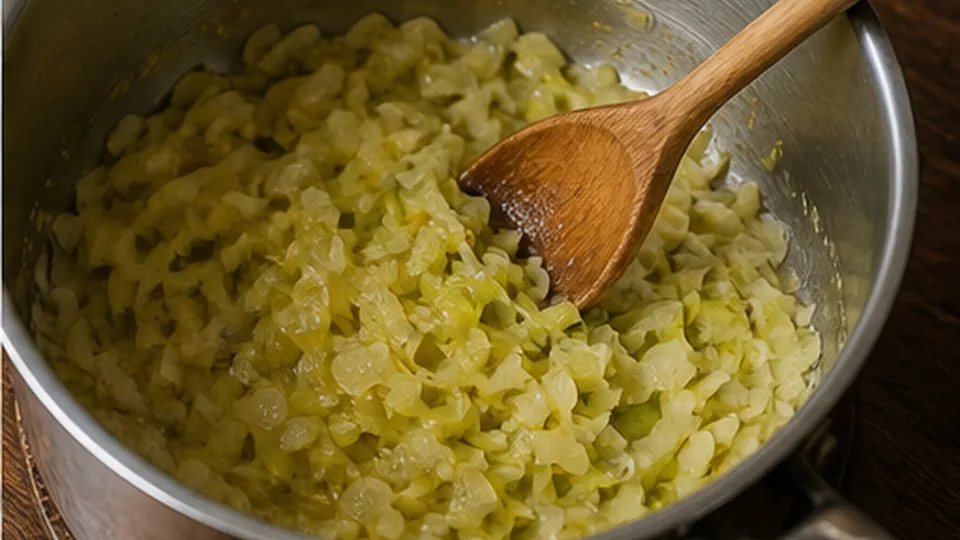
Melt the remaining butter in the saucepan and add the cleaned sliced leek with ¼ teaspoon of the salt. Cook 6 minutes over medium-low, until the rings are soft and sweet without taking on any brown color.
Soften the sliced leek
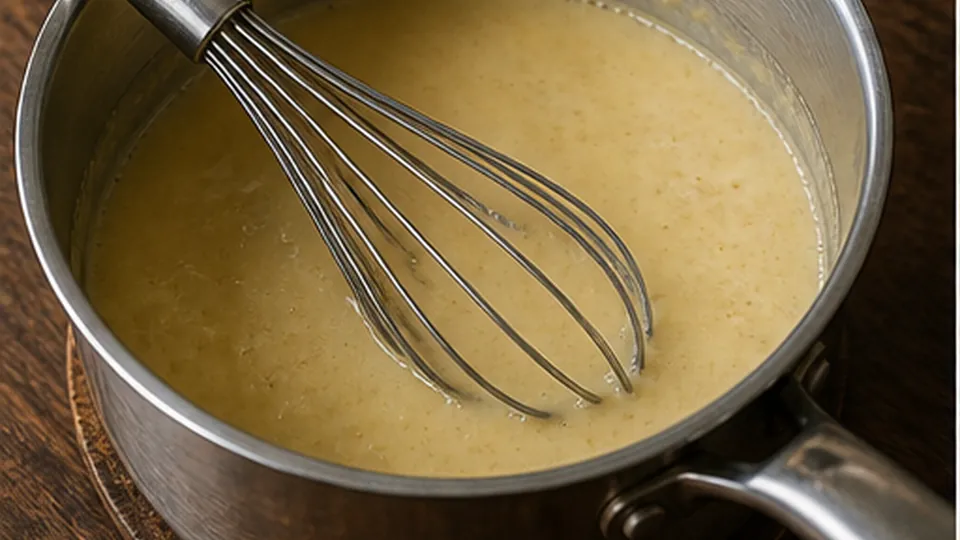
Stir the flour into the leeks and cook 1 minute, then whisk in 1¾ cups (420 ml) of the reserved broth a splash at a time. Simmer 3 minutes, until the sauce holds a line drawn across the back of the spoon.
Thicken the poaching broth
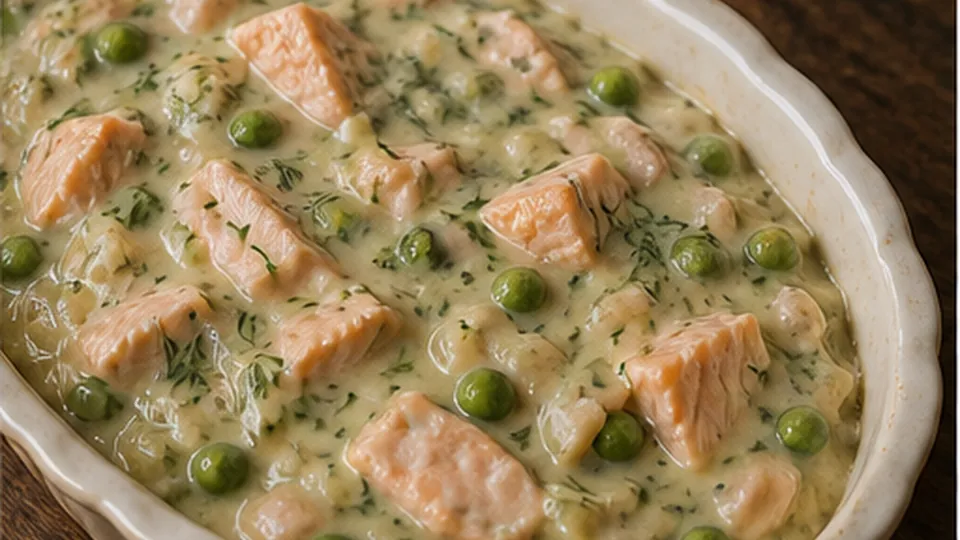
Off the heat, fold in the frozen peas, chopped dill, lemon juice, and the salmon broken into large flakes, along with the black pepper. Turn it gently so the fish stays in recognizable pieces, then tip it into the pie dish.
Fold in fish and peas
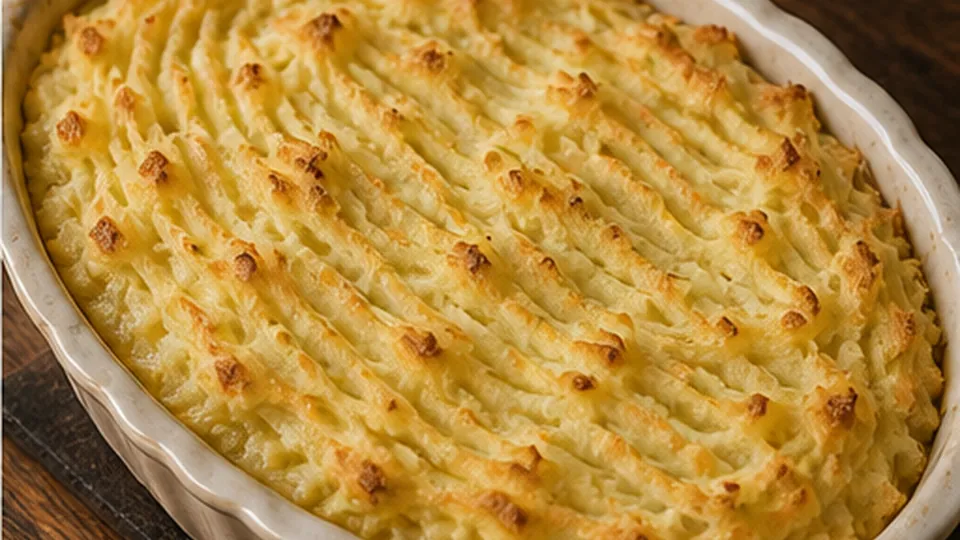
Spread the mash to the very edges to seal the filling in, rake the surface with a fork, and bake at 425°F (220°C) for 20 minutes until bubbling and browned. Rest the pie 10 minutes before cutting.
Top, bake, and rest
✅ How to know it's done
The sauce is thick around whole peas, the salmon stays in flakes rather than shredding, and the potato ridges are golden without sinking. After “Boil and mash potatoes,” if the filling looks loose, simmer it down before adding the potatoes; if the potato ridges stay pale after the center is hot, use a brief broil and watch closely.
💡 Practical tips (and what not to do)
Keep every drop of the poaching broth. It carries all the salmon flavor, and swapping fresh broth in at the sauce stage leaves the filling tasting only of leek.
A bare shiver, not a simmer. Broth moving hard breaks the fillet into shreds before it reaches 145°F (63°C), and the pie loses its flakes.
Dry mash, or the topping sinks. Let the drained potatoes steam in the hot pot a full minute before the butter and warm milk go in.
Peas go in frozen. Thawed peas collapse in the oven, while straight from the bag they hold their shape and cool the filling slightly as they go.
Seal the mash right to the rim. Any gap at the edge lets sauce climb the side of the dish and burn onto it.
Budget: Use half salmon and half frozen white fish, poached together in the same broth to 145°F (63°C). Lighter: Mash the potatoes with the reserved poaching broth instead of milk and butter; the topping browns just as well. Kids: Leave the dill out of one corner of the dish and mark that corner with a fork pattern. Extra flavor: Stir a teaspoon of Dijon and a tablespoon of capers into the sauce before the fish goes in.
💛✨ Flavor boost
Fold dill into the hot filling off heat so its fresh aroma remains clear beneath the potato topping.
🥔 What Goes Well With It
Wilted spinach with lemon, which adds a green note the pie itself has none of.
Quick-pickled cucumber, sharp enough to cut through buttery mash.
Shredded cabbage dressed with malt vinegar, a cold crunch against a soft-textured pie.
📦 Storage & Freezer Notes
Cut the pie into portions before refrigerating so the center cools quickly, cover it once cold, refrigerate within 2 hours and eat within 3 days, since cooked fish keeps less well than meat.
Reheat covered at 350°F (175°C) for about 20 minutes until the center reaches 165°F (74°C), then uncover for 5 minutes to dry the potato ridges.
Freeze it unbaked and fully cooled for up to 2 months, then bake from frozen at 400°F (205°C) for 45–55 minutes. Freezing it baked shreds the salmon flakes on thawing.
Before “Boil and mash potatoes” for Salmon Potato Pea Pie, prepare the potato and cut the vegetables for “Boil and mash potatoes” one day ahead; keep the raw fish sealed separately on the refrigerator’s lowest shelf. After handling the raw fish, wash the board, knife, hands, and counter before touching the dill used in “Top, bake, and brown.”
At “Top, bake, and brown,” Salmon Potato Pea Pie is ready when salmon reaches 145°F (63°C), sauce is thick around whole peas, and potato topping has golden ridges without sinking. Portion Salmon Potato Pea Pie onto clean plates with cucumber and tomato salad.
🧒 Serving Ideas for Kids
Check a child's portion for pin bones twice, running a fingertip through the flakes rather than relying on your eyes.
Serve mostly topping with a shallow scoop of filling under it if the peas and leek are an obstacle.
Bake individual portions in ramekins for 15 minutes so each one has its own browned lid.
❓ Quick answers
Can I use cooked or tinned salmon?
Tinned works: drain about 400 g, skip the poaching step and use plain vegetable broth for the sauce. You lose the poaching flavor, so add an extra tablespoon of lemon juice.
Why is my filling watery under the mash?
The sauce was not reduced far enough. It should hold a clean line when you draw a finger across the back of the spoon before the fish goes in, not merely coat it.
Can I use sweet potato for the topping?
Yes, but it holds more water and will not ridge as sharply. Mash it with no milk at all and expect a softer crust.
Do I really need the full 10-minute rest?
Yes. Cut straight from the oven, the sauce runs off the plate; ten minutes lets it set enough to hold a wedge together.
🥗 Nutrition, roughly: about 670 calories per serving. Estimates only; brands, cuts and portion sizes change the numbers.
Published by MommyCooking.org. This AI-assisted recipe passed automated checks for page consistency and required image files. The publisher confirms this recipe was tested before publication. The food images are AI-generated illustrations, not photographs of a cooking session. Cooking temperatures should be checked with a food thermometer; nutrition figures are estimates. How we make recipes · Report a problem with this recipe