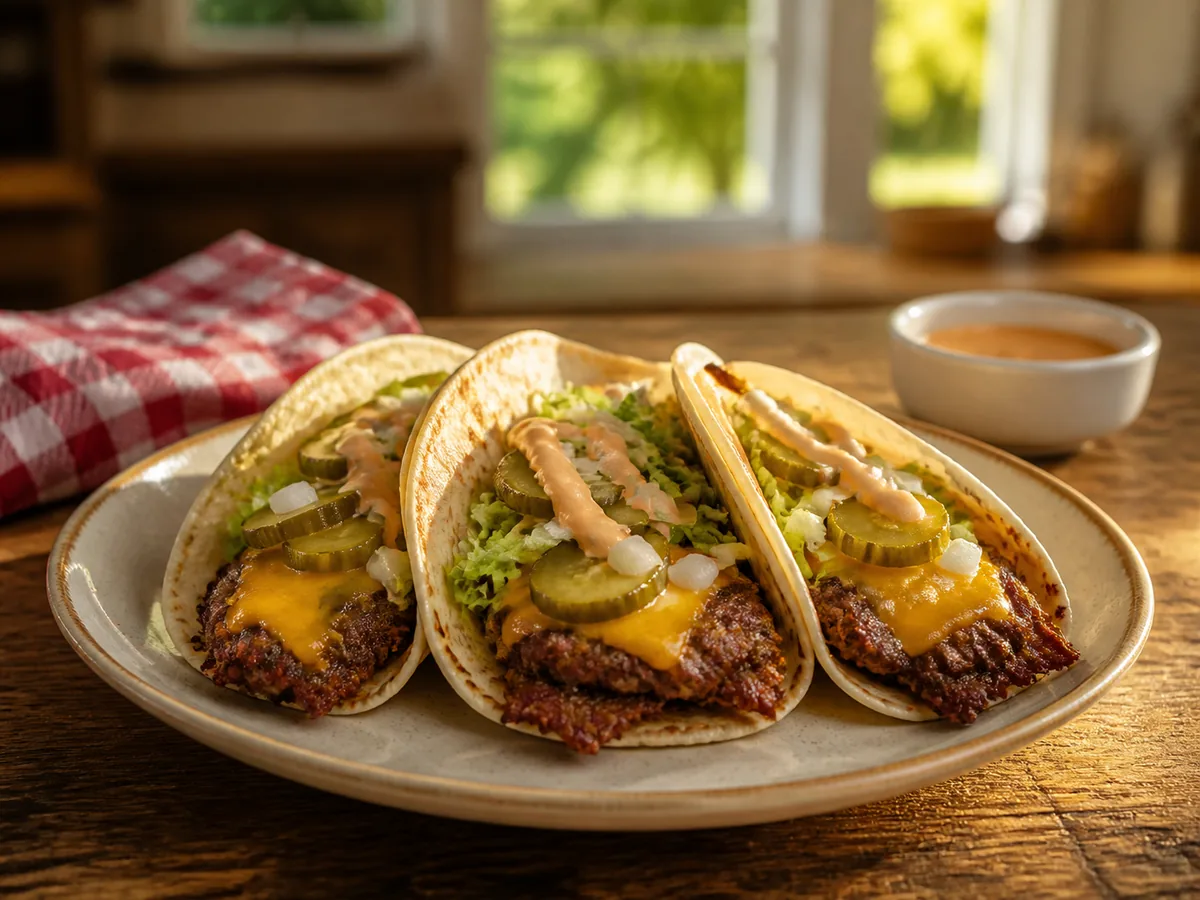
“The burger and the taco settled their differences.”
Published by MommyCooking.org · Published October 5, 2026
A smash taco looks like internet chaos until you notice the useful engineering. Pressing a thin layer of beef directly onto a tortilla gives the meat full contact with hot metal. The beef browns instead of steaming, and the tortilla catches every savory drip without becoming a wet envelope.
The sequence matters. Beef side meets the skillet first, cheese melts only after the crust releases cleanly, and the cold sauce waits until serving. That keeps the hot parts crisp and the pickles snappy. It is a burger wearing a taco for structural reasons.
🌮 The promise: lacy-edged beef, crisp tortillas, and proper burger sauce in 25 minutes, with no bun to slide apart.
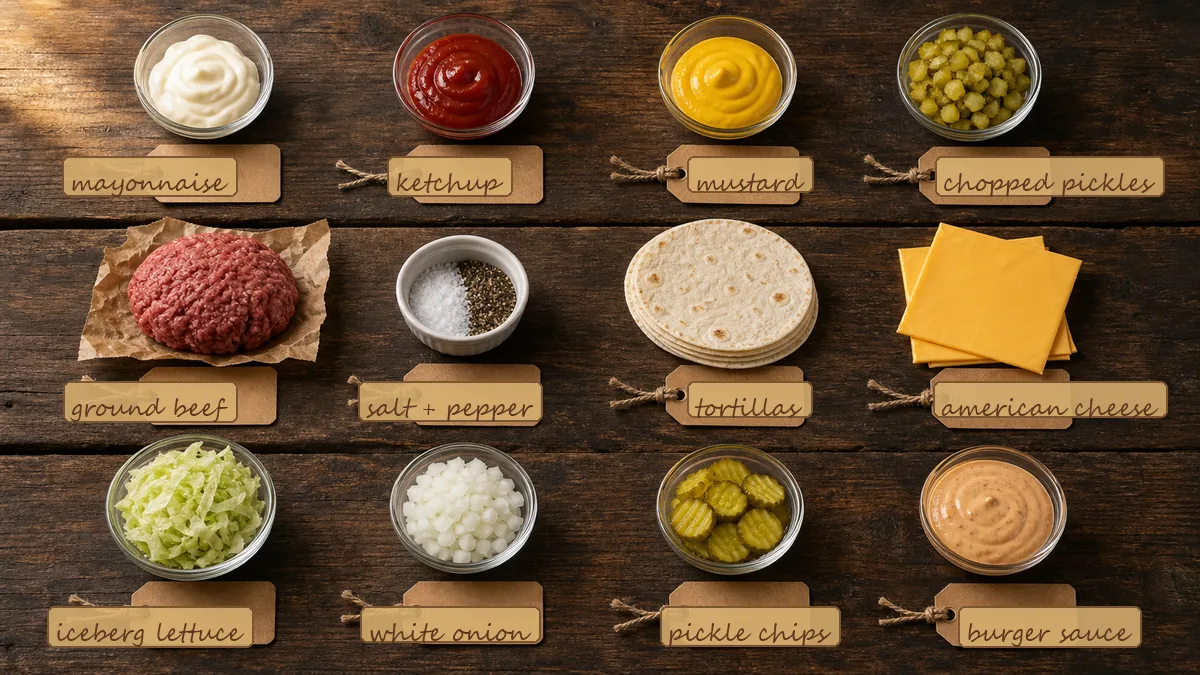
🌮 Everything you need, all in one look🧂 Ingredient notes & easy swaps
Use 85/15 beef: leaner meat sticks less willingly and tastes drier; fattier meat can soak the tortilla. Small flour tortillas bend without cracking. American cheese is chosen for clean melting, but thin cheddar slices work if you cover the pan for an extra 30 seconds.
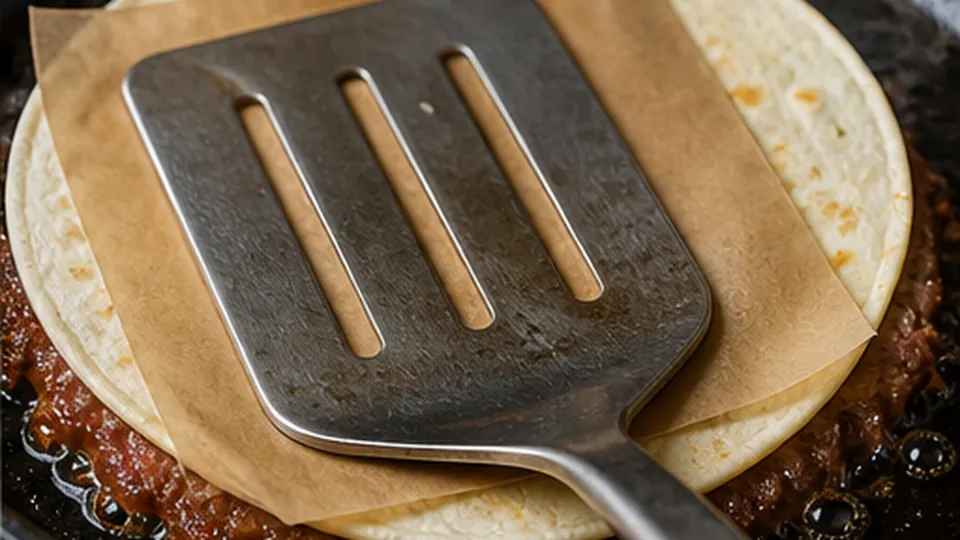
The tortilla is also the press: it spreads the beef into a thin, even layer while keeping the spatula clean. Start with a cool tortilla so it stays firm under pressure. A rigid metal turner matters because a flexible one cannot scrape the crust cleanly. If the first taco browns too quickly, lower the heat before the next batch instead of shortening the cook and gambling on the beef temperature.
🍳 What you actually need (equipment)
A large cast-iron or stainless skillet, a stiff metal spatula, parchment squares for pressing, one mixing bowl, and a clean plate. A flat griddle makes the two-batch job faster.
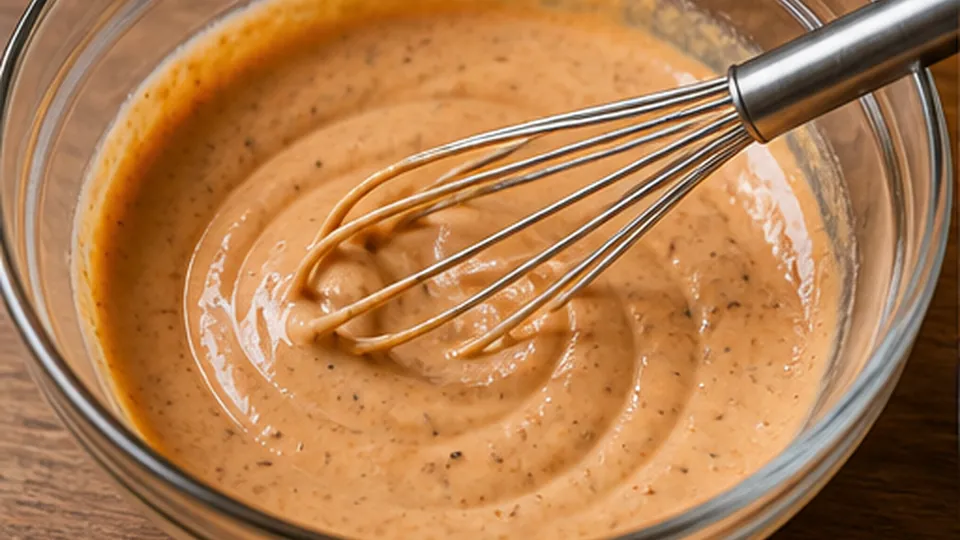
Stir ½ cup (120 g) mayonnaise, 2 tablespoons (30 ml) ketchup, 1 tablespoon (15 ml) yellow mustard, 2 tablespoons (30 g) finely chopped dill pickles, and 1 teaspoon (5 ml) pickle brine until the sauce turns evenly coral and falls from a spoon in a thick ribbon. Refrigerate it while the skillet heats.
Mix the pickle sauce
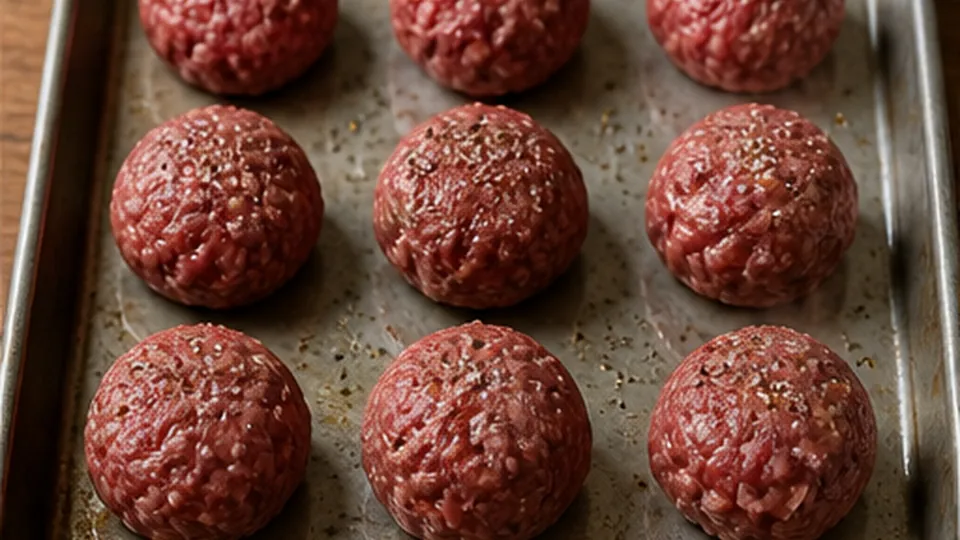
Mix 1 lb (454 g) ground beef (85/15) with 1 teaspoon (6 g) kosher salt and ½ teaspoon (1 g) black pepper using loose fingers, stopping while the strands still look distinct. Divide into 8 balls of about 2 oz (57 g); packed meat cooks dense instead of craggy.
Season and ball the beef
Heat the skillet over medium-high until a drop of water skitters and vanishes. Set a beef ball down, lay one of the 8 small flour tortillas (320 g) on top with a sheet of parchment, and press hard until the beef spreads to the tortilla edge.
Smash beef onto tortillas
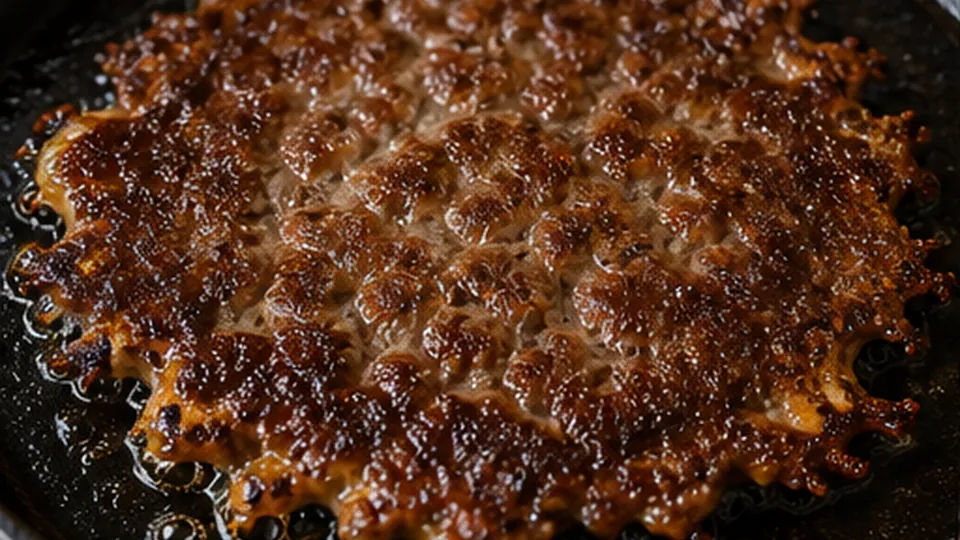
Cook beef side down without nudging until the sizzle turns sharp, fat beads around the rim, and the crust releases when scraped firmly, 2 to 3 minutes. Resist lifting it early, since the lacy edge forms in the last moments.
Sear until the crust sets
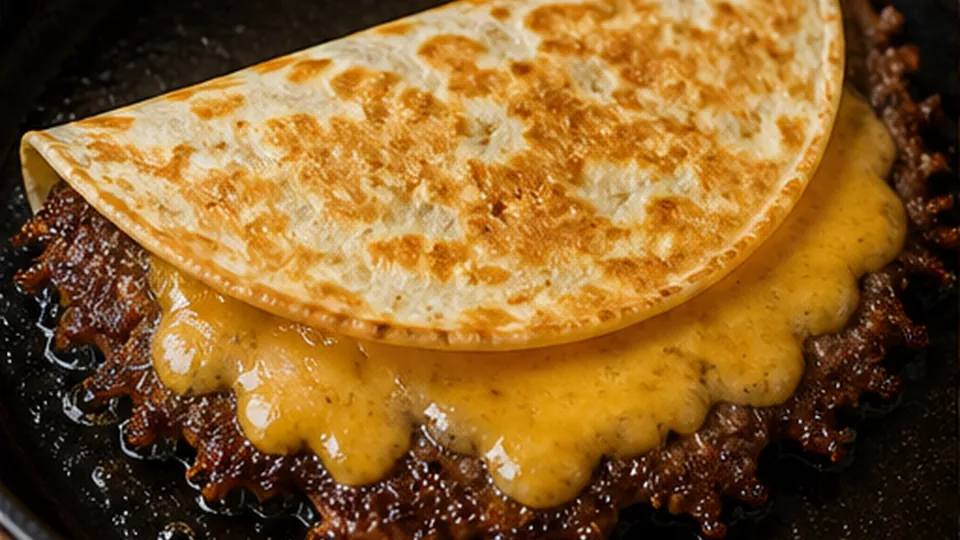
Flip in one confident motion, lay on a slice of the 8 slices (160 g) American cheese, cover, and cook 60 to 90 seconds, until the tortilla shows crisp brown freckles and the cheese slumps. Confirm the beef registers 160°F (71°C), then move it to a rack rather than a stacked plate.
Flip, melt, and crisp
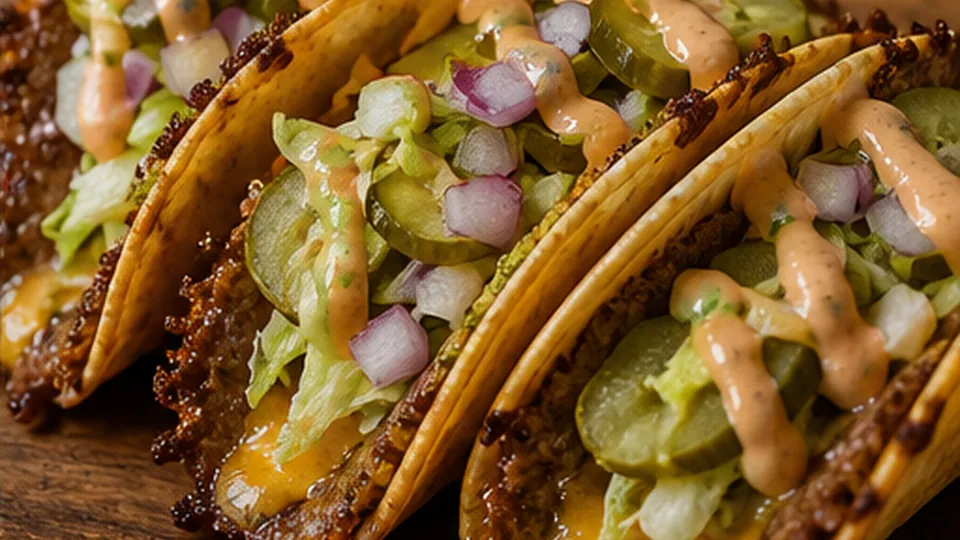
Top each taco with 1 cup (45 g) finely shredded iceberg lettuce, ½ cup (75 g) finely diced white onion, and ½ cup (75 g) dill pickle chips divided among them. Add a stripe of the cold sauce, fold while the tortilla is still flexible, and serve.
Top, fold, and serve
✅ How to know it's done
The beef carries a deep brown lacy rim at 160°F (71°C), the tortilla folds without cracking, and the cheese has fully relaxed. If the first tortilla scorches before the beef crust releases, the skillet is carrying too much heat for its material. Move it off the burner for a minute, wipe out dark crumbs, and resume at medium. If the meat separates from the tortilla during the flip, it was pressed too thick or lifted too early. Scrape under the beef rather than the tortilla and let the next taco cook until fat beads clearly at the edge. A soft finished shell usually came from stacking hot tacos; spread them on a rack in one layer so steam can escape. Sauce cannot repair missing crust, so fix heat and spacing before adjusting toppings.
💡 Practical tips (and what not to do)
Press once. Repeated smashing squeezes out moisture after the crust starts forming.
Use parchment. It keeps raw beef off the spatula handle and peels away cleanly.
Three per batch, maximum. Any more and there is no room to turn one without folding it into its neighbor.
Rack the first batch. A plate traps steam underneath and softens the tortillas.
Dress at the table. Lettuce and sauce belong on the taco seconds before the first bite.
Budget: use ¾ lb (340 g) beef and press a thinner layer. Lighter: choose 93/7 beef and brush the pan with oil. Kids: leave onion off and serve sauce for dipping. Extra flavor: add minced jalapeño or a shake of smoked paprika to the sauce.
💛✨ Flavor boost
Toast the tortilla for the final 20 seconds after the cheese melts, pressing only the bare edges against the skillet. That short contact wakes up the flour tortilla’s nutty flavor without burning the beef crust.
🥔 What Goes Well With It
Oven fries with plenty of black pepper.
A vinegary cabbage slaw, which does the job the missing bun would have done.
Thick milkshakes, the traditional companion to anything smashed on a griddle.
📦 Storage & Freezer Notes
Refrigerate cooked beef-tortilla rounds within 2 hours and keep up to 3 days. Store toppings separately.
Reheat in a dry skillet, beef side first, until the center reaches 165°F (74°C); the microwave softens the shell.
Freeze the cooked, untopped rounds between parchment up to 2 months.
For a calmer dinner, mix sauce, shred lettuce, dice onion, and portion beef up to one day ahead. Keep raw beef on the lowest refrigerator shelf and use a separate tray for finished tacos. Heat the skillet only when every cold topping is ready; once cooking begins, the eight tacos move quickly and should not wait for knife work.
🧒 Serving Ideas for Kids
Cut each taco into two compact wedges.
Put lettuce, pickles, and sauce in separate bowls for low-stakes assembly.
Leave one taco at cheese and beef only, since the onion and pickles are the parts most often picked off.
❓ Quick answers
Why is my beef sticking to the pan?
It has not formed a crust yet, or the pan was not fully hot. Scrape firmly with a thin metal spatula only after the edges look dark and the sizzling turns sharp.
Will corn tortillas hold up to the press?
Small, flexible corn tortillas can work, but they crack more easily under pressure. Warm them first and use a gentler press.
Can these be made ahead?
Mix the sauce and portion the beef one day ahead. Press and cook only when you are ready to eat, because the crisp texture is the point.
How do I avoid greasy tacos?
Use 85/15 beef, keep the layer thin, and rest each taco briefly on a rack. Blot the skillet between batches if a deep pool of fat collects.
🥗 Nutrition, roughly: about 510 calories per serving. Estimates only; brands, cuts and portion sizes change the numbers.
Published by MommyCooking.org. This AI-assisted recipe passed automated checks for page consistency and required image files. The publisher confirms this recipe was tested before publication. Food images are AI-generated illustrations, not photographs of a cooking session. Verify doneness with a food thermometer. How we make recipes · Report a problem