Written with AI assistance · Reviewed, edited, and approved by Sok Heng Oeun · Published July 17, 2026 · Updated August 10, 2026
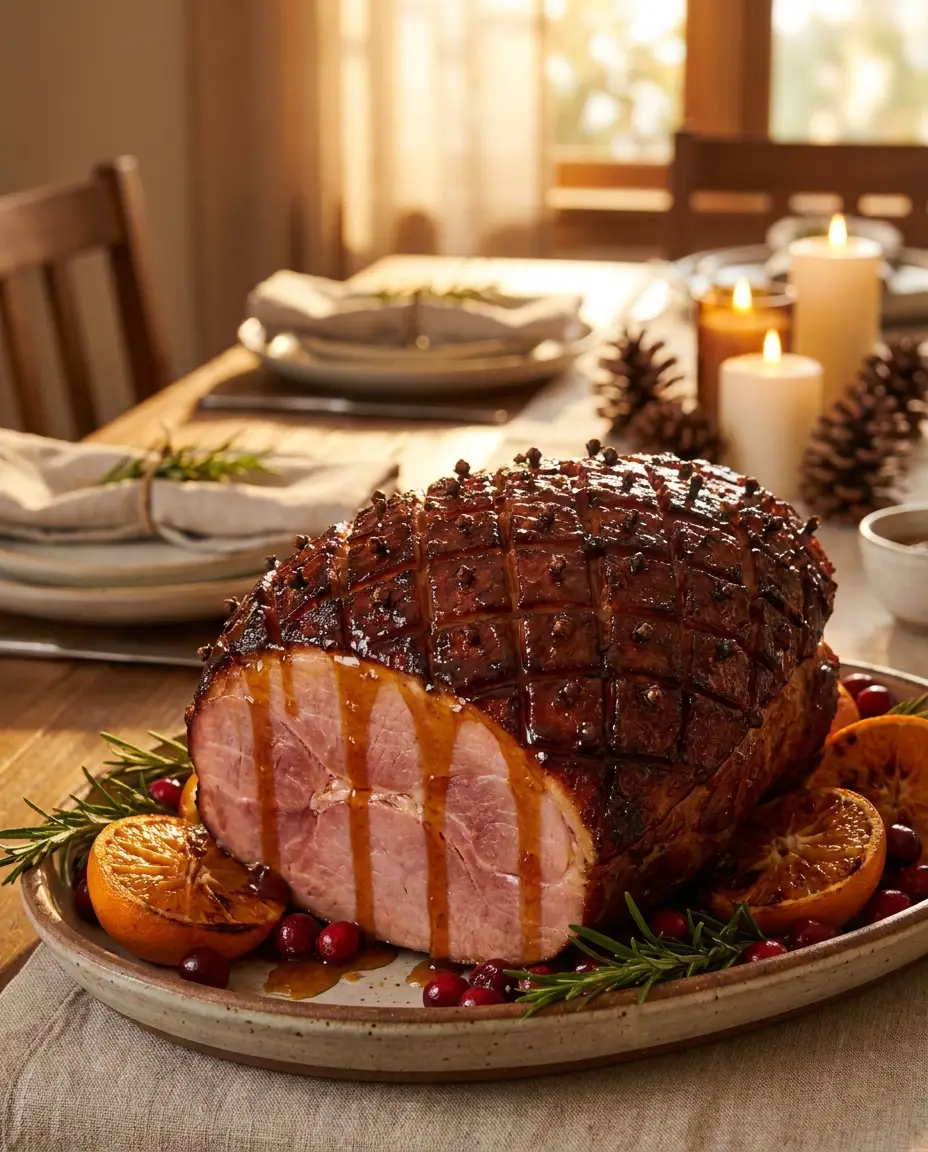
Picture the table: the sides are jostling for space, someone is guarding the rolls, and in the middle sits a mahogany ham with a caramelized diamond crust catching the light. Everyone assumes it was the hard part. It was the easiest thing in the room.
Because here's the open secret of holiday ham: it arrives already cooked. Your whole job is warming it gently so it stays juicy, then lacquering it in a brown sugar–honey–Dijon glaze during the final 45 minutes — three thin coats, like painting. The oven does the drama. You take the credit.
🍖 The promise: a juicy, diamond-crusted glazed ham — 20 minutes of your attention across 3 easy hours, centerpiece status included.
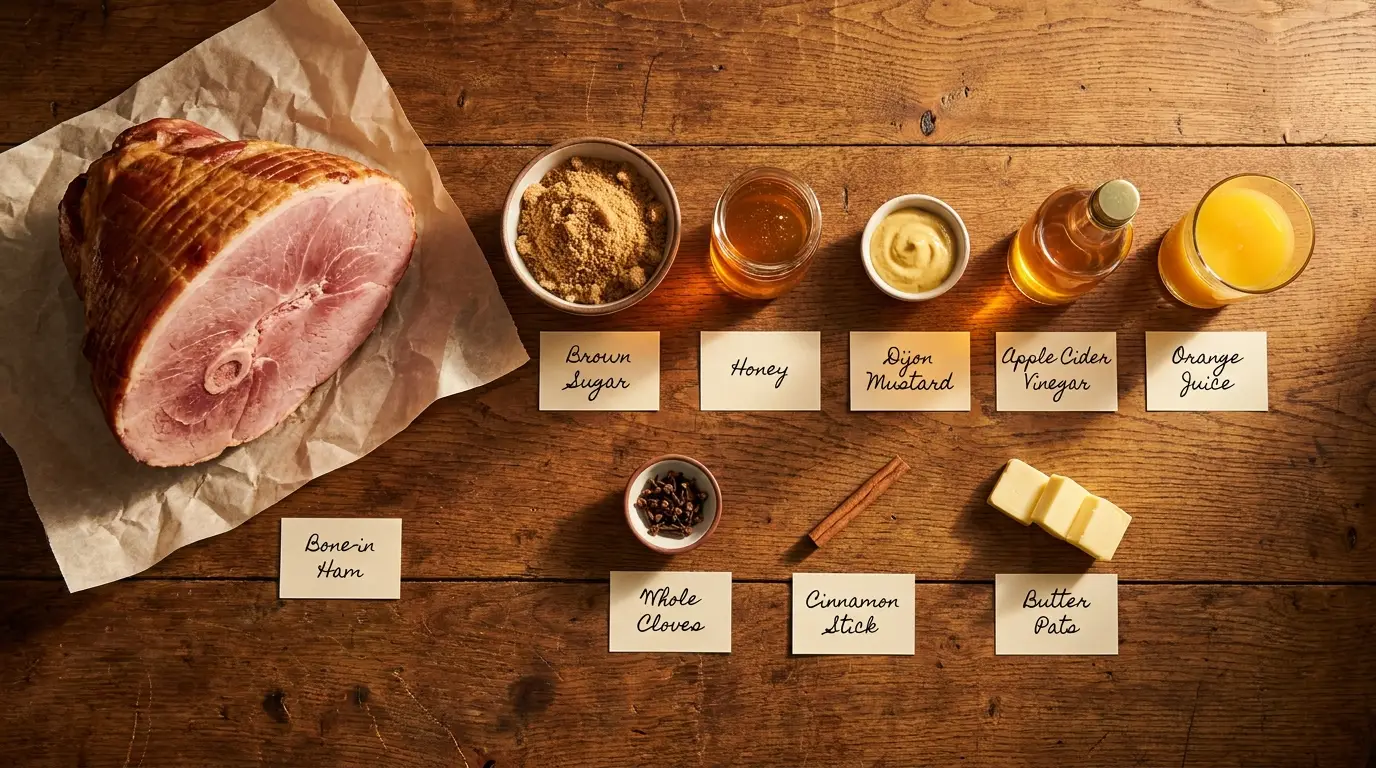
🧺 Everything you need, all in one look🧂 Ingredient notes & easy swaps
Buy a fully cooked bone-in half ham — the bone means flavor and the leftover soup of legend. "Shank" halves are easier to carve; "butt" halves are meatier. Spiral-cut saves carving but dries faster, so the foil stage matters double. The vinegar in the glaze is the quiet hero — pure sugar glazes turn candy-sweet, and that spoonful of acid keeps it grown-up. Plan about 15 minutes per pound of gentle warming.
🍳 What you actually need (equipment)
A roasting pan with a rack (or a foil-lined pan with thick onion slices as a rack), heavy foil, a small saucepan for the glaze, a brush, and a thermometer.
Heat the oven to 300°F (150°C). Score the ham's surface in a diamond pattern, about ¼ inch (6 mm) deep — the cuts catch glaze and bloom open into the famous crust. Stud with cloves at the intersections if you're feeling traditional.
Set the ham flat-side down on the rack, pour the water into the pan, and tent the whole thing tightly with foil. Warm 15 minutes per pound — about 2 hours for an 8-pounder. The foil and water keep the already-cooked meat juicy while it heats.
Meanwhile, simmer the brown sugar, honey, Dijon, orange juice, vinegar, cinnamon, and butter for 3–4 minutes until glossy and slightly thickened. It should coat a spoon like warm maple syrup.
When the ham reaches about 120°F (49°C) inside, remove the foil, raise the oven to 400°F (200°C), and brush on glaze coat number one — thin, everywhere, into the scores.
Bake 15 minutes, coat two. Fifteen more, coat three — by now the diamonds are darkening to mahogany and the kitchen smells like the holiday started early.
Pull at 140°F (60°C) internal, tent loosely, and rest 15 minutes before carving. Serve the remaining warm glaze in a pitcher — someone will ask, and today you're ready.
✅ How to know it's done
The crust should be deep mahogany with caramelized diamond ridges, the internal temperature 140°F (60°C), and slices that glisten — juicy from the low-and-slow warmup, lacquered at the edges from the three coats. If the crust darkens too fast in the 400°F stage, a loose foil shield on the dark spots buys the rest time to catch up.
💡 Practical tips (and what not to do)
Low first, hot last. Ham is already cooked — 300°F warms it juicy; the 400°F finale exists only for the glaze. Reversing this is where dry ham comes from.
Score before you glaze. The diamond cuts multiply the crust and drink the glaze into the meat — the same layered-lacquer patience as our honey-glazed meatloaf, scaled to a centerpiece.
Three thin coats. One thick pour slides off; layers bake into lacquer. Paint, don't dump.
Foil plus water underneath. Steam from below is the juiciness insurance most ham instructions forget to mention.
Save the bone. Simmered with beans or split peas next week, it's the second holiday nobody expects.
💸 Budget: half hams go on deep sale around every holiday — buy two, freeze one; this glaze works from frozen-thawed identically. 🥦 Lighter: halve the glaze and serve it on the side — the low-and-slow warmup does the juicy part solo. 🧒 Kids: ham is already the kids' favorite centerpiece — cut their slices small and watch the pineapple garnish disappear too. ✨ Extra flavor: swap orange juice for pineapple juice, or add a splash of bourbon to the glaze's simmer.
💛✨ Flavor boost
The spoonful of cider vinegar in the glaze. Brown sugar and honey alone bake into a one-note candy shell — the acid cuts through, keeps the sweetness from cloying, and helps the glaze caramelize deeper instead of just crystallizing. It's the same balance trick behind every great barbecue sauce, and it works in any sweet glaze you'll ever paint on meat.
🥔 What Goes Well With It
Scalloped or mashed potatoes — the ham's constitutional running mate.
Something green and sharp: roasted green beans or a bright salad against the sweet crust.
Soft dinner rolls for the day-one sandwiches that happen before dinner ends.
The warm glaze pitcher, because someone always asks for extra.
📦 Storage & Freezer Notes
Fridge: sliced ham keeps 5 days — sandwiches, omelets, and fried rice all week long.
Freezer: slices and chunks freeze 2 months; the BONE freezes too, destined for soup.
Reheat slices gently with a splash of water, covered — or eat cold, which is half the point of leftover ham.
❓ Quick answers
How long do I heat a fully cooked ham?
About 15 minutes per pound at 300°F (150°C), covered, to an internal 140°F (60°C). The label says cooked; your job is gentle warming, not cooking.
Spiral-cut or whole?
Spiral saves carving but dries easier — keep it foil-tented until glazing. A whole half ham stays juicier and carves in 5 minutes with a long knife.
Can I make the glaze ahead?
A week ahead, refrigerated — rewarm to syrup consistency before painting. One less holiday-morning job.
What do I do with the ham bone?
Freeze it, then simmer it with split peas or white beans and an onion for the soup that tastes like a second holiday.
🥗 Nutrition, roughly: about 420 calories per serving. Estimates only — holiday plates are measured in gratitude, not grams.