Baked Ziti with a Hidden Layer of Melty Mozzarella
“Every square is the middle piece.”
By Sok Heng Oeun, Founder and Reviewer · Published July 8, 2026 · Updated September 22, 2026
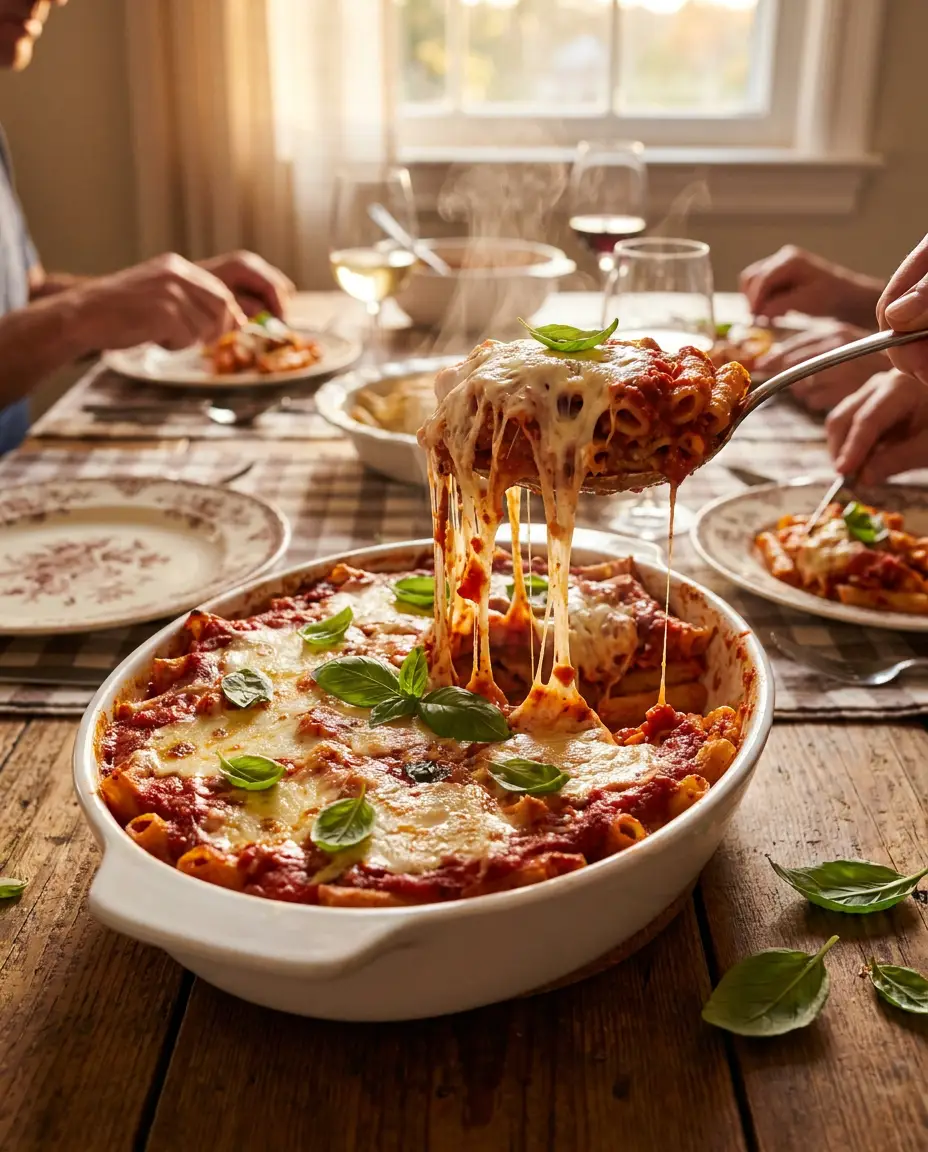
A full layer of mozzarella in the center gives every serving a stretchy, molten middle, including the corner pieces. The result is evenly cheesy baked ziti rather than a pan with all the best cheese concentrated on top.
The other two choices that matter: the pasta goes into the pan two minutes underdone so it finishes in the sauce instead of turning soft, and the ricotta is seasoned on its own before it goes in, because it makes up a third of every bite and nothing else in the pan can fix it later.
🍝 The promise: saucy, cheese-veined baked ziti with a molten middle in every square — a little over an hour including the rest, feeds six with leftovers.
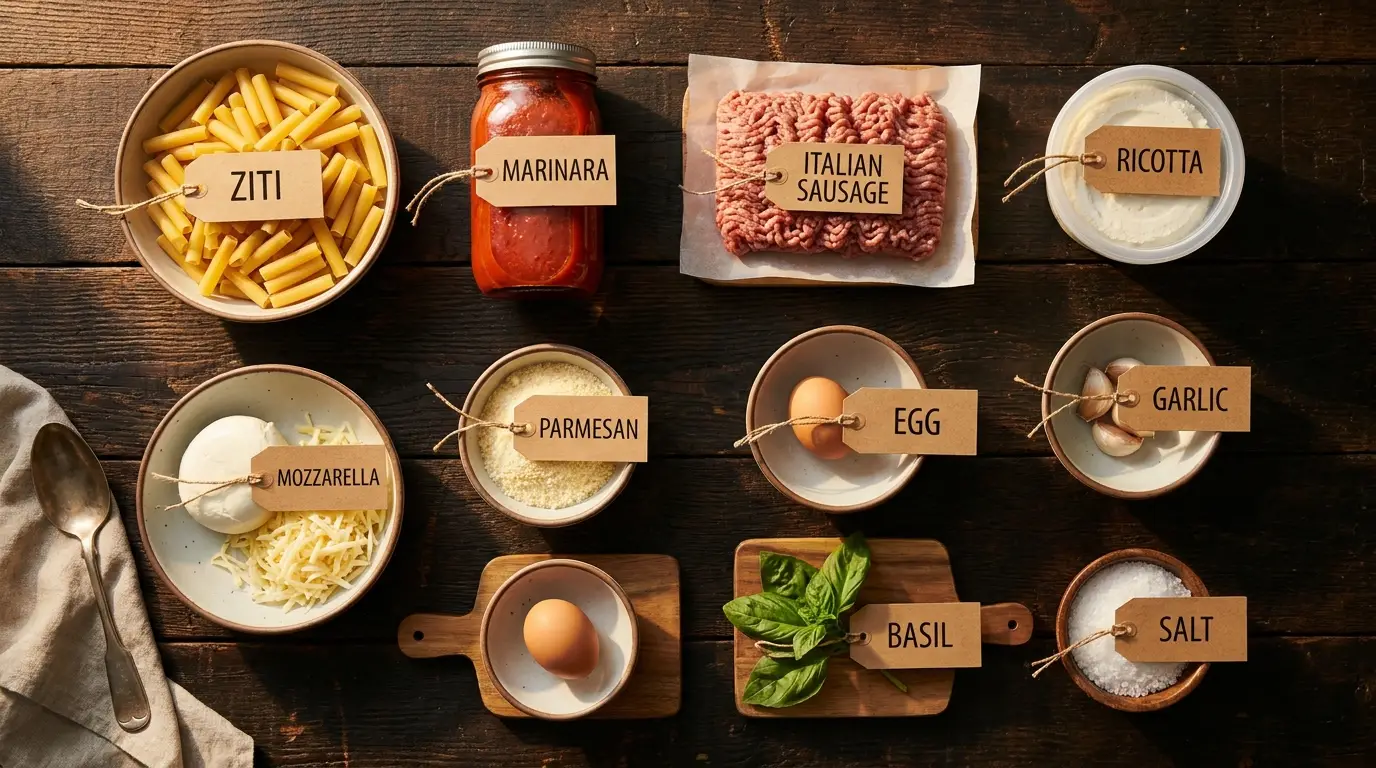
🧺 Everything you need, all in one look🧂 Ingredient notes & easy swaps
A good jar of marinara plus properly browned sausage beats a rushed from-scratch sauce every single time — no shame, only strategy. The ricotta must be whole-milk; the skim kind bakes up grainy and weepy. Sweet or hot Italian sausage both work, and ground beef steps in fine with an extra pinch of herbs. And undercook the pasta by a full 2 minutes — it finishes cooking in the oven, which is the difference between tender and mush.
🍳 What you actually need (equipment)
A 9×13 inch (23×33 cm) baking dish, one big pot for pasta, and a deep skillet for the sauce. Foil pans on standby if you're a make-a-freezer-twin household.
Boil the ziti in well-salted water for 2 minutes LESS than the package says — it should still have a firm center. Scoop out ½ cup of the pasta water, then drain.
Brown the sausage with the onion in the olive oil over medium-high, breaking it up, until dark sticky bits collect on the pan — that's the flavor bank. Stir in the garlic and pepper flakes and cook 1 minute more, just until the garlic smells toasty rather than raw.
Pour in the marinara and the reserved pasta water, scraping the browned bits loose, and simmer 5 minutes until glossy and rich-smelling — starchy water is what turns jar sauce silky.
Stir the ricotta with the egg, parmesan, herbs, and salt — then taste it. It should taste good on the spoon RIGHT NOW; bland ricotta is how baked ziti loses its reputation.
Toss the pasta with two-thirds of the sauce. Layer half into the dish, dollop the ricotta all over, and blanket with 1½ cups of mozzarella — that's the extra middle. Top with the remaining pasta, remaining sauce, and the rest of the mozzarella plus a parmesan snowfall.
Bake uncovered at 375°F (190°C) for 25–30 minutes until the sauce bubbles hard at the corners and the top is bronzed in patches. Rest 10 minutes on the counter; the ricotta and mozzarella firm up just enough that a spatula lifts clean squares instead of a loose scoop.
✅ How to know the ziti is done
The edges should be bubbling hard, the top spotted deep gold, and and the center should read 165°F (74°C) on a thermometer. After the 10-minute rest, a square holds its shape on the spatula and the middle pulls into cheese strings — that's the whole point of the pan.
💡 Practical tips (and what not to do)
Undercook the pasta by 2 minutes. The oven finishes the job — pasta boiled to "done" arrives at the table as mush.
Season the ricotta until it tastes good alone. It's a third of the pan; bland on the spoon means bland at dinner.
The middle layer is not optional. Cheese only on top means dry pasta three bites down. Build the molten layer in.
Rest 10 minutes before slicing. Straight from the oven it's lava soup; ten minutes later, tidy squares.
Make a freezer twin. Assemble a second pan in foil, unbaked — it bakes from frozen, covered, plus about 30 minutes, on some future Tuesday that needs rescuing.
💸 Budget: half the sausage, extra onion — the browned bits still do the heavy lifting. 🥦 Lighter: swap a third of the mozzarella for a layer of wilted spinach. 🧒 Kids: mild sausage, and a zucchini grated invisibly into the sauce. ✨ Extra flavor: a spoonful of pesto swirled into the ricotta.
💛✨ Flavor boost
That splash of starchy pasta water into the jar sauce. The starch binds sauce to pasta and gives it a silky, simmered-all-day body — the same move restaurants pull on every pasta that leaves the kitchen. One ladle, zero cost, instantly less "from a jar."
🥖 What Goes Well With It
Garlic bread with a crunchy crust, for dragging through the sauce that pools at the edge of the pan.
A big lemony green salad; the sharpness cuts straight through the cheese.
Roasted broccoli that catches a little stray sauce on the side.
Fridge: covered, 4 days — the pasta keeps absorbing sauce overnight, so day-two squares are firmer and easier to cut.
Freezer: baked squares wrap individually for 3 months; an unbaked foil twin keeps 2 months and bakes straight from frozen.
Reheat covered with foil at 350°F (175°C) — about 20 minutes for a half pan, 10–12 for a single square — with a spoonful of water or sauce underneath so the pasta rehydrates. Microwaving uncovered dries the exposed pasta and makes the mozzarella tighten; if you must, cover the square and use 50% power.
❓ Quick answers
Can I use cottage cheese instead of ricotta?
Yes — blend it smooth and drain any liquid first. It's the classic budget swap and honestly close in flavor.
Skim ricotta, a thin sauce, or no rest — usually all three travel together. Whole-milk ricotta, the 5-minute simmer, and the 10-minute rest fix it for good.
Ziti vs penne — does it matter?
Same family. Ridged penne actually grips sauce a little better; use whichever box the pantry offers.
🥗 Nutrition, roughly: about 520 calories per square. Estimates only; brands, cuts and portion sizes change the numbers.
Published by MommyCooking.org. This AI-assisted recipe passed automated checks for page consistency and required image files. The publisher confirms this recipe was tested before publication. The food images are AI-generated illustrations, not photographs of a cooking session. Cooking temperatures should be checked with a food thermometer; nutrition figures are estimates. How we make recipes · Report a problem with this recipe