“Ten minutes in the basket. Dinner in about twenty.”
By Sok Heng Oeun, Founder and Reviewer · Published July 8, 2026 · Updated September 22, 2026
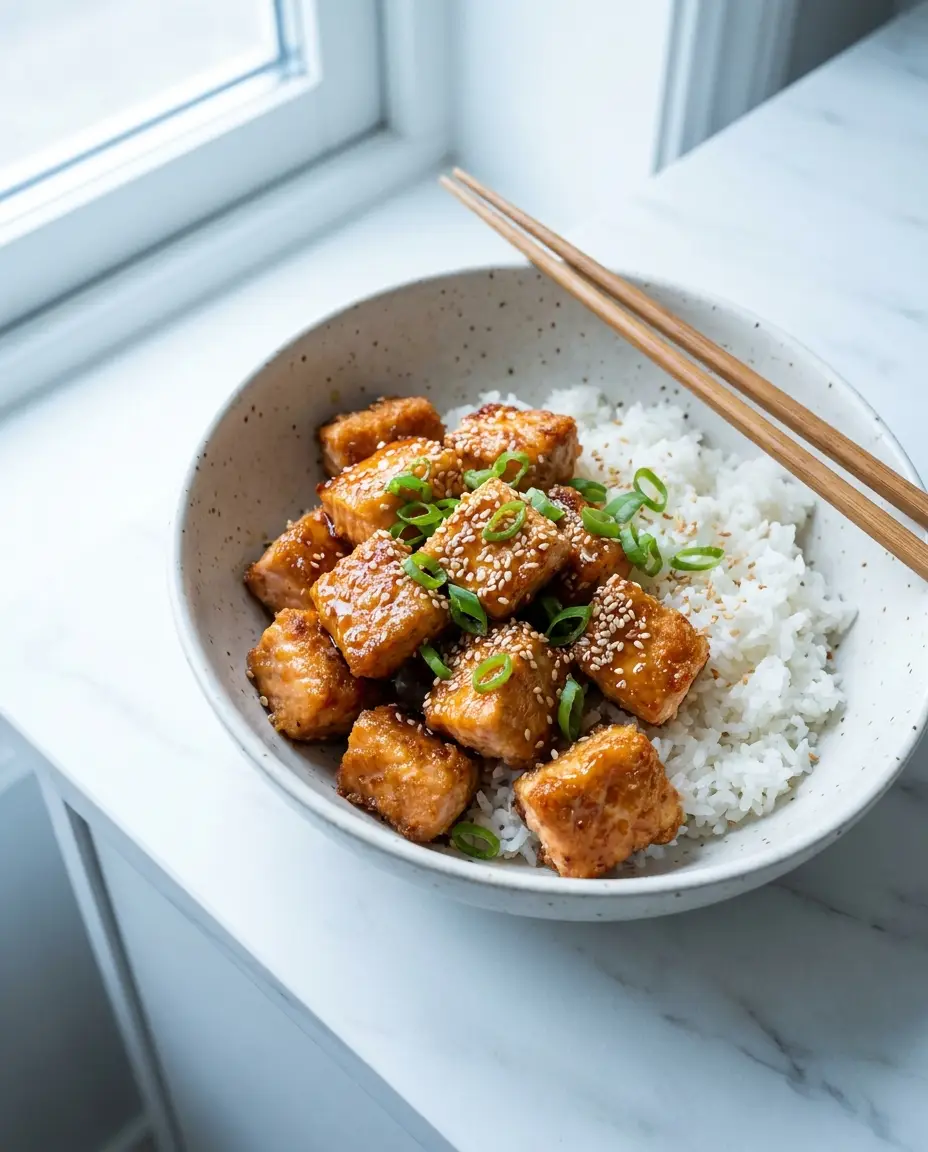
Salmon does not need to be reserved for special occasions. Cut into bites, it cooks in about ten minutes in the air fryer (plus a short preheat), with crisp edges, tender centers, and a honey-garlic glaze that works especially well over rice.
Cutting salmon into even, bite-size pieces creates more browned edges and helps every piece cook at the same rate. The honey-garlic glaze is tossed on after air-frying, so the honey stays glossy instead of scorching in the basket.
🐟 The promise: crispy-edged, glossy honey-garlic salmon bites — ten minutes in the air fryer, over rice before anyone asks what's for dinner.
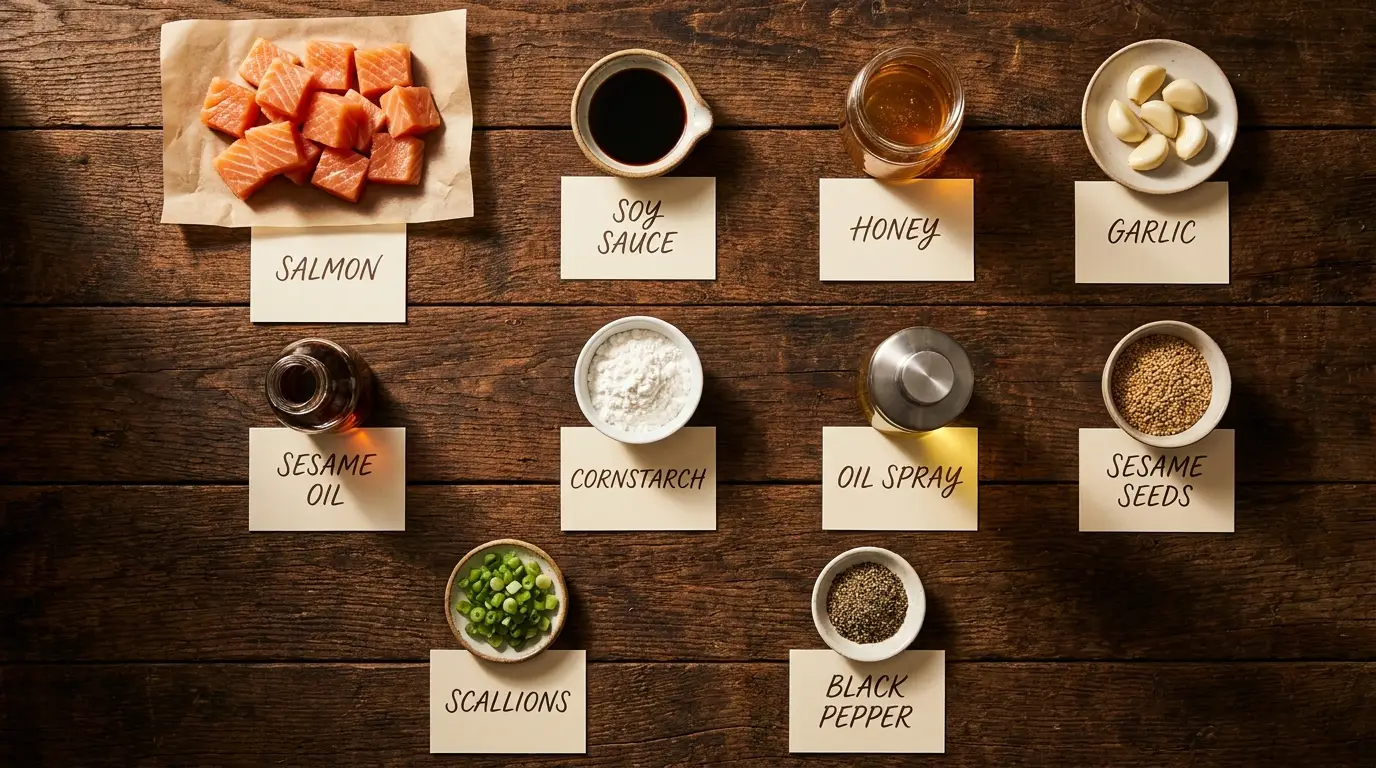
🧺 Everything you need, all in one look🧂 Ingredient notes & easy swaps
Fresh or thawed-from-frozen salmon both work — just pat the cubes very dry. The light cornstarch dusting is what gives the edges a crisp shell in such a short cook — without it the surface just dries. Low-sodium soy keeps the glaze from turning salty as it reduces; maple syrup can stand in for honey, spoon for spoon.
🍳 What you actually need (equipment)
An air fryer, one small saucepan for the glaze, a bowl for tossing, and tongs. Start a pot of rice before the salmon goes in so both land on the table at the same time.
Pat the salmon cubes completely dry, then toss with the sesame oil, pepper, and cornstarch until lightly dusted all over — a dry surface and a thin starch coat are what crisp in the hot air.
Preheat the air fryer at 400°F (200°C) for 3 minutes. Arrange the bites in a single layer with space between them and spray the tops lightly.
Air fry 5 minutes. Meanwhile, simmer the soy sauce, honey, and garlic in a small saucepan 1–2 minutes, until it coats the back of a spoon.
Shake the basket or flip the bites gently, then cook 3–4 minutes more, until the edges are deep golden and the centers flake when pressed.
Take the glaze off the heat and tumble the hot bites through it — it thickens and turns glossy on contact with the warm salmon.
Pile over rice and scatter with the sesame seeds and scallions. Eat right away: the glaze is at its glossiest in the first few minutes, and the crisp edges soften as the bites sit.
✅ How to know it's done
The edges turn deep golden and lacquered, the centers flake apart with gentle pressure, and the inside is just opaque — cooked to 145°F (63°C) on a thermometer pushed into the thickest piece. Chalky, pale and dry means a minute too long — one-inch cubes go from done to overdone fast, so check at the 3-minute mark of the second cook.
💡 Practical tips (and what not to do)
Dry salmon is crispy salmon. Pat the cubes with paper towels until nothing sticks — surface water turns to steam and washes the cornstarch off.
Space in the basket matters more than time. Crowded bites steam; two quick batches beat one soggy one.
Glaze after cooking, not before. Honey scorches at 400°F long before the centers reach 145°F; tossing the hot bites through the reduced glaze off the heat gives the same lacquered look without burnt sugar.
Cut even cubes. One-inch pieces finish together — mixed sizes mean some dry, some raw.
Thawed frozen salmon needs an extra pat-dry. It releases more water than fresh, and any moisture left on the cubes will keep the edges from browning.
💸 Budget: frozen salmon portions, thawed and patted dry, glaze exactly the same. 🥦 Lighter: skip the cornstarch and use just soy, garlic, and a teaspoon of honey — the bites will be tender rather than crisp. 🧒 Kids: call them salmon nuggets, serve the glaze as a dip. ✨ Extra flavor: a teaspoon of grated ginger in the glaze and a pinch of chili flakes on top.
💛✨ Flavor boost
Reduce the glaze until it coats the back of a spoon, then toss the salmon through it while both are hot: the residual heat thickens the honey onto the cornstarch shell in a few seconds, which is why the bites come out lacquered instead of wet. A teaspoon of rice vinegar stirred into the glaze off the heat sharpens the sweetness.
🍚 What Goes Well With It
Steamed jasmine rice to catch the extra glaze.
Quick cucumber salad with rice vinegar for the cool crunch.
Buttered edamame or steamed broccoli for the green quota.
A wedge of lime and a few slices of avocado on the rice bowl; the fat and acid balance the sweet glaze.
📦 Storage & Freezer Notes
Fridge: airtight, up to 2 days.
Reheat: air fryer at 350°F (175°C) for 3 minutes, which re-crisps the edges without cooking the centers further. Avoid the microwave — the glaze turns the pieces steamy and the fish overcooks and toughens.
Freezing cooked glazed salmon isn't worth it — the flesh turns mealy on thawing. Freeze raw salmon instead and cook a fresh batch.
🧒 Serving Ideas for Kids
Keep a few bites out of the glaze and serve them plain with the honey-garlic sauce in a small cup for dipping; the glossy coating puts some children off, the dip does not.
Serve over rice with the sesame seeds and scallions in separate bowls so each child adds what they want.
Cold leftover bites flaked over buttered noodles or into a rice ball pack well for a school lunch the next day.
❓ Quick answers
Can I use frozen salmon?
Yes — thaw it fully in the fridge overnight, then pat the cubes very dry; thawed salmon carries more surface water than fresh, and that water is what stops the edges from crisping.
How do I know salmon is cooked?
Cook to 145°F (63°C) measured with a thermometer in the thickest piece. At that point the flesh is opaque all the way through and flakes under gentle pressure.
Can I bake these in the oven?
Yes — 425°F (220°C) on a lined sheet pan, 8–10 minutes, then a quick broil for the edges.
My glaze turned too thick — help?
Honey glaze keeps thickening as it cools. Whisk in warm water a teaspoon at a time over low heat until it pours again, then toss the salmon through it right away.
🥗 Nutrition, roughly: about 380 calories and ~34 g protein per serving before rice. Estimates only; brands, cuts and portion sizes change the numbers.
Published by MommyCooking.org. This AI-assisted recipe passed automated checks for page consistency and required image files. The publisher confirms this recipe was tested before publication. The food images are AI-generated illustrations, not photographs of a cooking session. Cooking temperatures should be checked with a food thermometer; nutrition figures are estimates. How we make recipes · Report a problem with this recipe