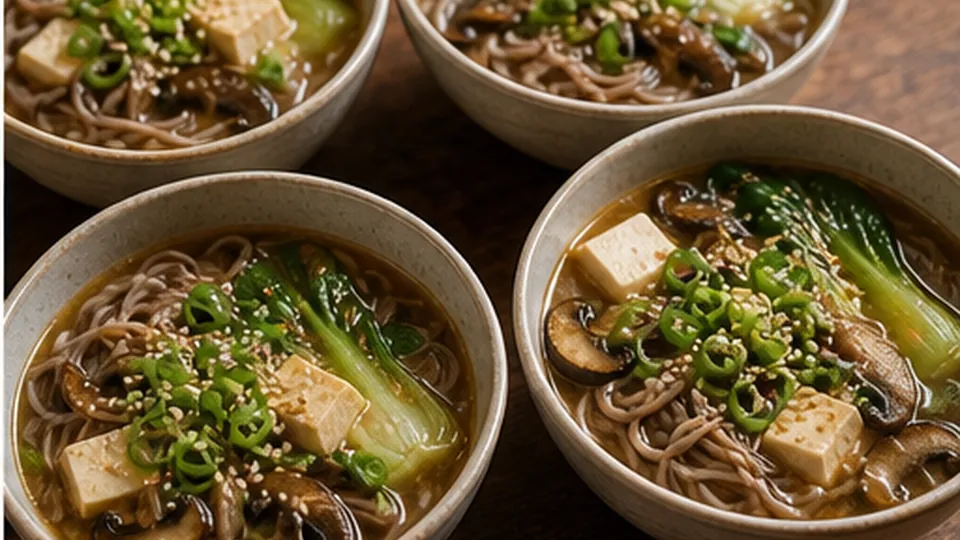
Fast Family Soup

Tofu Miso Noodle Soup
Gentle Broth, Tender Noodles

“Miso is whisked in after boiling stops, keeping its flavor rounded.”

A brothy bowl that reads restaurant-made and takes twenty minutes on the stove. Nearly all of it comes from a carton of broth plus one jar of fermented paste, which means the flavor arrives without stock-making, browning meat, or anything simmering for hours in the background.

The paste goes in last, off the heat, and this is the one rule worth protecting. Boiling it flattens the flavor into something merely salty and kills the live cultures that give it depth. Whisk it smooth in a ladleful of hot broth first, wait for the pot to stop bubbling, then stir it through.

🍜 The promise: a broth bowl with tofu, greens and soba that tastes restaurant-made, in under forty minutes from a carton of stock and a jar of paste.
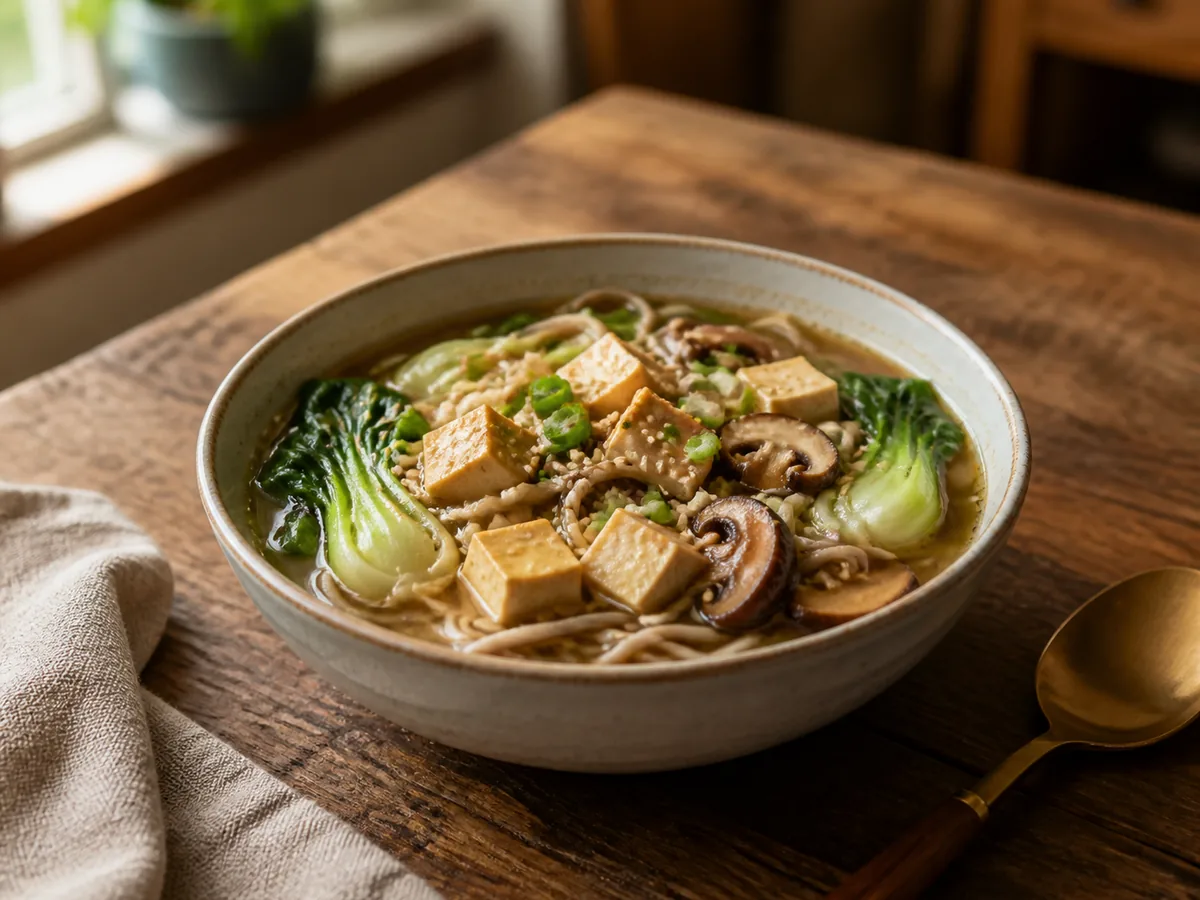
Prep 18 minCook 20 minTotal 38 minEasyServes 4
← Back to recipes
Tofu Miso Noodle Soup

How to make it

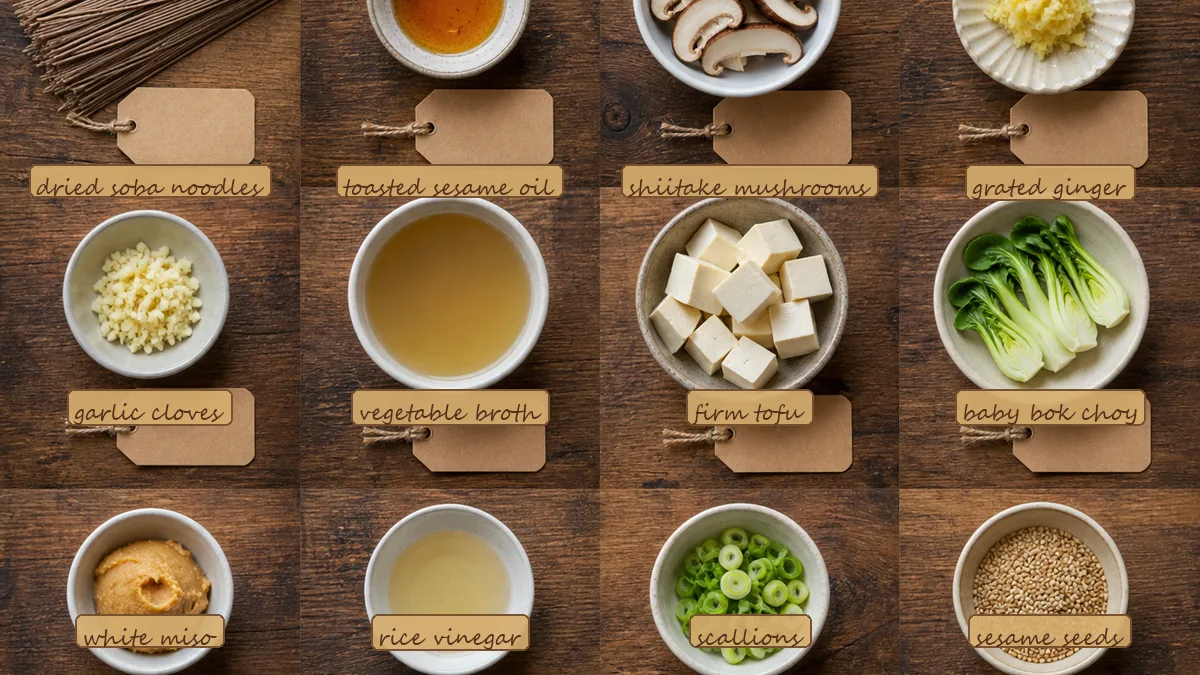
All ingredients for Tofu Miso Noodle Soup, labeled
🍜 Everything you need, all in one look
🧂 Ingredient notes & easy swaps
White paste is mild and slightly sweet; red is much saltier, so start with three tablespoons if that is what you have. Soba can be swapped for udon or ramen, though both go softer in broth. Cremini mushrooms brown as well as shiitake with less woodsy depth. Regular bok choy, halved lengthwise, works when the baby kind is not around.

During “Warm tofu and bok choy,” use this checkpoint for Tofu Miso Noodle Soup: add tofu and bok choy; simmer 4–5 minutes until bok choy stems are crisp-tender and tofu is hot through.

Use “Assemble bowls just before serving” to reach the final cue—bok choy stems are tender with a little snap, tofu is steaming, and noodles remain separate rather than bloated—and stop there.

🍳 What you actually need (equipment)
A 4-quart soup pot for the broth, a second saucepan for boiling the soba, a ladle, and a small bowl for whisking the miso smooth before it goes in.
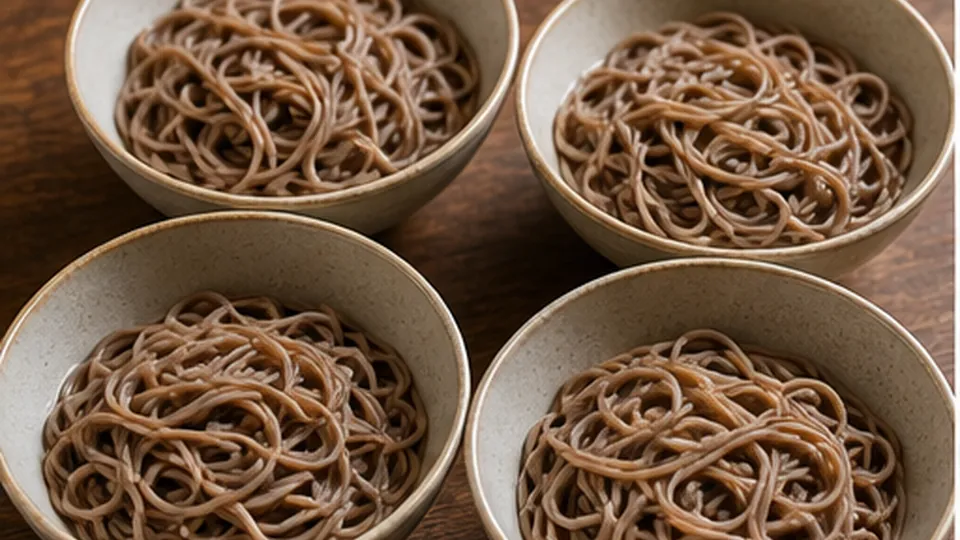
  1. Boil 8 oz (227 g) dried soba noodles to package directions until just tender, then drain and rinse briefly under cool water. Divide them among four bowls so they do not keep cooking in the pot.

    Boil and divide the soba for Tofu Miso Noodle Soup
    Boil and divide the soba
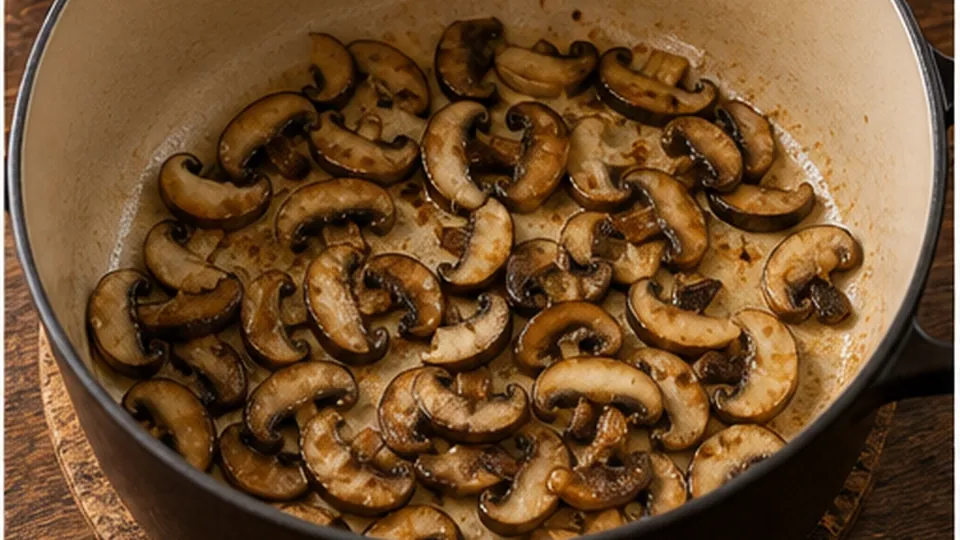
  2. Heat 1 tbsp (15 ml) toasted sesame oil in a 4-quart soup pot over medium-high and lay 8 oz (227 g) sliced shiitake mushrooms in one layer. Cook 5 minutes without stirring, until their edges brown and they smell woodsy.

    Brown the shiitake mushrooms for Tofu Miso Noodle Soup
    Brown the shiitake mushrooms
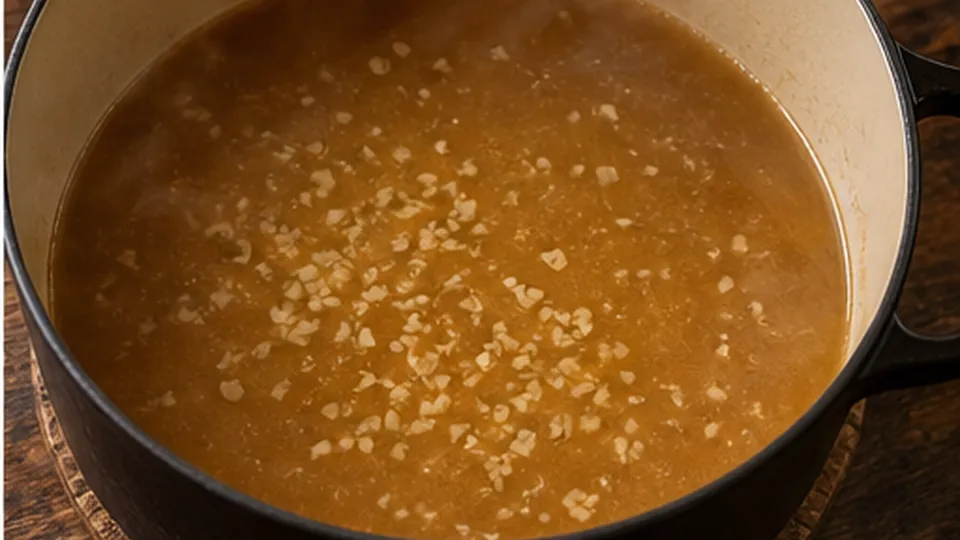
  3. Stir in 1 tbsp (8 g) grated ginger and 2 minced garlic cloves (10 g) for 20 seconds, then pour in 6 cups (1.44 L) low-sodium vegetable broth and bring the pot to a gentle simmer.

    Add aromatics and broth for Tofu Miso Noodle Soup
    Add aromatics and broth
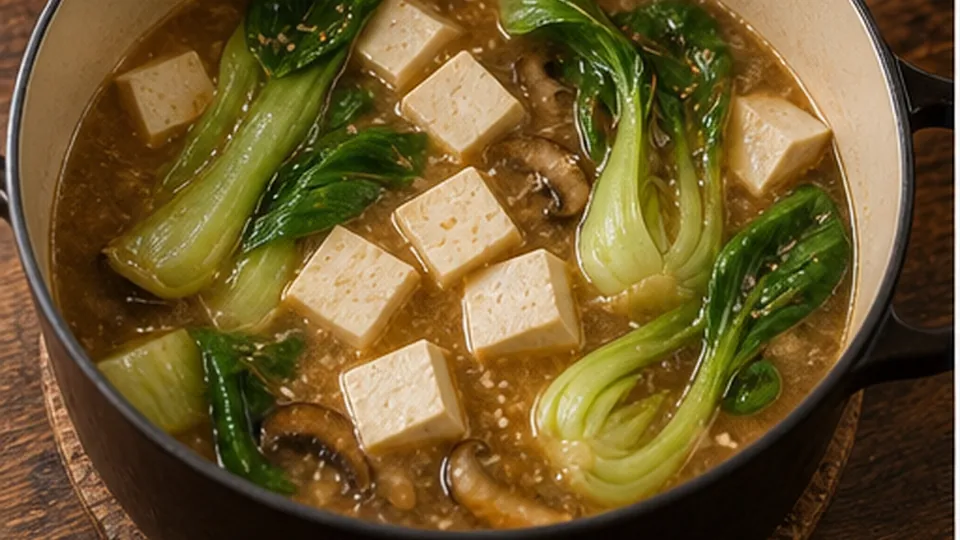
  4. Slide in 14 oz (397 g) firm tofu, drained and cubed, and 4 baby bok choy (400 g), quartered. Simmer 4 to 5 minutes, until the bok choy stems are crisp-tender and the tofu is hot through.

    Warm tofu and bok choy for Tofu Miso Noodle Soup
    Warm tofu and bok choy
  5. Ladle 1 cup of the hot broth into a bowl and whisk ¼ cup (68 g) white miso into it until smooth. Turn off the burner, wait for the bubbling to stop, then stir that mixture and 2 tsp (10 ml) rice vinegar into the pot.

    Temper and stir in miso for Tofu Miso Noodle Soup
    Temper and stir in miso
  6. Ladle the broth, vegetables, and tofu over the waiting noodles. Finish each bowl with 3 sliced scallions (45 g) and 1 tsp (3 g) sesame seeds, and serve at once before the soba swells in the broth.

    Ladle and garnish the bowls for Tofu Miso Noodle Soup
    Ladle and garnish the bowls

✅ How to know it's done

The bok choy stems keep a little snap, the tofu steams, and the noodles stay separate. At “Warm tofu and bok choy,” add tofu and bok choy; simmer 4–5 minutes until bok choy stems are crisp-tender and tofu is hot through; adjust ingredients only after comparing the batch with the cue that bok choy stems are tender with a little snap, tofu is steaming, and noodles remain separate rather than bloated.

💡 Practical tips (and what not to do)

🔁 Easy variations (budget · lighter · kids · extra flavor)
Budget: use dried shiitake soaked in hot water and add the soaking liquid to the broth, which costs less and deepens the flavor at the same time. Lighter: replace half the noodles with more greens, which keeps the bowl full at a fraction of the starch. Kids: serve noodles and broth in separate bowls, since a child who eats both happily may still refuse them combined. Extra flavor: add a spoonful of chili paste or a soft-boiled egg to each bowl at the table.

💛✨ Flavor boost

Brown the shiitake in a single uncrowded layer before any liquid touches the pot; apart from the paste itself that browning is the only savory depth this broth gets, and a crowded pan skips it entirely.

🥔 What Goes Well With It

  • Cucumber sunomono, cold and sharp against a salty broth.
  • Torn nori over the top, or a handful of rice crackers alongside.
  • A plate of blanched greens with sesame, for anyone who does not count a noodle bowl as dinner.

📦 Storage & Freezer Notes

  • Refrigerate the broth and the noodles in separate containers for up to three days, because stored together the soba dissolves into the liquid overnight.
  • Warm the broth gently over medium-low without letting it boil, then pour it over the noodles in the bowl to reheat them through.
  • Freeze the broth alone for up to two months. Noodles, greens and bean curd all come out of the freezer with wrecked texture, so make those fresh.
  • Set noodle water on first, then slice mushrooms while it heats so both pots finish together. For Tofu Miso Noodle Soup, brown shiitakes without crowding before adding liquid to create savory depth beneath the miso.
  • Place noodles at the bottom and ladle broth over them only at the table. Cool Tofu Miso Noodle Soup promptly in shallow containers, refrigerate it, and use it within 3–4 days.

🧒 Serving Ideas for Kids

  • Cut the noodles with kitchen shears in the bowl so a child can manage them with a spoon rather than wrestling long strands.
  • Separate the leaves from the stems and give a younger child the tender leaves, which need less chewing than the crisp stem base.
  • Serving a shallow bowl with more solids than broth makes it far easier for a child to eat without spilling.

❓ Quick answers

Can I use a different miso?
Yes, but adjust the amount. Red and barley pastes are considerably saltier and more assertive, so begin with about three tablespoons, taste, and add more once the pot is off the heat.
Why did my broth go cloudy and grainy?
The paste went in while the pot was still boiling, which separates it. Take the pot off the heat and let the surface settle before you whisk the tempered mixture through.
Does this survive being packed for lunch?
Partly. Carry the broth and the drained noodles in separate containers, and cook fresh greens into the broth as you reheat it, since anything that sat in liquid overnight comes out limp.
How do I stop the tofu from breaking apart?
Use firm or extra-firm, cut it into generous cubes, and slide it in rather than stirring. Once it is in the pot, move things with a gentle push from the side of a spoon.

🥗 Nutrition, roughly: about 360 calories per serving. Estimates only; brands, cuts and portion sizes change the numbers.

🍽️ You might also like

← Every recipe
Published by MommyCooking.org. This AI-assisted recipe passed automated checks for page consistency and required image files. A real-kitchen test has not been documented for this dish. The food images are AI-generated illustrations, not photographs of a cooking session. Cooking temperatures should be checked with a food thermometer; nutrition figures are estimates. How we make recipes · Report a problem with this recipe