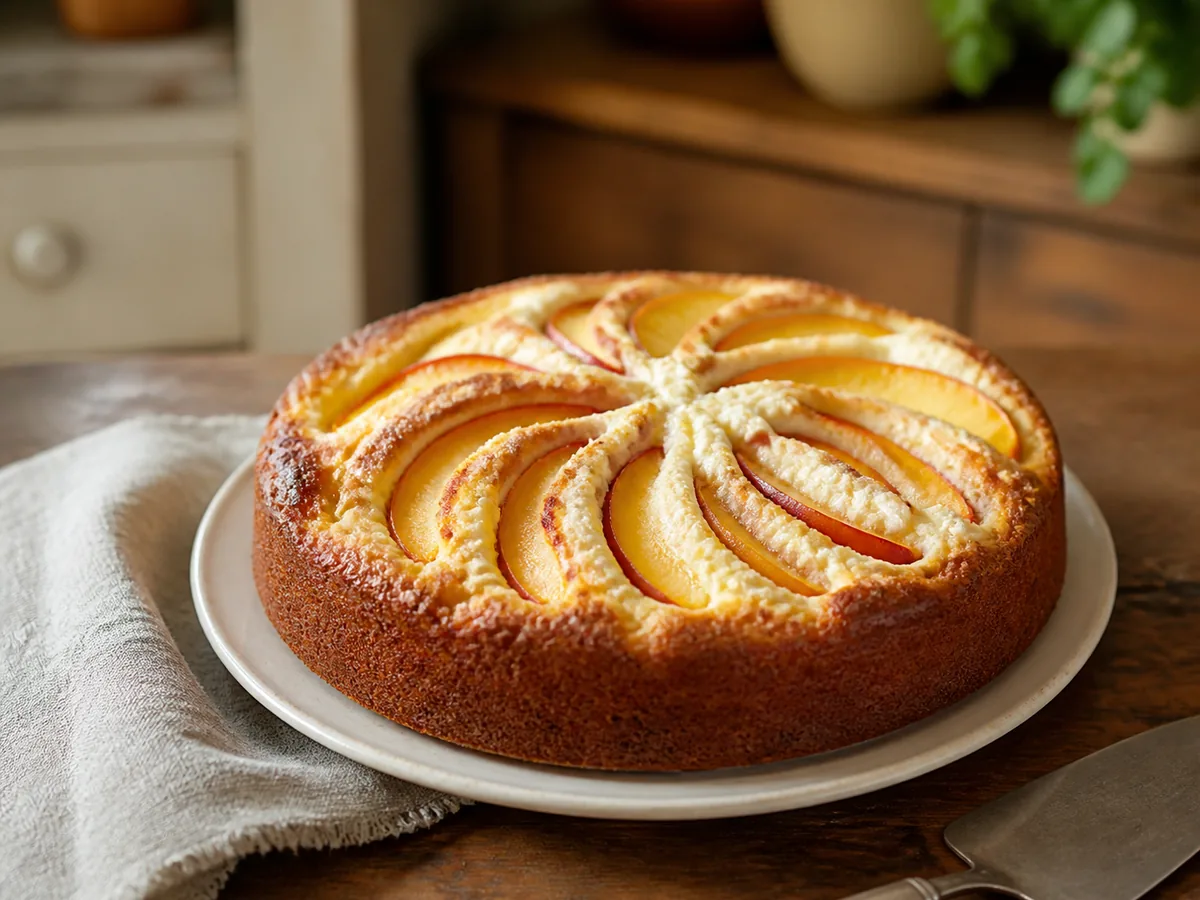
Peach Ricotta Breakfast Cake Tender slices with jammy peach pockets
“Drained ricotta keeps the crumb plush without leaving a wet stripe.”
Published by MommyCooking.org · Published September 30, 2026
A cake you can reasonably eat at eight in the morning: far less sugar than a proper one, whole-wheat pastry flour, olive oil in place of butter. It is baked and sliced inside an hour and holds for days on the counter. Skillet to table, with no pan to line and nothing to invert.
Moisture management is the entire job. Ricotta straight from the tub carries enough whey to leave a wet stripe through the crumb, so give it twenty minutes in a sieve. The peach slices want patting dry for the same reason. And fold no more than a dozen strokes, because whole-wheat flour toughens quickly when it is worked.
🍑 The promise: A skillet cake for a slow morning: eight slices, and about an hour and three-quarters from setting the ricotta to drain to the first clean cut.
🍑 Everything you need, all in one look🧂 Ingredient notes & easy swaps
Whole-wheat pastry flour is softer than standard whole wheat and behaves closer to all-purpose; regular whole wheat makes this heavy. Whole-milk ricotta earns its place, since part-skim drains drier and leaves the crumb tight. Peaches should be ripe but firm, because soft ones fall apart on the knife. A mild olive oil keeps the flavor from dominating.
Draining the ricotta is the only slow part of this, and it is the difference between a moist crumb and a wet one.
Curds of ricotta left whole rather than beaten smooth are what keep the slices soft into a second day.
🍳 What you actually need (equipment)
A 9-inch oven-safe skillet, a fine sieve set over a bowl for the ricotta, two bowls and a whisk, a towel for blotting the fruit, and an instant-read thermometer.
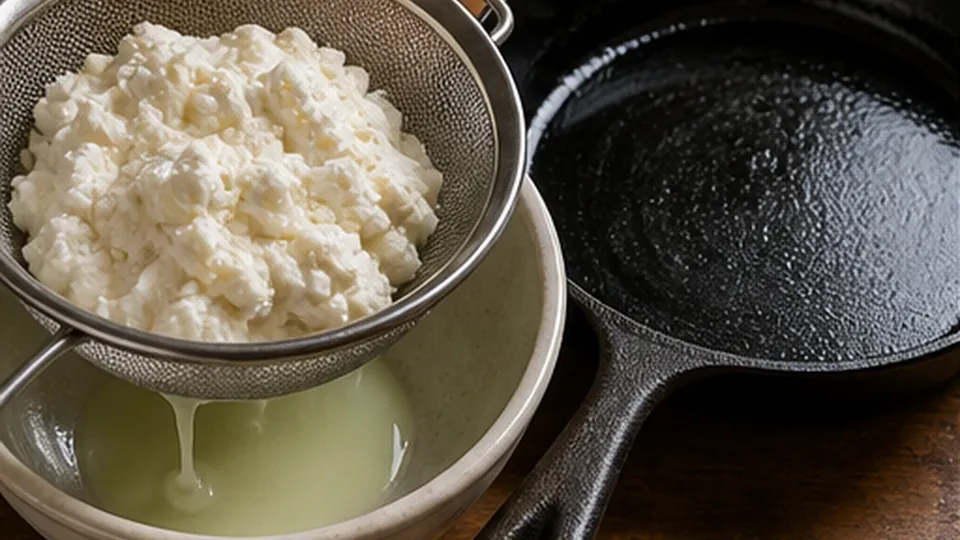
Set ¾ cup (185 g) whole-milk ricotta in a sieve to drain 20 minutes, until the whey stops dripping. Heat the oven to 350°F (175°C) and grease a 9-inch skillet, sides and all, so the cake releases cleanly.
Drain ricotta and heat oven
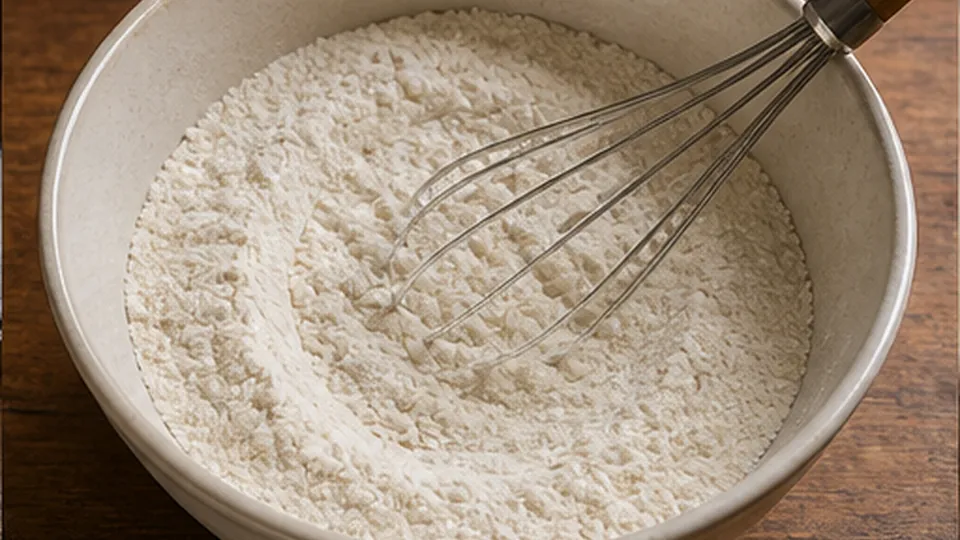
Whisk 1½ cups (180 g) whole-wheat pastry flour, 1 teaspoon (4 g) baking powder, and ¼ teaspoon (1.5 g) kosher salt together. Pastry flour is soft, so break up any packed lumps with the whisk rather than sifting.
Whisk the dry ingredients
Whisk 2 large eggs (100 g) with the drained ricotta, ½ cup (100 g) sugar, ¼ cup (60 ml) olive oil, and 1 tablespoon (6 g) lemon zest until mostly smooth. A few curds of ricotta left whole are what keep the crumb moist.
Beat the ricotta batter
Fold the dry ingredients into the wet just until no flour pockets remain, using no more than a dozen strokes. Spread the thick batter into the skillet and level the surface with the back of the spatula.
Fold and spread the batter
Pat 2 peaches (300 g), thinly sliced, dry on a towel and lay them over the batter in loose rings without overlapping heavily. Wet fruit sinks and leaves a soggy seam under the surface.
Arrange the peach slices
Bake 36 to 42 minutes, until the center springs back and reaches 200°F (93°C) and a tester shows moist crumbs. Cool 25 minutes before slicing, or the crumb tears and the peach juices run.
Bake and cool before slicing
✅ How to know it's done
The center springs back, the peach juices have gone syrupy rather than watery, and slices lift cleanly from the skillet. If the surface browns before the center reaches 200°F (93°C), tent it loosely with foil and carry on in five-minute checks.
💡 Practical tips (and what not to do)
Keep the drained whey. It lasts a few days in the refrigerator and does good work in smoothies or in place of water when baking bread.
Do not peel the peaches. The skin holds each slice together through baking and softens completely, so peeling is extra work for a worse result.
Count your folds. A dozen strokes sounds arbitrary, but this flour develops gluten fast and the gap between twelve and thirty is a noticeably tougher slice.
Lay the fruit loosely. Heavily overlapped slices trap steam underneath, which is what creates the soggy seam people tend to blame on the peaches.
Zest over the bowl. Lemon oils spray as you grate, and catching them in the batter is where most of the citrus flavor actually comes from.
Budget: Frozen peach slices work well thawed and patted very dry, at a fraction of the cost of fresh out of season. Lighter: Cut the sugar to a third of a cup and lean on riper fruit to carry it. Kids: Dice the peaches instead of slicing them so nobody gets a whole slippery piece to negotiate. Extra flavor: Scatter two tablespoons of sliced almonds or a spoonful of raw sugar over the fruit before it goes in for a crisp top.
💛✨ Flavor boost
Massage the lemon zest into the sugar with your fingertips before whisking; the friction releases the peel oil into the whole batter.
🥔 What Goes Well With It
Thick Greek yogurt with a thread of honey, which suits how little sugar is in the cake.
Blackberries or raspberries, whose sharpness lands well against soft peach.
Strong coffee, since this is deliberately not very sweet and reads better beside something bitter.
📦 Storage & Freezer Notes
Keep it covered at room temperature for two days, or refrigerate up to five if your kitchen runs warm.
Warm a slice for about fifteen seconds in the microwave, which softens the crumb and revives the fruit.
Freeze slices wrapped individually for up to three months and thaw at room temperature for roughly an hour.
Set the ricotta over the sieve first, then heat the oven and grease the skillet while the whey runs off; that 20 minutes is otherwise dead time.
Cut in the skillet only after the full 25-minute cool, or the crumb tears and the fruit juices run out of the slice.
🧒 Serving Ideas for Kids
Cut narrow slices rather than wide wedges, which are easier to hold and less likely to crumble apart.
The fruit is the sweetest part, so a slice from the middle where it sits thickest is the easier sell.
It packs well into a lunchbox once fully cooled, though it does not survive being jostled while warm.
❓ Quick answers
Can I use all-purpose flour instead?
Yes, one for one, and the crumb comes out slightly lighter and paler for it. You may need a minute or two less in the oven, so start checking the temperature around thirty-four minutes.
Can I bake this in a cake pan instead of a skillet?
A nine-inch round pan works. Grease it and line the base with parchment, since a cake pan does not release as willingly as a seasoned skillet, and expect the same 36 to 42 minutes.
Why is there a soggy seam under the peaches?
Ricotta that drained for less than its full 20 minutes, or slices that went on damp. Give the sieve the whole 20 minutes, blot the fruit on a towel, and lay it in loose rings — heavy overlap traps steam and deepens the seam.
Can I use canned peaches?
Yes, if they are packed in juice rather than syrup and drained thoroughly on paper towels. They are softer than fresh, so lay them on gently and expect them to settle further into the batter.
🥗 Nutrition, roughly: about 315 calories per serving. Estimates only; brands, cuts and portion sizes change the numbers.
Published by MommyCooking.org. This AI-assisted recipe passed automated checks for page consistency and required image files. A real-kitchen test has not been documented for this dish. The food images are AI-generated illustrations, not photographs of a cooking session. Cooking temperatures should be checked with a food thermometer; nutrition figures are estimates. How we make recipes · Report a problem with this recipe