“Yesterday’s noodles become tonight’s golden-edged wedges.”
Published by MommyCooking.org · Published September 30, 2026
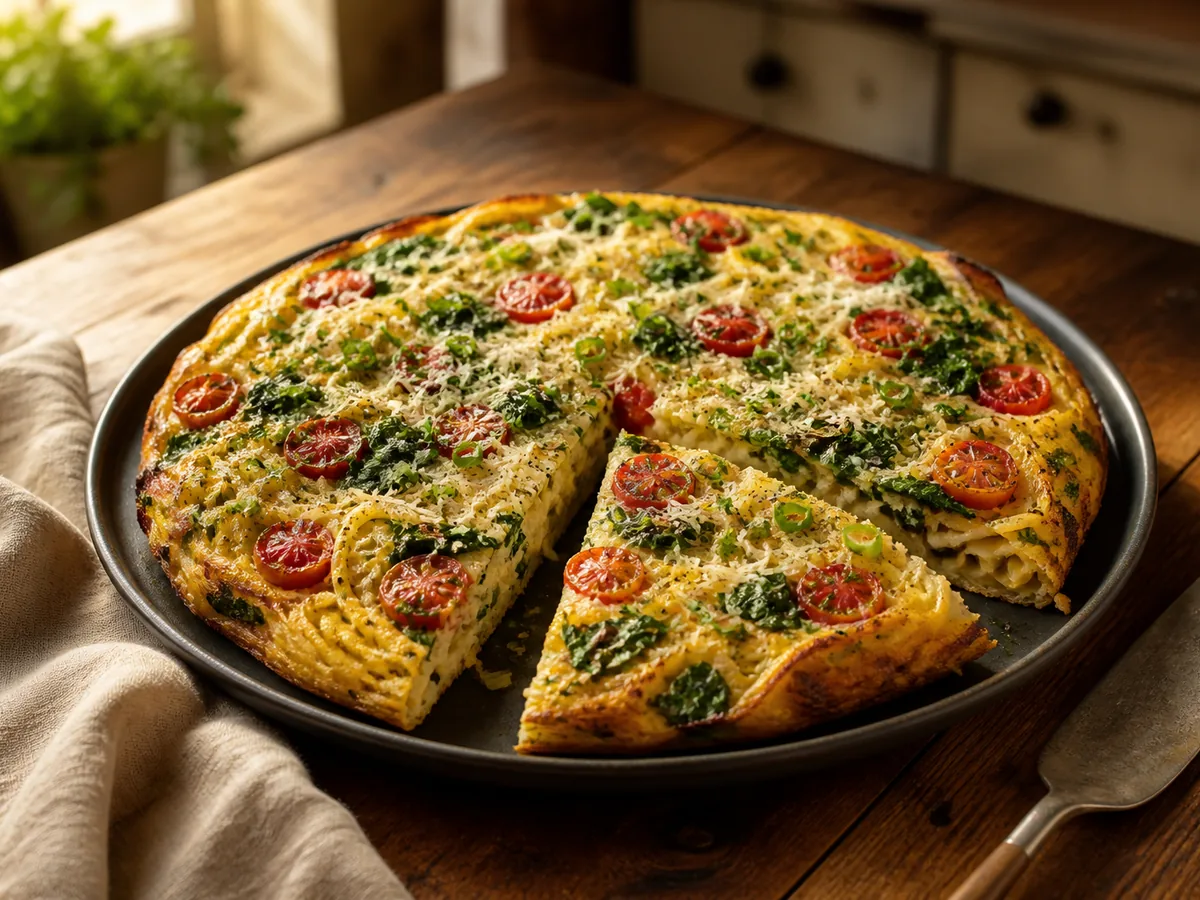
Cold pasta is the most common thing in the fridge and the least appealing to reheat. Bound with egg and given a hot pan, it stops being a sad container of leftovers and becomes something you would serve to people. Six wedges out of four cups of noodles, and the oven does most of the work.
Separating the strands is the step people skip and the reason wedges fall apart. A cold clump holds a pocket of dry pasta that custard never reaches, so the slice splits along that seam. Pull the noodles loose with your fingers first. The rest is heat control: medium-low on the stove, then 375°F (190°C) until the middle reads 160°F (71°C).
🍝 The promise: six wedges of golden-edged pasta frittata out of four cups of cold noodles, sturdy enough to eat with your hands.
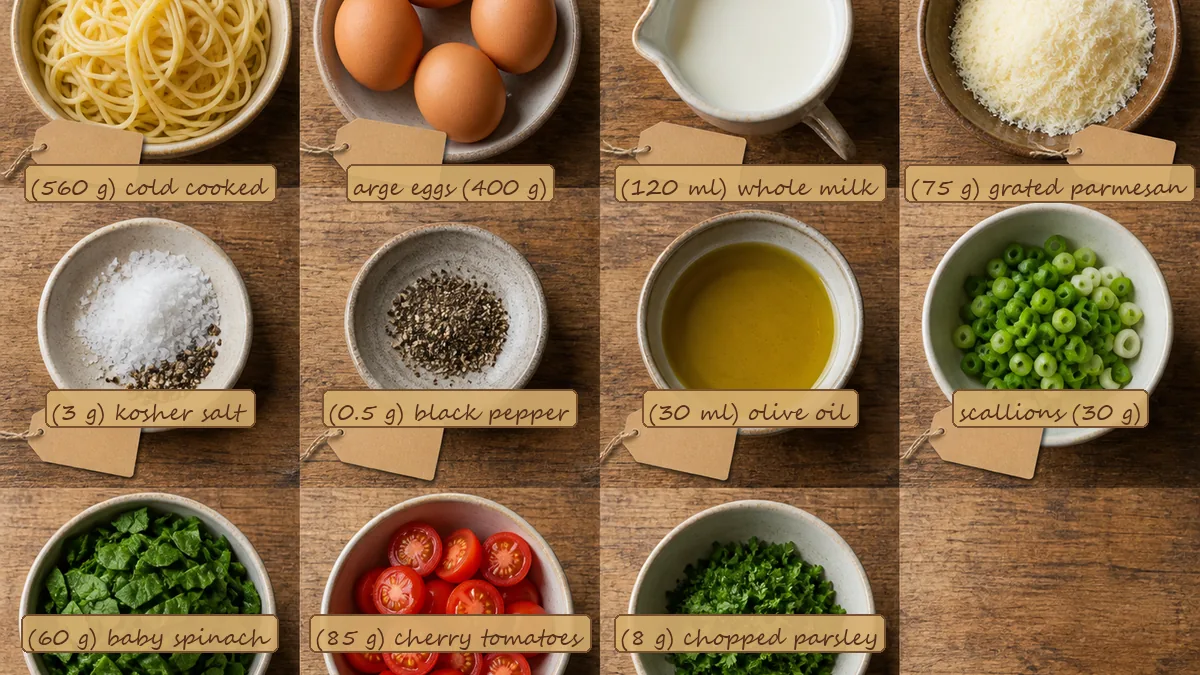
🍝 Everything you need, all in one look🧂 Ingredient notes & easy swaps
Whole milk keeps the custard tender; skim makes it rubbery, and cream makes it heavy enough to sink the noodles. Any long shape works, and linguine or bucatini behave the same, though short tubes trap egg and bake denser. Parmesan does double duty as salt and browning agent, so pecorino works but push the added salt down. Spinach must be chopped or it mats into layers.
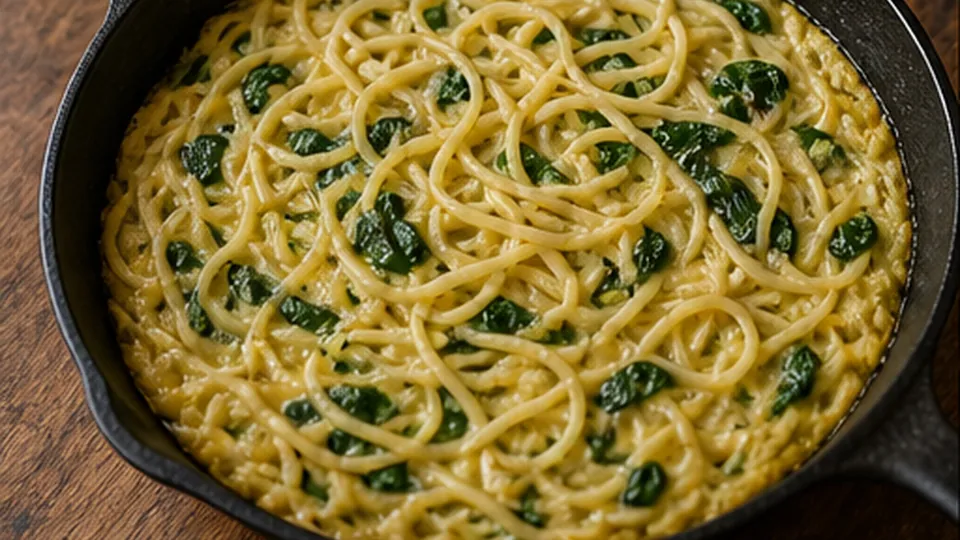
Gentle stovetop heat builds a stable bottom crust before oven heat sets the center evenly.
For Leftover Spaghetti Frittata, resting allows residual heat to finish the eggs and gives starch time to absorb surface moisture. For Leftover Spaghetti Frittata, press several spaghetti strands directly against the oiled skillet edge; those crisp curls provide the frittata’s best texture.
🍳 What you actually need (equipment)
10-inch oven-safe nonstick or well-seasoned skillet
Heat the oven to 375°F (190°C) and pull 4 cups (560 g) cold cooked spaghetti apart with clean fingers, snipping any long bundles once or twice. Separated strands let the custard reach every corner of the pan.
Separate the cold strands
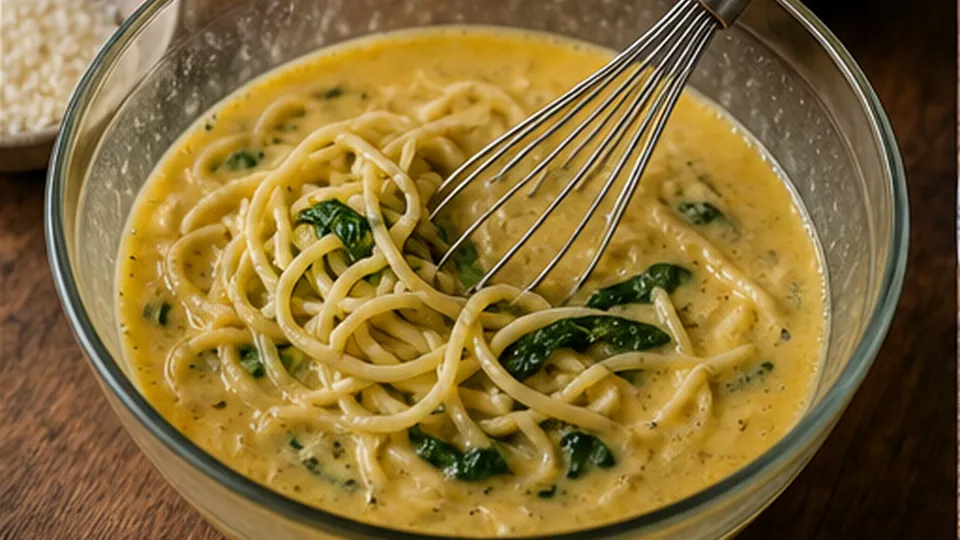
Whisk 8 large eggs (400 g) with ½ cup (120 ml) whole milk, ½ cup of the ¾ cup (75 g) grated Parmesan, ½ tsp (3 g) kosher salt, and ¼ tsp (0.5 g) black pepper until no streaks of white remain, then fold in the spaghetti.
Whisk eggs with Parmesan
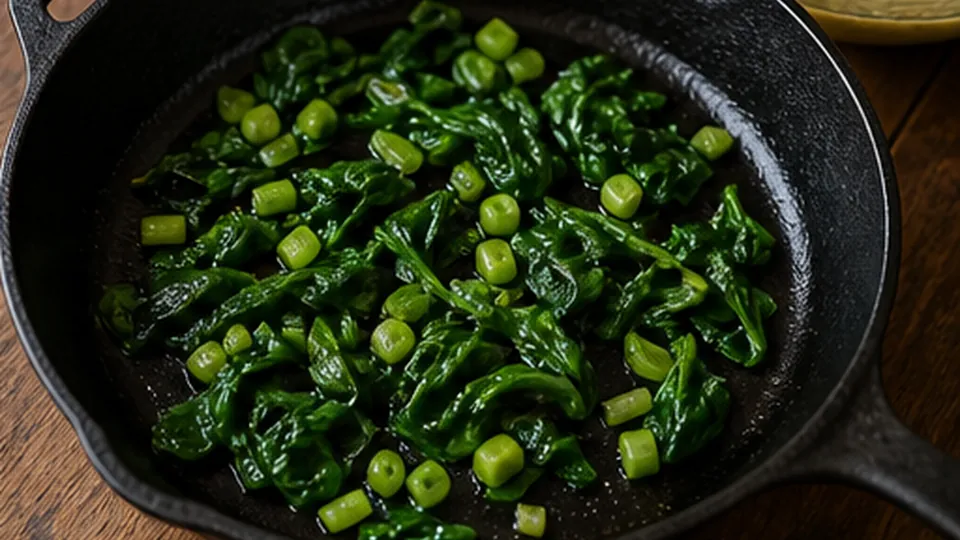
Heat 1 tbsp of the 2 tbsp (30 ml) olive oil in a 10-inch oven-safe skillet and cook 2 sliced scallions (30 g) with 2 cups (60 g) chopped baby spinach for 1 minute, until the leaves just collapse. Fold them into the egg and pasta mixture.
Wilt scallions and spinach
Add the remaining oil to the pan, pour the mixture in, and spread the noodles out level. Cook over medium-low for 5 to 6 minutes, until the edges set and the base releases when the handle is shaken.
Set the base on the stove
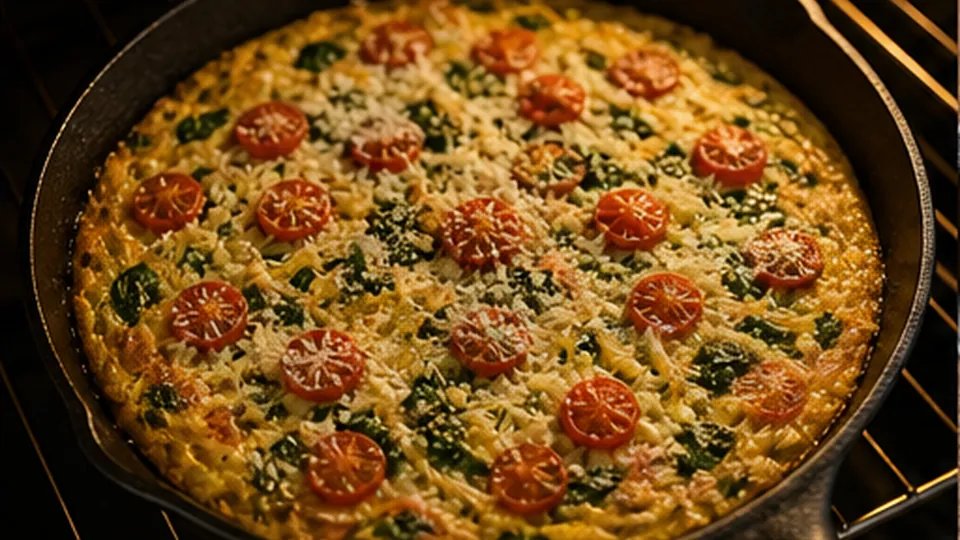
Scatter ½ cup (85 g) halved cherry tomatoes and the last of the Parmesan across the top, then bake 10 to 13 minutes. The center should reach 160°F (71°C) and jiggle only slightly when nudged.
Top and bake through
Rest the frittata 8 minutes in the skillet so the custard firms, then loosen the edge with a thin spatula. Cut it into six wedges and finish with 2 tbsp (8 g) chopped parsley.
Rest and cut wedges
✅ How to know it's done
The edges are golden and lacy, the center is set but moist, and each wedge holds its strands without leaking. If the underside sticks, let it cook another minute before forcing the spatula beneath it. For Leftover Spaghetti Frittata, continue toward “Rest before cutting wedges” without returning the ready portion to heat.
💡 Practical tips (and what not to do)
Take the chill off. Fridge-cold noodles drop the pan temperature, and the base takes longer to release than five minutes suggests.
Oil the sides too. Running oil up the walls of the skillet is what lets the rested slab slide out whole instead of tearing.
Seed wet tomatoes. Cherry halves left cut-side down release juice into the custard and leave pale, soggy patches under the cheese.
Use a thin spatula. A flexible metal blade gets under the crust cleanly, while silicone drags and pulls the browned layer off with it.
Mind carryover heat. The middle climbs a few degrees during the rest, so pull it while it still moves faintly at the center.
Budget: Drop the cherry tomatoes and use whatever vegetable is already cooked in the fridge, since roasted broccoli and leftover peppers both fold in fine. Lighter: Use six whole eggs plus four whites and cut the Parmesan to half a cup, which costs some browning but little flavor. Kids: Chop the spinach very fine and scatter the tomatoes over only one half of the pan. Extra flavor: Crisp a few tablespoons of chopped pancetta in the oil before the scallions, then pour the egg mixture over the rendered fat.
💛✨ Flavor boost
Press a few loose strands against the oiled side of the pan before the custard sets. They fry into crisp curls, which are the best part of any wedge that gets one.
🥔 What Goes Well With It
Peppery arugula salad.
A small dish of olives and pickled peppers, since the wedges themselves are mild and eggy.
Broiled radicchio with a squeeze of lemon.
📦 Storage & Freezer Notes
Refrigerate wedges airtight for up to 4 days; the custard firms further and slices cleanly cold.
Warm wedges in a 325°F (163°C) oven for about 10 minutes, until the middle is hot and the edges crisp again; a microwave turns the custard spongy.
Freeze individually wrapped wedges up to 1 month, then thaw overnight before warming.
Cool leftover spaghetti within 2 hours and refrigerate promptly; never use pasta left at room temperature overnight. For Leftover Spaghetti Frittata, press several spaghetti strands directly against the oiled skillet edge; those crisp curls provide the frittata’s best texture.
Cut with a serrated knife after resting and lift wedges with a broad spatula.
🧒 Serving Ideas for Kids
Cut a wedge lengthwise into three fingers so it can be picked up without a fork.
Pack it at room temperature in a lunchbox, where it holds better than most egg dishes.
Lift the tomato and parsley onto the plate rather than the portion if green flecks are a problem.
❓ Quick answers
Can I use pasta that was already sauced?
Tomato-coated noodles work, though the custard takes on their color and sets softer because the sauce adds moisture. Cream sauces are riskier, since the fat can break under oven heat and pool. Scrape off what you can first.
Why did mine weep liquid when I cut it?
Either the spinach went in wet or it was cut before the eight-minute rest. Squeeze wilted greens in a towel, and let the pan sit off the heat so the custard finishes firming before the knife goes in.
What if my skillet is not oven-safe?
Set the base in the pan, then slide everything into a greased pie dish or square pan before baking. Add two or three minutes because the transfer cools the mixture, and check the middle with a thermometer rather than the clock.
Can the noodles sit in the egg mixture overnight?
No. Whisk the eggs, milk, and cheese ahead and refrigerate that much, but fold the pasta in only when you are ready to cook. Left overnight in custard, the strands go soft and stop reading as strands at all.
🥗 Nutrition, roughly: about 360 calories per serving. Estimates only; brands, cuts and portion sizes change the numbers.
Published by MommyCooking.org. This AI-assisted recipe passed automated checks for page consistency and required image files. The publisher confirms this recipe was tested before publication. The food images are AI-generated illustrations, not photographs of a cooking session. Cooking temperatures should be checked with a food thermometer; nutrition figures are estimates. How we make recipes · Report a problem with this recipe