Published by MommyCooking.org · Published September 30, 2026
Blended cottage cheese and eggs can become a useful flatbread, but only after enough moisture leaves the pan. Pull it while the center still shines and you get breakfast pudding with ambitious branding.
A wide, thin layer and a full cooling minute do the structural work. The finished sheet peels cleanly, bends around soft scrambled eggs, and brings gentle tang without tasting like a tub of curds.
🥚 The promise: a flexible, golden cottage cheese flatbread with soft eggs and spinach, ready in 40 minutes and sturdy enough to pick up.
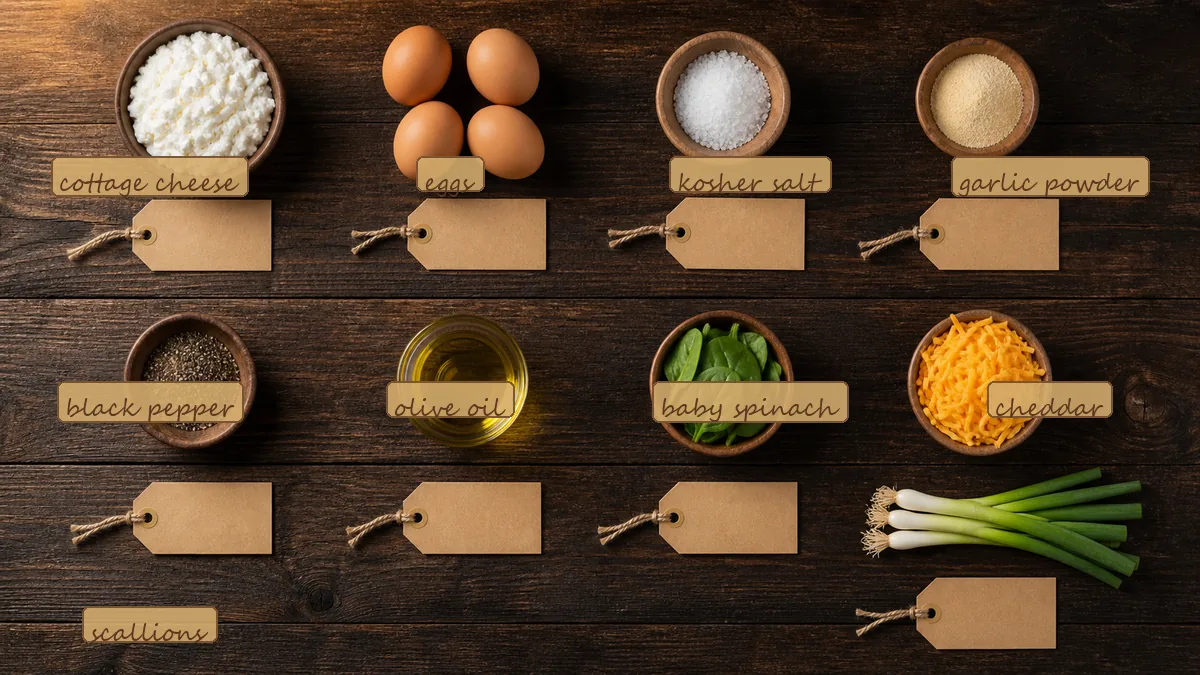
🥚 Everything you need, all in one look🧂 Ingredient notes & easy swaps
Full-fat cottage cheese browns and flexes better than fat-free. Small- or large-curd both work because the mixture is blended. Eggs vary; weigh them without shells if your flatbread has been inconsistent.
This is a dairy-and-egg sheet, not bread dough, so structure comes from even thickness and complete setting. A metal pan conducts heat more decisively than glass and encourages amber edges. If your pan is larger than 9 by 13 inches, spread a smaller rectangle of consistent depth rather than chasing every corner. Cooling releases steam and firms the proteins before peeling. Pull parchment back against itself, low and slow, instead of lifting upward; that protects thin corners from tearing.
The sheet is most flexible while barely warm. Fill it then for breakfast, or cool it flat before storage. Rolling a hot sheet traps steam; folding a refrigerator-cold sheet without reheating invites cracks. Thirty seconds in a dry skillet restores its bend.
🍳 What you actually need (equipment)
A blender, rimmed quarter-sheet pan or 9-by-13-inch metal pan, parchment paper, nonstick skillet, silicone spatula, and thin turner.
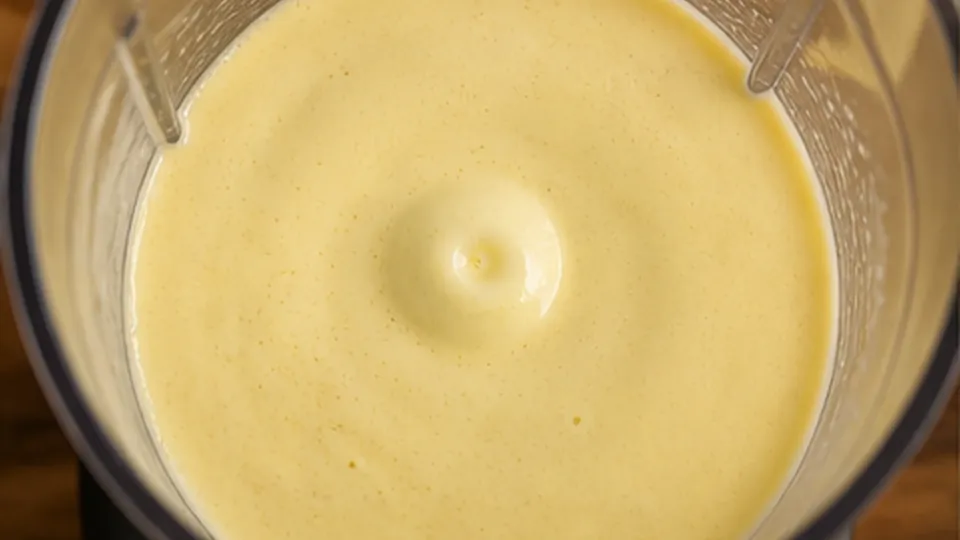
Heat the oven to 375°F (190°C). Blend 1 cup (226 g) full-fat cottage cheese with 2 of the 4 large eggs (200 g), ¼ teaspoon (1.5 g) of the kosher salt, ¼ teaspoon (1 g) garlic powder, and ¼ teaspoon (1 g) black pepper for 30 to 45 seconds, until no curds remain and it pours like heavy cream.
Blend the flatbread batter
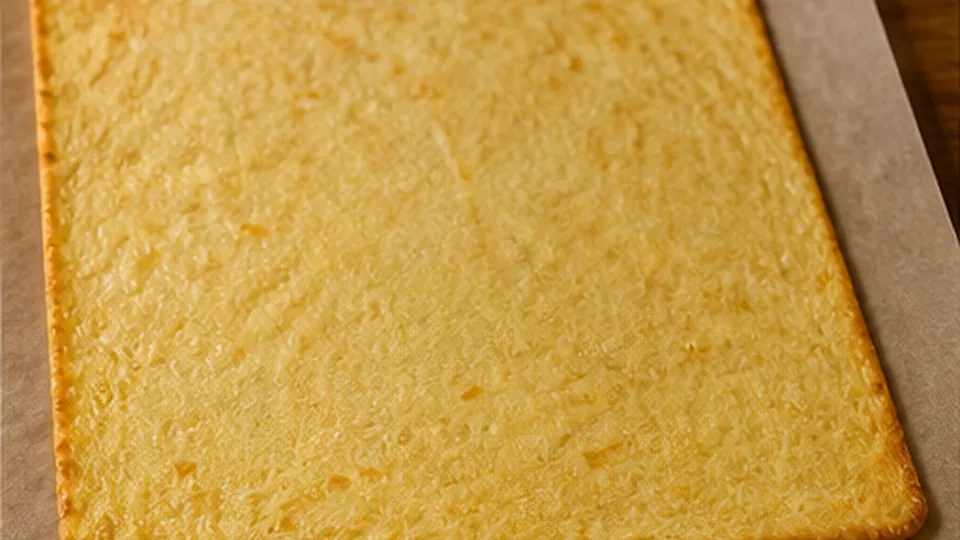
Line the pan with parchment and spread the batter into an even rectangle about ¼ inch (6 mm) thick. Bake 22 to 27 minutes, until the top is matte, the edges turn amber, and the center springs back without leaving a wet fingerprint.
Spread and bake the sheet
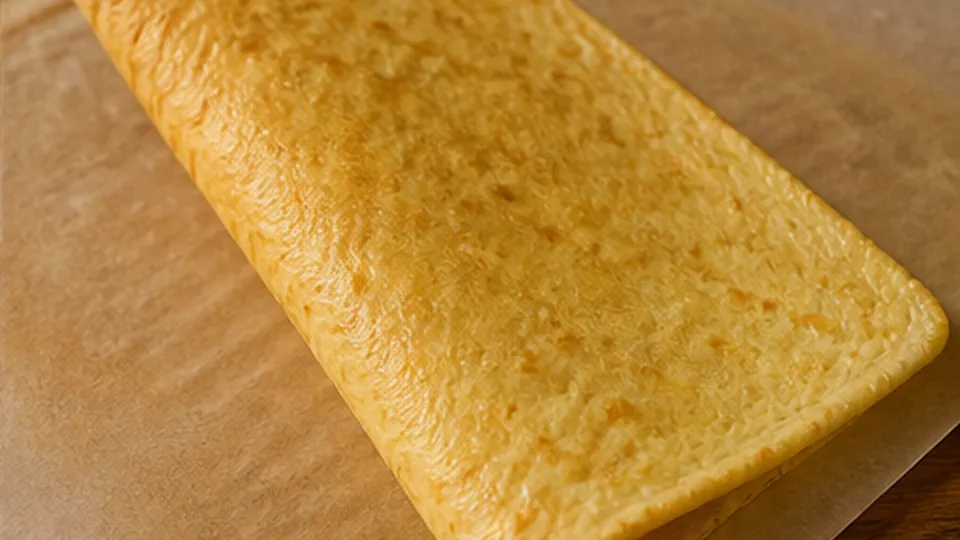
Rest the flatbread on the pan 5 minutes, until the steam stops billowing and the surface feels leathery rather than fragile. Lift it by the parchment, invert it onto a board, and peel the paper back slowly.
Rest and peel the parchment
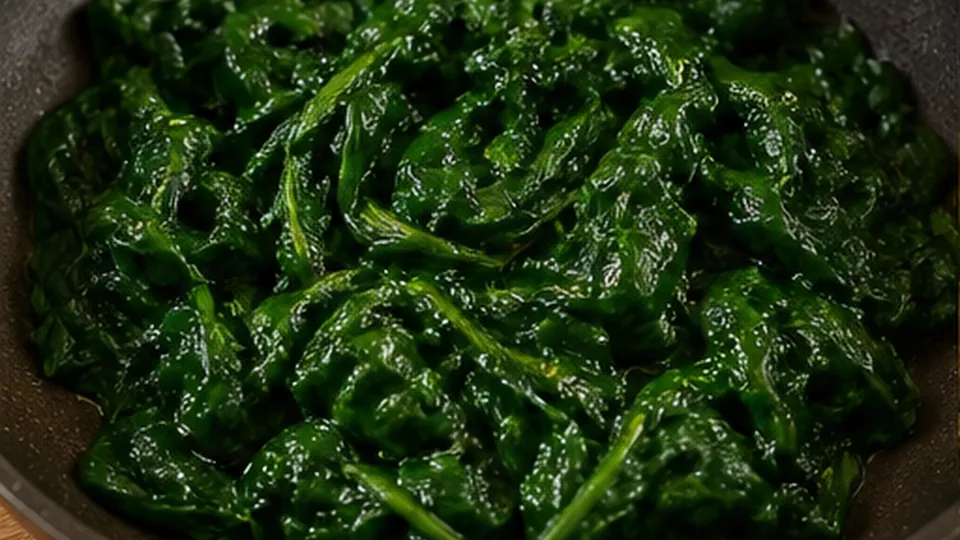
Heat 1 teaspoon (5 ml) olive oil in a skillet over medium and add 2 cups (60 g) baby spinach. Cook 1 to 2 minutes, until the leaves are glossy, dark green, and collapsed with no puddle left in the pan.
Wilt the baby spinach
Beat the remaining 2 eggs with the remaining ¼ teaspoon (1.5 g) kosher salt. Cook over medium-low, folding broad curds 2 to 3 minutes until they look softly set and slightly shiny, and take them to 160°F (71°C).
Scramble the remaining eggs
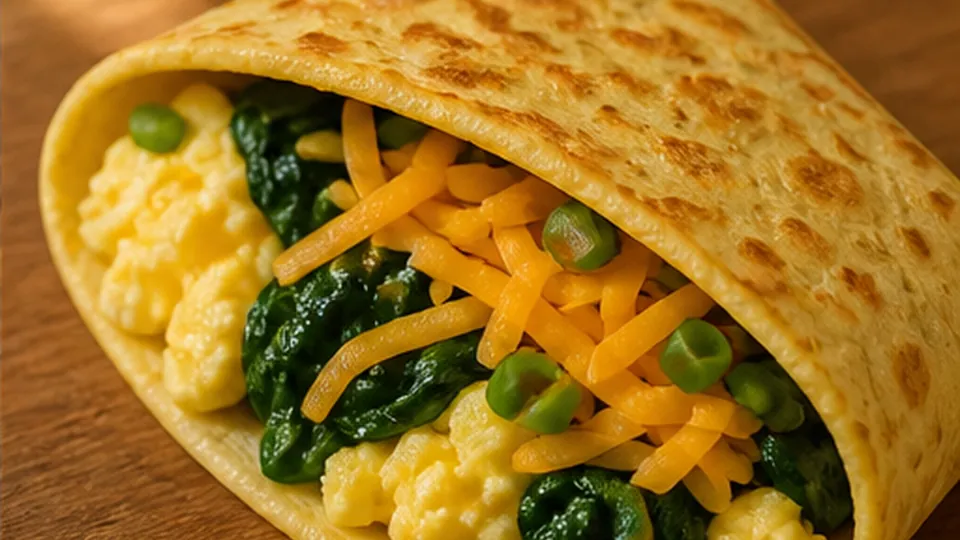
Scatter ½ cup (56 g) shredded cheddar over the warm flatbread, then pile on the spinach, the eggs, and 2 tablespoons (10 g) thinly sliced scallions. Cut into 4 pieces and fold; the sheet should curve without splitting.
Layer, cut, and fold
✅ How to know it's done
The flatbread is dry and matte with amber edges, peels away in one piece, and folds around softly set eggs. A center that tears while parchment peels is underbaked even if the edge is brown. Return the sheet, paper and all, to the oven for three minutes and check for a matte springy surface. Brittle edges mean the layer was too thin there; trim them into crisp snack pieces and fold from the softer center. If scrambled eggs release water into the wrap, they were cooked too hot or spinach was not drained. Transfer both fillings out of their hot skillet promptly. A properly baked sheet can soften under wet fillings, so tomatoes, salsa, and dressing belong at the table rather than inside a stored wrap.
💡 Practical tips (and what not to do)
Blend longer than seems necessary. Hidden curds create weak spots.
Use parchment, not wax paper. Wax paper is not made for this heat.
Spread evenly. Thin corners turn brittle before a thick middle sets.
Wait five minutes. Cooling is part of the recipe, not administrative delay.
Dry the filling. Watery spinach can soften even a properly baked wrap.
Budget: fill with eggs only and skip cheddar. Lighter: use 2% cottage cheese and expect 2–3 extra baking minutes. Kids: make smaller squares with plain egg and cheese. Extra flavor: add everything-bagel seasoning after baking.
💛✨ Flavor boost
Brush the peeled flatbread with a thin film of olive oil and return it to the oven for 2 minutes. The surface gains a faint toastiness while the center stays bendable.
🥔 What Goes Well With It
Sriracha or a spoon of chile crisp, since the sheet itself is deliberately mild.
Quartered radishes with flaky salt, crunchy against soft egg.
A glass of tomato juice under plenty of black pepper, which suits a savory egg breakfast.
📦 Storage & Freezer Notes
Stack the bare sheets between parchment in a rigid box and refrigerate three days; a filled wrap has gone soft by the next morning.
Bring a sheet back in a dry skillet, roughly thirty seconds a side, until it bends without cracking, and take leftover egg to 165°F (74°C) in a covered pan before rebuilding the wrap.
Freeze plain sheets flat for a month with paper between them, then thaw in the refrigerator so condensation does not collect on the surface.
Bake flatbread sheets up to three days ahead, cool them completely, and stack between parchment in an airtight container. Prepare spinach separately and scramble eggs fresh when possible. For a packed breakfast, assemble only after every component is cool; warm filling trapped in a container creates condensation and a soft wrap.
For a brunch platter, cut each filled quarter into two diagonal pieces only after the cheese softens enough to hold the seam. Arrange them cut-side up so the spinach and egg remain visible. Do not hold assembled wraps in a low oven: extended heat dries the egg and turns the flexible sheet brittle. Keep flatbreads warm under a clean towel, eggs covered in their skillet off heat, and assemble in small batches. If serving later, cool everything and follow the storage plan instead of hovering in the unsafe lukewarm range.
🧒 Serving Ideas for Kids
Cut filled pieces into pinwheels after a 2-minute rest.
Offer egg, cheese, and spinach in separate rows.
Use a pizza cutter for tidy hand-held strips.
❓ Quick answers
Why did my cottage cheese flatbread stick?
It was underbaked, peeled while steaming hot, or placed on uncoated paper. Bake until fully matte and cool 5 minutes before peeling.
Can I make it without a blender?
A food processor works. Hand-mashing leaves curds that weaken the sheet, so a smooth appliance blend is strongly preferred.
Does it taste like cottage cheese?
It has a mild dairy tang, but the texture becomes smooth and eggy rather than curdy.
Can I use this as a lunch wrap?
Yes. Cool it fully and fill with dry ingredients; wet tomatoes or heavy dressing should travel separately.
🥗 Nutrition, roughly: about 290 calories per serving. Estimates only; brands, cuts and portion sizes change the numbers.
Published by MommyCooking.org. This AI-assisted recipe passed automated checks for page consistency and required image files. A real-kitchen test has not been documented for this dish. The food images are AI-generated illustrations, not photographs of a cooking session. Cooking temperatures should be checked with a food thermometer; nutrition figures are estimates. How we make recipes · Report a problem with this recipe