Weeknight

Lo Mein Better
Than the Box

“Delivery fee: permanently canceled.”

Let's do the math on lo mein night: the takeout box runs fourteen dollars, arrives lukewarm, and contains four snap peas distributed among noodles that fused into a single noodle-brick somewhere on Route 9. And someone in your house will still fight for the last of it, because even compromised lo mein is good lo mein. That's how strong this dish is.

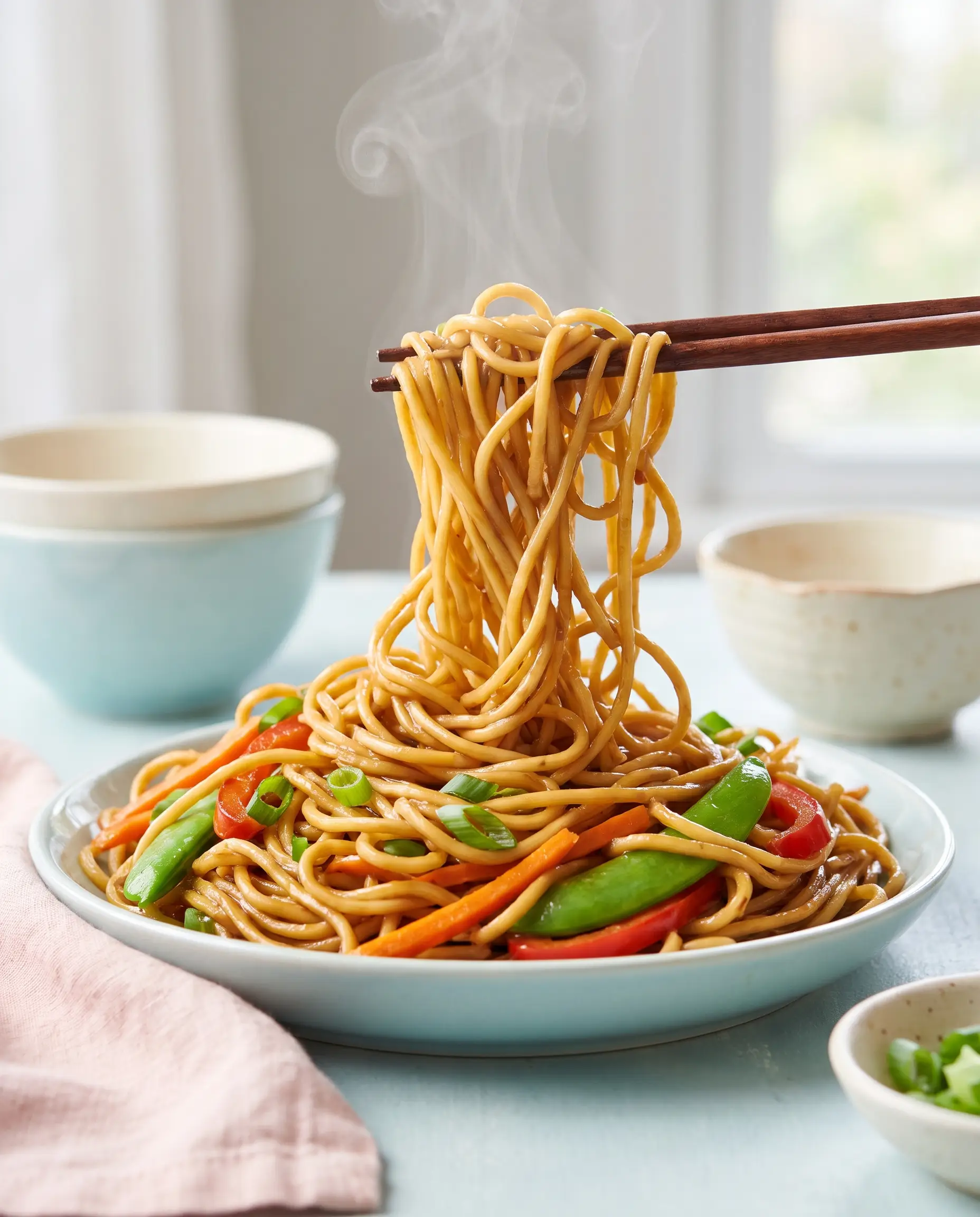
Now the home version, in the takeout-inspired American-Chinese style: springy noodles, vegetables that still crunch because they only cooked for three minutes, and the glossy sauce that makes lo mein taste like lo mein — which turns out to be four pantry ingredients whisked in a cup: soy sauce, oyster sauce, sesame oil, brown sugar. Twenty-five minutes, hot from your own wok-ish skillet, and the noodle-brick era is over.

Twenty-five minutes, one skillet, a sauce you'll know by heart after twice — and it swallows whatever vegetables and leftover protein the fridge offers.
Prep: 15 minCook: 10 minServes: 44-ingredient sauceFridge-cleanout friendly
← Back to recipes
Lo Mein Better Than the Box

How mom makes it

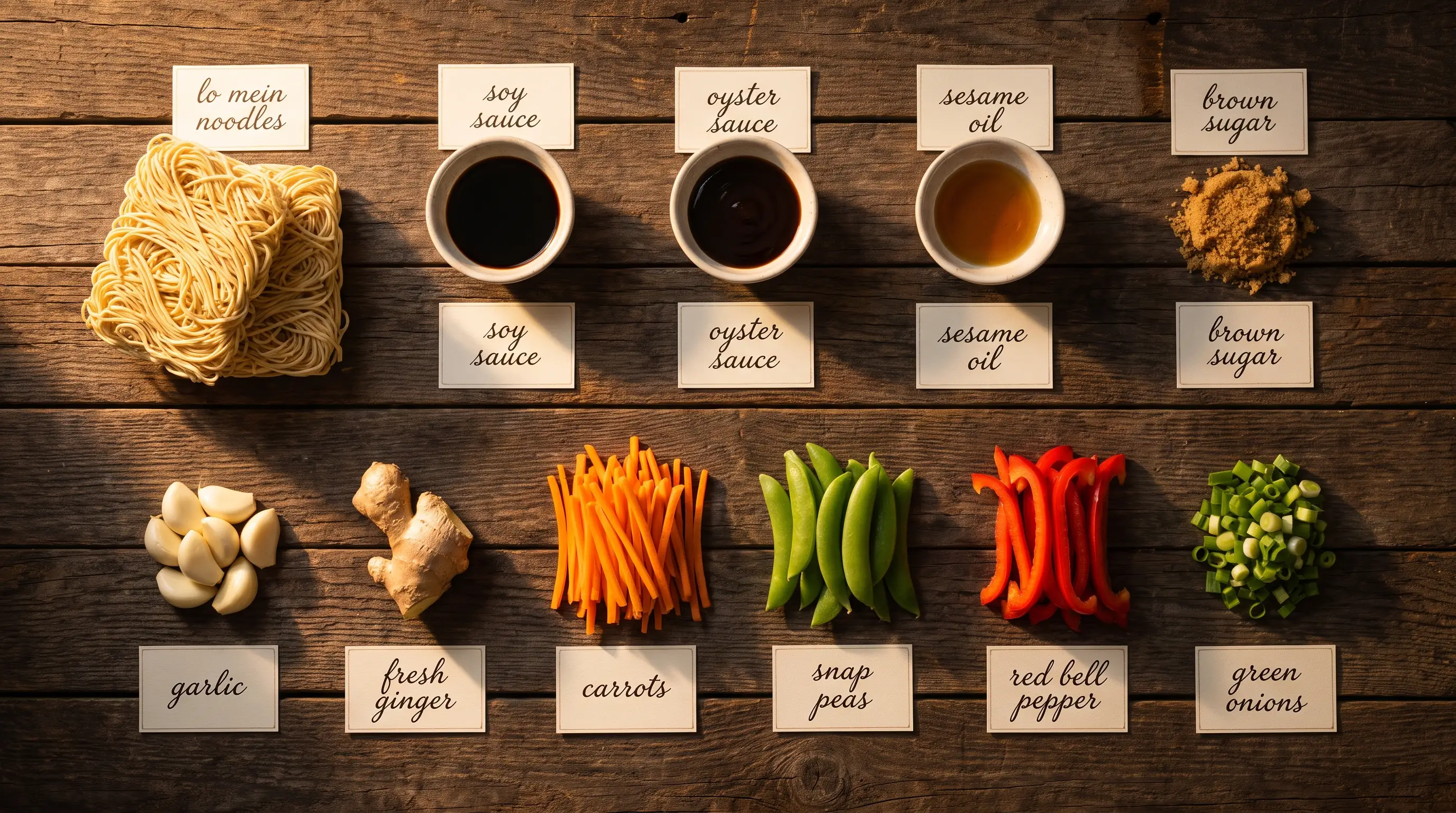
All ingredients for Lo Mein Better Than the Box, labeled
🧺 Everything you need, all in one look
🧂 Ingredient notes & easy swaps
About authenticity, honestly: this is takeout-style American-Chinese lo mein — the Friday-night box version, not a claim on any family's real recipe. It's made with love and oyster sauce. Noodles: fresh lo mein noodles from the refrigerated aisle are ideal; dried lo mein works; and plain spaghetti, slightly undercooked, is the time-honored home substitute nobody can detect under this sauce. Oyster sauce is the flavor keystone — it's in every grocery store's Asian aisle and it's what makes the sauce taste 'like the restaurant.' Cut everything before the heat goes on; the cooking is 10 minutes and waits for no chopping.
🍳 What you actually need (equipment)
Your biggest skillet or a wok if you have one, a pot for the noodles, tongs (the lo mein power tool), and a cup for whisking the sauce. High heat is the secret equipment — don't be shy with the burner.
  1. Whisk the sauce first: soy sauce, oyster sauce, sesame oil, and brown sugar stirred in a cup until the sugar dissolves. This is the part you'll have memorized by next week: 3-2-2-1.

  2. Cook the noodles one minute short of the package directions, drain, and toss with a few drops of oil so they don't fuse while they wait.

  3. Screaming-hot pan. Get the big skillet properly hot, add the neutral oil, and stir-fry the carrots 2 minutes, then the snap peas, bell pepper, and green onion whites for 2 more — the vegetables should blister a little and stay crisp.

  4. Aromatics for 30 seconds: garlic and ginger into the middle, stirred just until fragrant — they burn fast at this heat, so keep moving.

  5. Noodles and sauce in. Add the noodles, pour the sauce over, and toss with tongs for 90 seconds until every strand is glossy and the sauce has thickened into a light cling.

  6. Finish with the green onion tops, a last drop of sesame oil if you're feeling generous, and serve straight from the pan — chopsticks optional, seconds inevitable.

✅ How to know it's done

Noodles glossy and evenly brown-lacquered with no sauce pooling in the pan, vegetables bright with a real crunch left in them, and the whole thing smelling like the good corner of a food court. Dull, wet noodles mean the pan wasn't hot enough — crank it and toss another minute to evaporate and cling.

💡 Mom's tips (and what not to do)

🔁 Easy variations (budget · lighter · kids · extra flavor)
Budget: spaghetti + whatever vegetables are cheapest this week — the 3-2-2-1 sauce does not discriminate. Lighter: load the vegetable ratio up to double and go easy on the sesame at the end. Kids: milder is easy — skip the ginger, keep the sweet-savory sauce, and expect slurping (it's structural to the enjoyment). Extra flavor: leftover rotisserie chicken, shrimp (2 minutes at the start), or a fried egg on top; chili crisp on the side for the heat-seekers.

💛✨ Mom's secret ingredient

The 3-2-2-1 sauce — and adding it to a genuinely hot pan. Lo mein sauce isn't a simmered thing; it's a glaze that forms in the last ninety seconds when soy, oyster sauce, sesame, and sugar hit high heat and reduce onto the noodles. The ratio gives you the taste; the sizzle gives you the shine. Together they retire the takeout menu.

🥢 What Goes Well With It

  • Crispy chicken tenders on the side for the full fake-out takeout spread
  • A quick cucumber salad — rice vinegar, pinch of sugar — for something cold and sharp against the noodles
  • Fried or jammy eggs on top for the ten-minute-dinner deluxe
  • Chopsticks for whoever's practicing and a fork for whoever's hungry

📦 Storage & Freezer Notes

  • Fridge: 3 days — and cold lo mein straight from the container at lunch is a legitimate lifestyle, not a compromise.
  • Reheat in a hot skillet with a teaspoon of water for 2 minutes — better than the microwave, which makes noodle-brick 2.0.
  • Freezing: not recommended — the vegetables surrender. Happily, four servings rarely survive to test it.

🧒 Serving Ideas for Kids

  • Slurping is engineering, not rudeness — lo mein night suspends the rule and attendance improves.
  • Let kids pick 'their' vegetable in the cart and identify it proudly in the noodles — ownership beats persuasion.
  • Kid chopstick training with rubber-band-trainer chopsticks turns dinner into a game with edible prizes.

❓ Quick answers

Is spaghetti really okay for lo mein?
It's the home-cook standard for a reason — cooked a minute short, it's springy and takes the sauce beautifully. Fresh lo mein noodles are a real upgrade when you find them, but no one has ever pushed away a bowl over the noodle's passport.
What can I use instead of oyster sauce?
Hoisin (sweeter) or a mushroom 'vegetarian oyster sauce' (closest match, and vegetarian) both work. Soy-only versions taste flat — the oyster sauce's savory depth is most of the takeout magic.
Lo mein vs chow mein — what's the difference?
Lo mein = soft noodles tossed in sauce (this recipe); chow mein = noodles fried until crisp-chewy. Same family, different texture goals. This one's the saucier, kid-friendlier sibling.
How do I add chicken or shrimp?
Slice chicken thin and stir-fry it first (3 to 4 minutes), or shrimp for 2, then set aside and return it with the noodles. Same pan, same sauce, one protein promotion.

🥗 Nutrition, roughly: about 420 calories per serving with 12g protein, 64g carbs, and 13g fat — before any protein additions.

🍽️ You might also like

← Every recipe