Chicken Cacciatore Polenta Balanced Flavor, Family Timing
“Saucy chicken above soft polenta. Forks are optional.”
Published by MommyCooking.org · Published September 30, 2026
Mushrooms lose their water before tomatoes arrive, concentrating the sauce instead of thinning it.
The polenta is cooked while the chicken braises so both are hot at the same moment. Nothing here waits well: polenta stiffens as it stands and the skin softens under sauce.
🍗 The promise: Chicken reaches 165°F (74°C) near the bone, sauce clings to a spoon, and polenta flows slowly from the ladle.
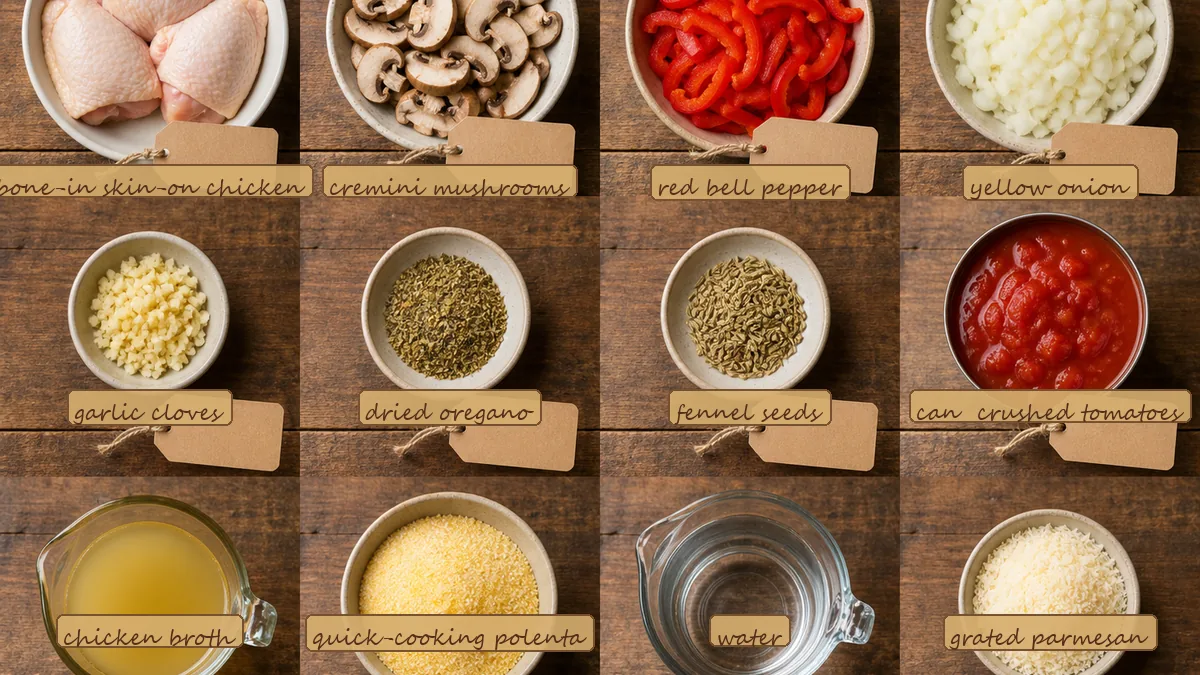
🍗 Everything you need, all in one look🧂 Ingredient notes & easy swaps
Boneless thighs work with a shorter braise, but check them from 18 minutes.
“Brown chicken thighs” starts Chicken Cacciatore Polenta in the wide Dutch oven and medium saucepan: season the chicken thighs with ¾ teaspoon salt; heat the Dutch oven over medium-high, set the thighs skin-side down, and brown 6–8 minutes; turn for 2 minutes, then transfer to a clean plate. During “Check tenderness and safety,” while the chicken braises, bring the water and remaining salt to a boil in the saucepan; whisk in polenta gradually, then cook over low heat, stirring often, until thick and tender; fold in Parmesan.
“Finish with basil and Parmesan” closes Chicken Cacciatore Polenta: spoon the creamy polenta into shallow bowls, ladle over the cacciatore sauce, and set a chicken thigh on each portion; finish with torn basil and serve while the polenta is soft; keep the basil for this step so Chicken Cacciatore Polenta reaches the table with its fresh aroma and texture intact.
🍳 What you actually need (equipment)
wide Dutch oven, a medium saucepan, a whisk, and an instant-read thermometer
Season the chicken thighs with ¾ teaspoon of the kosher salt. Heat the Dutch oven over medium-high, lay the thighs skin-side down, and brown 6–8 minutes until the skin is lacquered and crisp; turn for 2 minutes, then move them to a clean plate.
Brown the seasoned thighs
Pour off all but 1 tablespoon (15 ml) of the fat and add the onion, cremini mushrooms, and red bell pepper. Cook 7–9 minutes, until the mushrooms squeak and give up their water, then stir in the garlic, oregano, and crushed fennel for 30 seconds.
Sweat mushrooms and peppers
Pour in the crushed tomatoes and chicken broth, scraping the dark fond off the pot floor and into the sauce. Settle the thighs back in skin-side up so the crisp skin rides above the liquid rather than stewing in it.
Build the tomato braise
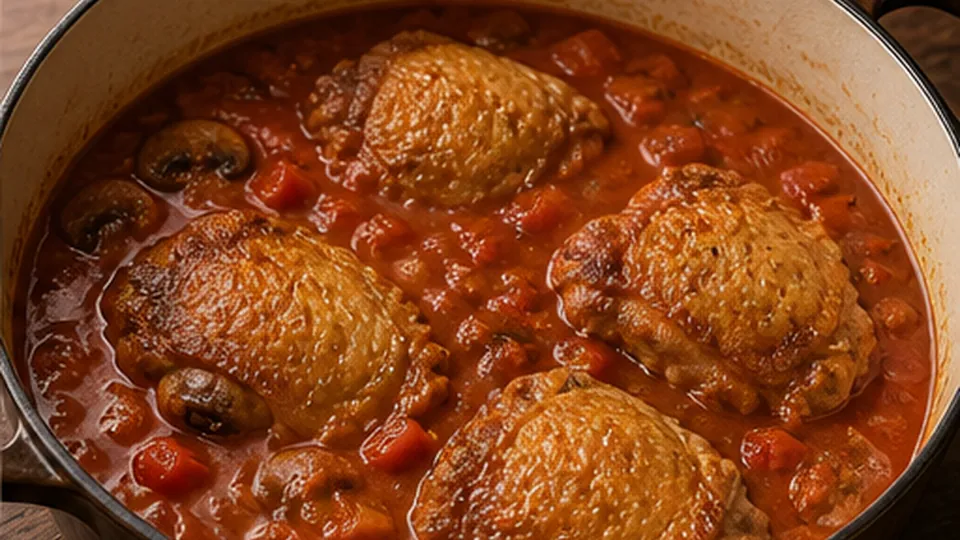
Cover the pot partway and braise over medium-low 25–35 minutes, until the thickest thigh registers 165°F (74°C) near the bone. Lift the chicken onto a clean platter and let the mushroom-tomato sauce reduce if it still looks thin.
Braise to safe doneness
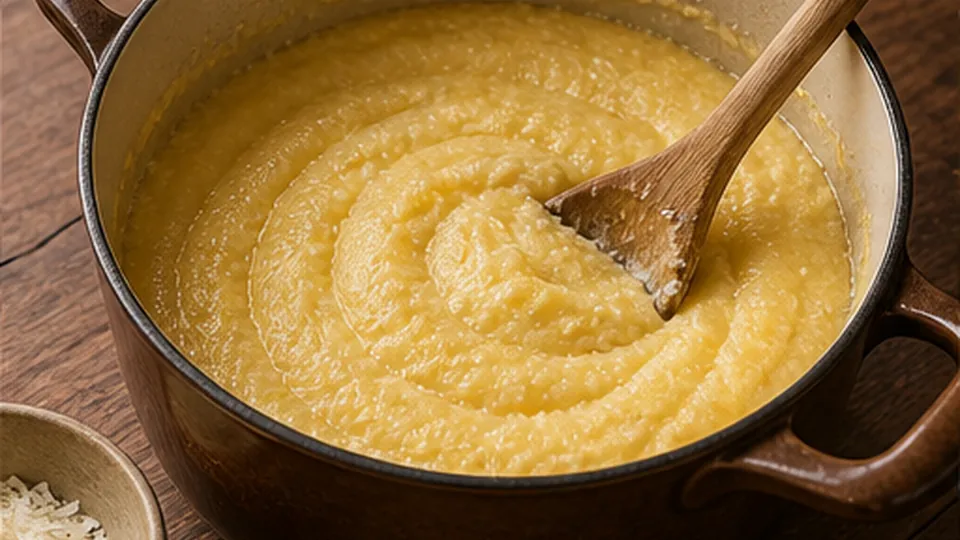
While the chicken braises, bring the water and the remaining salt to a boil in a saucepan. Rain in the polenta while whisking, then cook over low heat, stirring often, until it thickens and tastes tender; fold in the Parmesan.
Whisk the creamy polenta
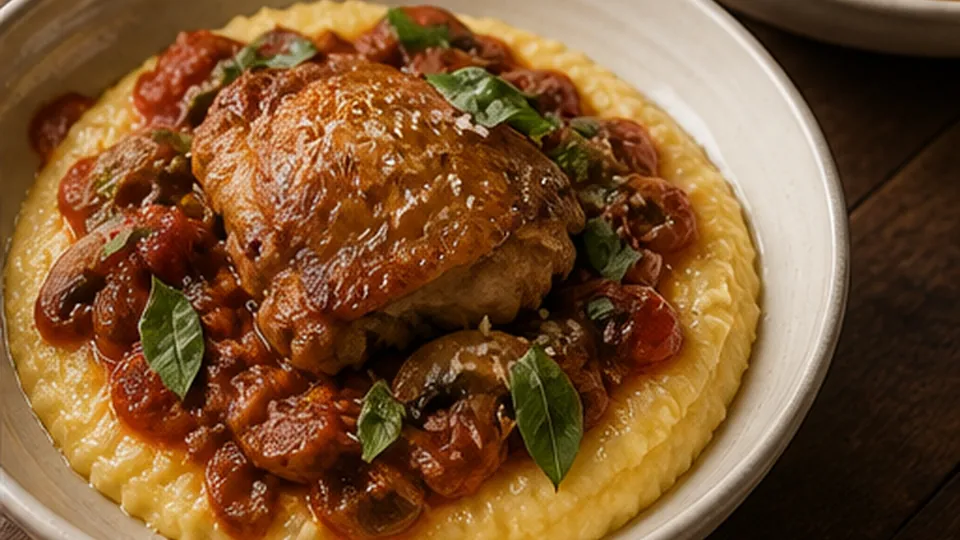
Spoon the polenta into shallow bowls and spread it out with the back of the ladle. Ladle the cacciatore sauce over, set a thigh on each portion, and strew the torn basil on top while everything is still steaming.
Bowl up and finish
✅ How to know it's done
The chicken reads 165°F (74°C) at the bone, the sauce clings to a spoon, and the polenta spreads slowly rather than running. After “Brown chicken thighs,” watery sauce needs uncovered reduction with chicken resting on a clean plate; stiff polenta needs hot water whisked in.
💡 Practical tips (and what not to do)
Start the thighs skin-side down in a dry hot pot. The skin releases its own fat, and added oil only makes it spit and steam.
Pour off all but a tablespoon of the fat. Two pounds of thighs render more than the vegetables can absorb, and the sauce ends up greasy.
Wait for the mushrooms to squeak. That sound means their water has left; tomatoes added before it make for a thin, watery braise.
Settle the thighs back skin-side up. Whatever crispness you built is gone within minutes if the skin rides under the liquid.
Rain the polenta in while the whisk is moving. Tipped in as a heap it sets into lumps on contact, and no amount of stirring breaks them up later.
Budget: Drumsticks cost less than thighs and braise on the same schedule, checked at 165°F (74°C) at the thickest point. Lighter: Pull the skin off after browning, which keeps the flavor it gave the fat and loses most of what it adds afterward. Kids: Leave the crushed fennel out of the pot and bloom it in a spoonful of oil to stir into the adult portions. Extra flavor: Drop a Parmesan rind into the sauce as it braises and fish it out before serving.
💛✨ Flavor boost
Crush fennel seeds with oregano before blooming them in the mushroom fond.
🥔 What Goes Well With It
A bitter salad of radicchio or escarole with a sharp vinaigrette, against a rich braise.
Crusty bread for the sauce left in the bowl once the polenta is gone.
Roasted broccoli rabe, whose bitterness matches the fennel in the pot.
📦 Storage & Freezer Notes
Store the cacciatore and the polenta in separate containers, refrigerated within 2 hours, and eat within 4 days; polenta sets solid overnight whatever you do.
Reheat the chicken and sauce covered over low heat until the meat reads 165°F (74°C), and whisk hot water into the cold polenta a splash at a time to bring it back to a spoonable texture.
Sauce and chicken freeze well for 2 months. Do not freeze the polenta, which turns grainy and weeps water as it thaws.
Before “Brown chicken thighs” for Chicken Cacciatore Polenta, make the cacciatore sauce two days ahead; cook fresh polenta only when serving. After handling the raw chicken, wash the board, knife, hands, and counter before touching the basil used in “Finish with basil and Parmesan.”
At “Finish with basil and Parmesan,” Chicken Cacciatore Polenta is ready when chicken reaches 165°F (74°C) near the bone, sauce clings to a spoon, and polenta flows slowly from the ladle. Portion Chicken Cacciatore Polenta onto clean plates with sliced tomatoes with herbs.
🧒 Serving Ideas for Kids
Pull the meat off the bone and chop it before it goes onto the polenta, so nothing needs cutting around a bone.
Serve the polenta with Parmesan alone and the sauce spooned into a well in the middle rather than over the top.
Skip the torn basil on a child's bowl; it is the loudest flavor in the dish and the easiest to leave aside.
❓ Quick answers
Can I use boneless thighs?
Yes, and the braise shortens to about 18 to 22 minutes. Check the thickest piece for 165°F (74°C) from 18 minutes. Boneless meat gives the sauce less depth but saves a quarter of an hour.
My polenta is lumpy. Can I save it?
Whisk hard over low heat with a splash of hot water and most lumps break down. Next time add the grain in a thin stream with the whisk already moving, which is the only reliable prevention.
Can I use instant polenta or coarse cornmeal?
Quick-cooking polenta is what the 4 cups of water is calculated for. Coarse cornmeal needs closer to 40 minutes and more liquid; instant needs about 5 and thickens very fast.
Should the pot be covered while it braises?
Partly. A lid set ajar holds a steady simmer while letting enough steam out for the sauce to reduce. Fully covered it stays thin; fully uncovered the tops of the thighs dry.
🥗 Nutrition, roughly: about 720 calories per serving. Estimates only; brands, cuts and portion sizes change the numbers.
Published by MommyCooking.org. This AI-assisted recipe passed automated checks for page consistency and required image files. A real-kitchen test has not been documented for this dish. The food images are AI-generated illustrations, not photographs of a cooking session. Cooking temperatures should be checked with a food thermometer; nutrition figures are estimates. How we make recipes · Report a problem with this recipe