Written with AI assistance · Reviewed, edited, and approved by Sok Heng Oeun · Published July 17, 2026 · Updated August 10, 2026
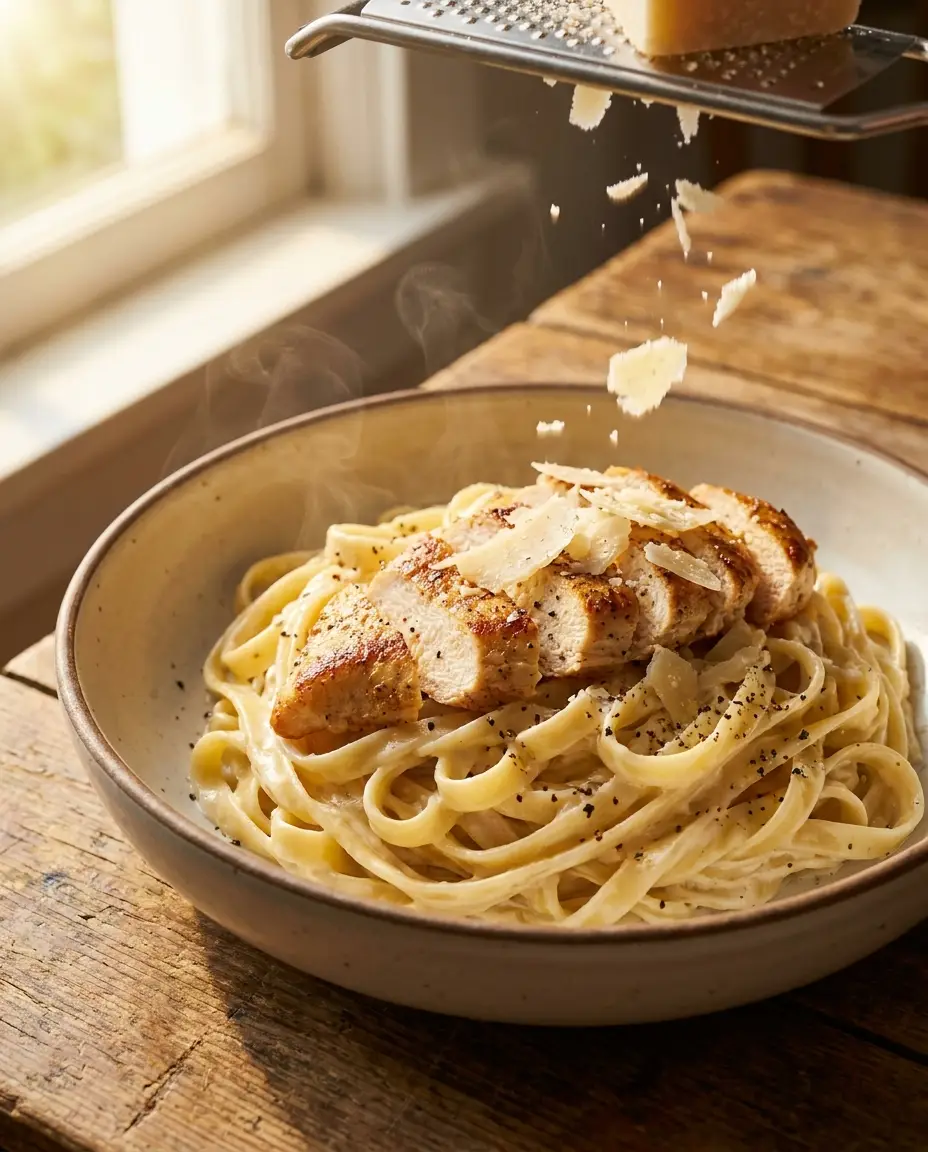
This version builds a smooth Alfredo sauce from butter, cream, Parmesan, and reserved pasta water. The chicken is cooked separately and returned at the end so the sauce stays silky and the meat does not overcook.
The catch is that alfredo has two famous failure modes: gloopy-thick or broken-greasy. Both have the same cure — starchy pasta water and cheese added OFF the heat. Get those two right and the sauce turns silky, clings to every noodle, and stays that way through second helpings.
🍝 The promise: golden chicken over silky, never-gloopy alfredo — 35 minutes, restaurant-smooth, licked-clean plates.
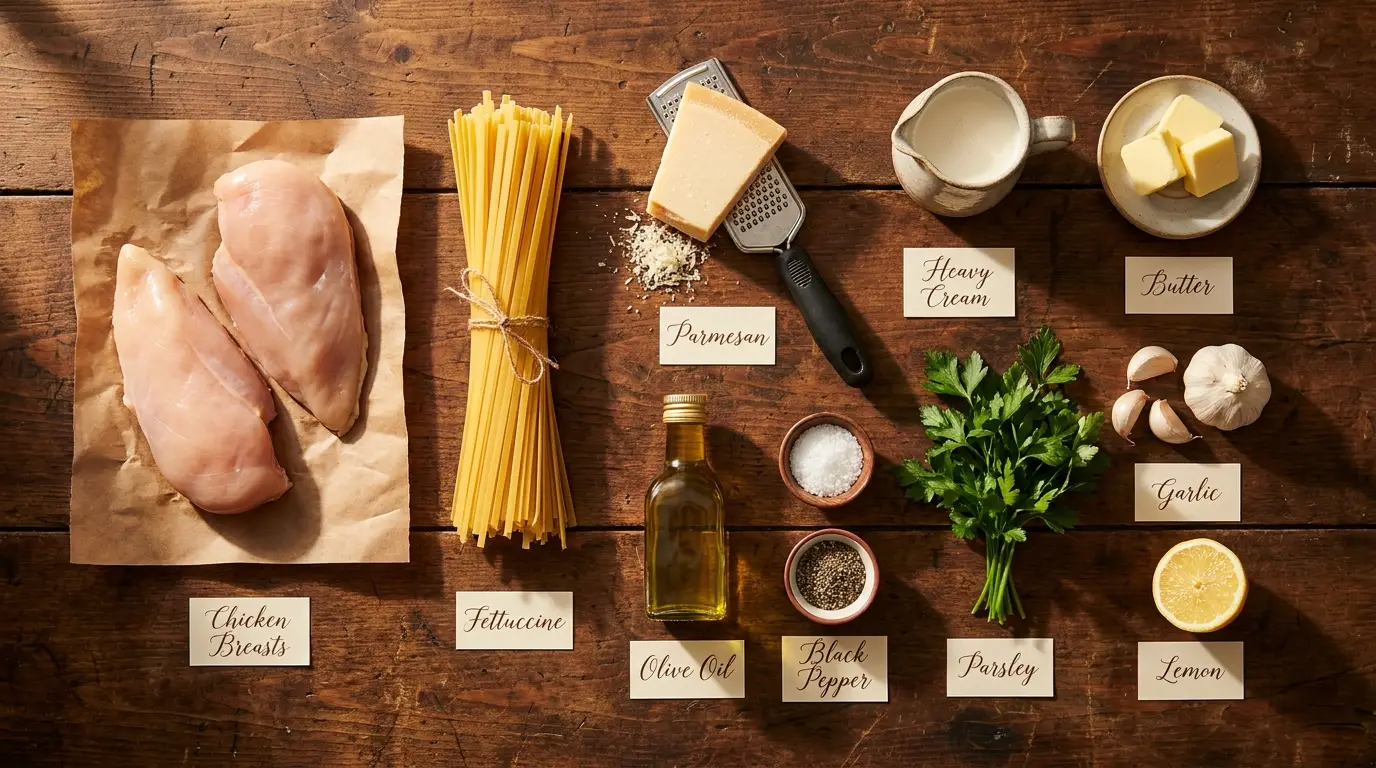
🧺 Everything you need, all in one look🧂 Ingredient notes & easy swaps
Grate the parmesan yourself from a block — this is the hill the sauce lives or dies on, because pre-grated cheese is coated in anti-caking starch that refuses to melt smooth. Heavy cream is the stable choice; nothing lighter survives the simmer. And the pasta water is an ingredient, not dishwater — salt the pot properly and scoop your cup BEFORE draining, because everyone forgets, once, at the worst moment.
🍳 What you actually need (equipment)
A big pasta pot, a wide deep skillet (the sauce and pasta get married in it), tongs for the tossing, and a measuring cup you put in the colander NOW as a pasta-water reminder.
Season the cutlets and sear them in the oil over medium-high, 4–5 minutes per side to golden and 165°F (74°C). Rest them on a board — they get sliced at the end so the juices stay in.
Cook the fettuccine in aggressively salted water to one minute SHY of the package time. Scoop out a full cup of the starchy water, then drain.
In the same skillet over medium-low, melt the butter and cook the garlic 60 gentle seconds — fragrant, never browned; brown garlic makes bitter alfredo.
Pour in the cream and let it barely simmer 3–4 minutes until it coats a spoon lightly. Small bubbles at the edge, never a boil.
OFF the heat: add the parmesan a handful at a time, stirring each melt-in before the next, then loosen with splashes of pasta water until the sauce flows like heavy silk.
Add the fettuccine and toss for a full minute — the starch and the sauce emulsify into gloss as you go. Slice the chicken over the top, squeeze the lemon, scatter parsley, and serve immediately to a soon-to-be-silent table.
✅ How to know it's done
The sauce should coat every strand and flow slowly off a lifted twirl — silky, glossy, pale gold. If it tightens toward gluey, another splash of pasta water brings it back in seconds; if it looks thin, one more minute of tossing lets the starch finish the job. Grainy means the cheese met too much heat — pull the pan, add cold cream, whisk gently.
💡 Practical tips (and what not to do)
Cheese off the heat, always. Parmesan melts smooth below a simmer and seizes grainy above it — this single habit prevents 90% of broken alfredos.
Pasta water is the secret ingredient. Its starch binds fat and cheese into an emulsion that clings — water from the tap just makes the sauce wet.
Undercook the pasta by a minute. It finishes cooking during the toss, drinking sauce instead of sitting in it.
Block parmesan only. The bagged pre-grated kind is dusted with starch that melts into grit, not silk.
Serve it NOW. Alfredo waits for no one — warm bowls and an already-seated family are part of the recipe.
💸 Budget: chicken thighs, and stretch the sauce with an extra splash of pasta water — it holds. 🥦 Lighter: half-and-half works if the pan never passes a whisper-simmer, and a pile of steamed broccoli tossed in belongs here anyway. 🧒 Kids: hold the pepper on their bowls; buttered-noodle loyalists accept alfredo as a gateway. ✨ Extra flavor: a pinch of nutmeg in the cream, the classic old-school move.
💛✨ Flavor boost
The starchy pasta water. Alfredo is an emulsion — fat, cheese, and liquid persuaded to hold hands — and starch is the mediator that makes the peace. That's why restaurant pasta looks lacquered while home versions split or gloop: they finish every pasta in the pan with a ladle of pasta water. Steal the habit for every pasta sauce you own, tomato ones included — the same move that silkens our garlic butter shrimp pasta.
🥗 What Goes Well With It
A sharp, lemony green salad — the only correct counterweight to cream.
Garlic bread for the sauce that escapes the noodles.
Steamed broccoli or peas — stir them right into the toss and watch kids eat green things.
Cracked pepper and extra parmesan at the table, wielded freely.
📦 Storage & Freezer Notes
Fridge: 3 days airtight — store a splash of reserved pasta water (or milk) alongside for the revival.
Freezer: not this one — cream-and-cheese emulsions come back grainy and betrayed.
Reheat LOW in a pan with that splash of liquid, tossing gently — the microwave on half power works if you stir every 45 seconds. High heat re-breaks what you built.
❓ Quick answers
Why did my sauce turn grainy?
The cheese hit too much heat, or it was pre-grated. Off the heat, block-grated, handful at a time — and a splash of cold cream with gentle whisking can rescue a seizing batch.
Can I use milk instead of cream?
Whole milk needs help: melt an extra tablespoon of butter with a teaspoon of flour first, then add the milk slowly. It's a different sauce — lighter, still lovely.
What pasta shapes work besides fettuccine?
Anything with surface to grip: linguine, tagliatelle, penne, rigatoni. The sauce doesn't discriminate, it just clings.
Can I add shrimp or vegetables?
Shrimp sears in the same pan in 3 minutes before the sauce; broccoli, peas, or spinach join at the final toss. The alfredo welcomes everyone.
🥗 Nutrition, roughly: about 720 calories per serving. Estimates only — alfredo night is a celebration, not a spreadsheet.