Cajun Chicken Pasta
with a Creamy, Spiced Sauce
“Restaurant favorite, kitchen prices.”
This is the chain-restaurant pasta people order on repeat: blackened chicken sliced over creamy, faintly spicy, paprika-red penne. The problem is the math — nineteen dollars a plate, times the whole table, plus the breadsticks you pretended not to want. Date night shouldn't require financing.
Here's the home version, honestly labeled: this is Cajun-inspired, chain-restaurant-style cooking — a Louisiana spice blend doing delicious work far from Louisiana. Chicken crusted in Cajun seasoning and seared hard, a cream sauce built on the spice left in the pan, tomatoes for freshness, parmesan for body. Forty minutes, one skillet and a pasta pot, and everyone orders 'the usual' at your own table.
🌶️ The promise: forty minutes, six servings, a third of the restaurant bill — and the blackened-spice cream sauce you thought needed a franchise agreement.
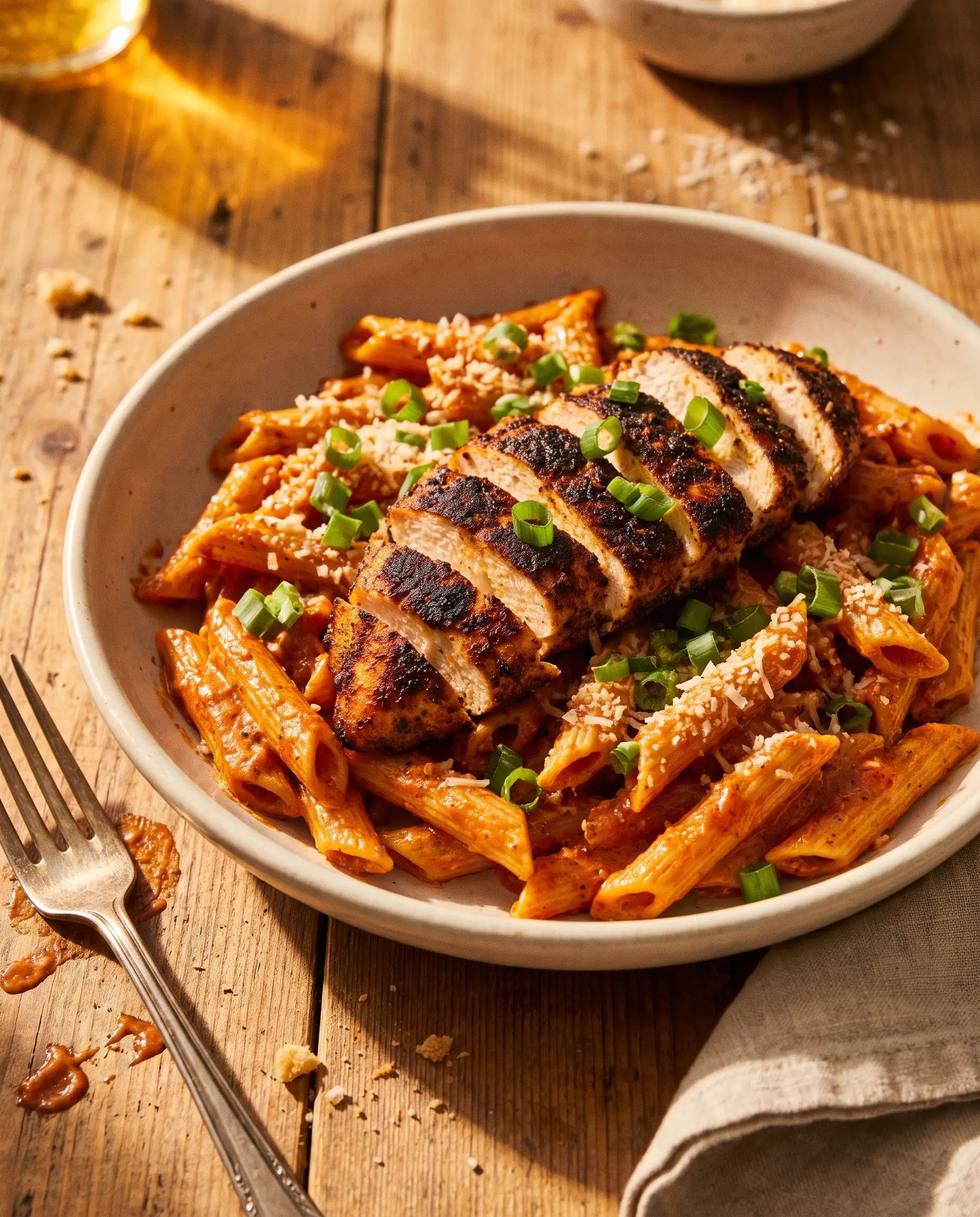
How to make it
View ingredient overview
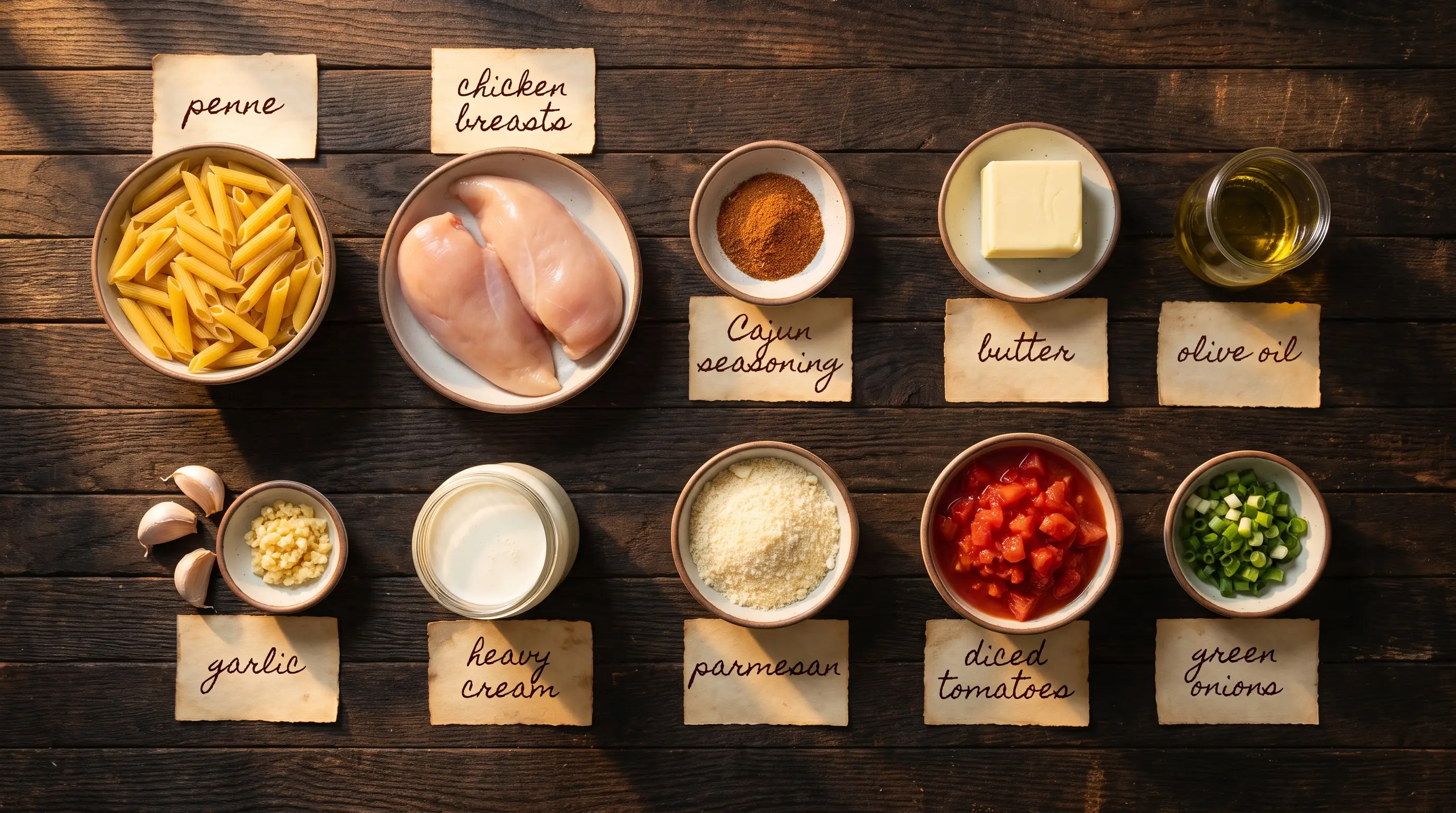
🧂 Ingredient notes & easy swaps
🍳 What you actually need (equipment)
Season and sear the chicken. Pat the cutlets dry and coat both sides with 2 tablespoons of the Cajun seasoning — a real crust, not a dusting. Sear in the oil over medium-high, 4 to 5 minutes per side, until deeply browned and cooked through (165°F / 74°C). Rest on a board for 5 minutes.
Start the penne in salted water when the chicken flips — cook 1 minute shy of the box, and bank a mug of pasta water.
Bloom the spice. In the same unwashed skillet (that browned crust is flavor money), melt the butter over medium, add the garlic and the last tablespoon of Cajun seasoning, and stir 45 seconds until it smells like the restaurant.
Build the sauce. Pour in the cream, scraping the pan's browned bits up, and simmer gently 3 minutes. Stir in the parmesan until melted, then the drained tomatoes.
Marry it. Toss the penne into the sauce with splashes of pasta water until every tube is coated in paprika-red silk — about 2 minutes over low heat.
Slice and crown. Slice the rested chicken against the grain, lay it over the pasta, and finish with green onions and more parmesan. Bring the skillet to the table so the sauce stays hot — it thickens as it sits, so keep a splash of pasta water handy for seconds.
✅ How to know it's done
Chicken: deep mahogany crust and 165°F (74°C) on a thermometer in the thickest part of a cutlet — color and juices are not a reliable check under a dark spice crust. Sauce: coats the penne with a light cling and drips slowly off a spoon — rosy-red from the bloomed spice, not pale. Pale sauce means the tablespoon-in-the-butter step got skipped, and that step is where the restaurant flavor lives.
💡 Practical tips (and what not to do)
- Bloom Cajun seasoning in the butter — don't just season the chicken. The tablespoon toasted in fat before the cream is what turns the sauce that signature paprika-red and makes the whole dish taste 'blackened' instead of 'cream sauce with spicy chicken on top.'
- Use the chicken pan, never wash it mid-recipe — the browned spice crust stuck to the skillet dissolves into the cream and does more work than any single ingredient.
- Rest the chicken the full five minutes before slicing — spice-crusted cutlets lose their juices fast when cut hot, and dry chicken can't be sauced back to life.
- Taste before salting, always with Cajun blends — many are 30% salt already. The parmesan brings more. Season at the very end or not at all.
- Scale the heat per table: sauce mild for everyone, then chili flakes or extra Cajun at the table for the brave — one pan, every heat preference served.
🔁 Easy variations (budget · lighter · kids · extra flavor)
💛✨ Flavor boost
Blooming a tablespoon of the Cajun seasoning in the butter before the cream goes in. Spices are oil-soluble — blooming them in hot fat wakes up the paprika, garlic, and cayenne in ways a cold sprinkle never does, and it's what dyes the sauce that unmistakable restaurant red. The chicken's crust seasons the chicken; the bloomed spoonful seasons the entire dish.
🌶️ What Goes Well With It
- Garlic bread or Garlic Pull-Apart Bread with Melty Mozzarella and Parmesan — that sauce deserves a mop
- A crisp romaine salad with sharp vinaigrette to cool the palate between bites
- Iced tea, lemonade, or whatever's cold — the gentle heat asks for it
- Candles and the good plates — this is the at-home date night that costs less than the appetizers out
📦 Storage & Freezer Notes
- Fridge: 3 days — store chicken slices on top of the pasta so they don't dry out. Reheat in a covered skillet over low with a splash of milk, 4–5 minutes, stirring — a hard boil in the microwave is what makes this sauce break.
- Freezer: not recommended — the cream-and-parmesan sauce separates and turns grainy when thawed. If you want a head start, freeze the seared, sliced chicken on its own and make the sauce fresh.
- Make-ahead: season, sear and slice the chicken up to 2 days ahead and refrigerate it; on the night, the sauce and pasta take about 20 minutes, and the cold chicken warms through in the last 2 minutes of tossing.
🧒 Serving Ideas for Kids
- Sear one or two cutlets with only salt and pepper for children who find the Cajun crust too hot, and keep the sauce at 1 tablespoon of seasoning; the rest of the table adds chili flakes.
- Serve a child's portion with the chicken cut into strips and the green onions on the side, since the raw onion is often the part they object to.
- Older children can slice the green onions and grate the parmesan while the chicken rests.
❓ Quick answers
Is this authentic Cajun food?
How spicy does it come out as written?
Can I use shrimp or sausage instead?
My sauce broke and looks grainy — what happened?
🥗 Nutrition, roughly: about 610 calories per serving. Estimates only; brands, cuts and portion sizes change the numbers.