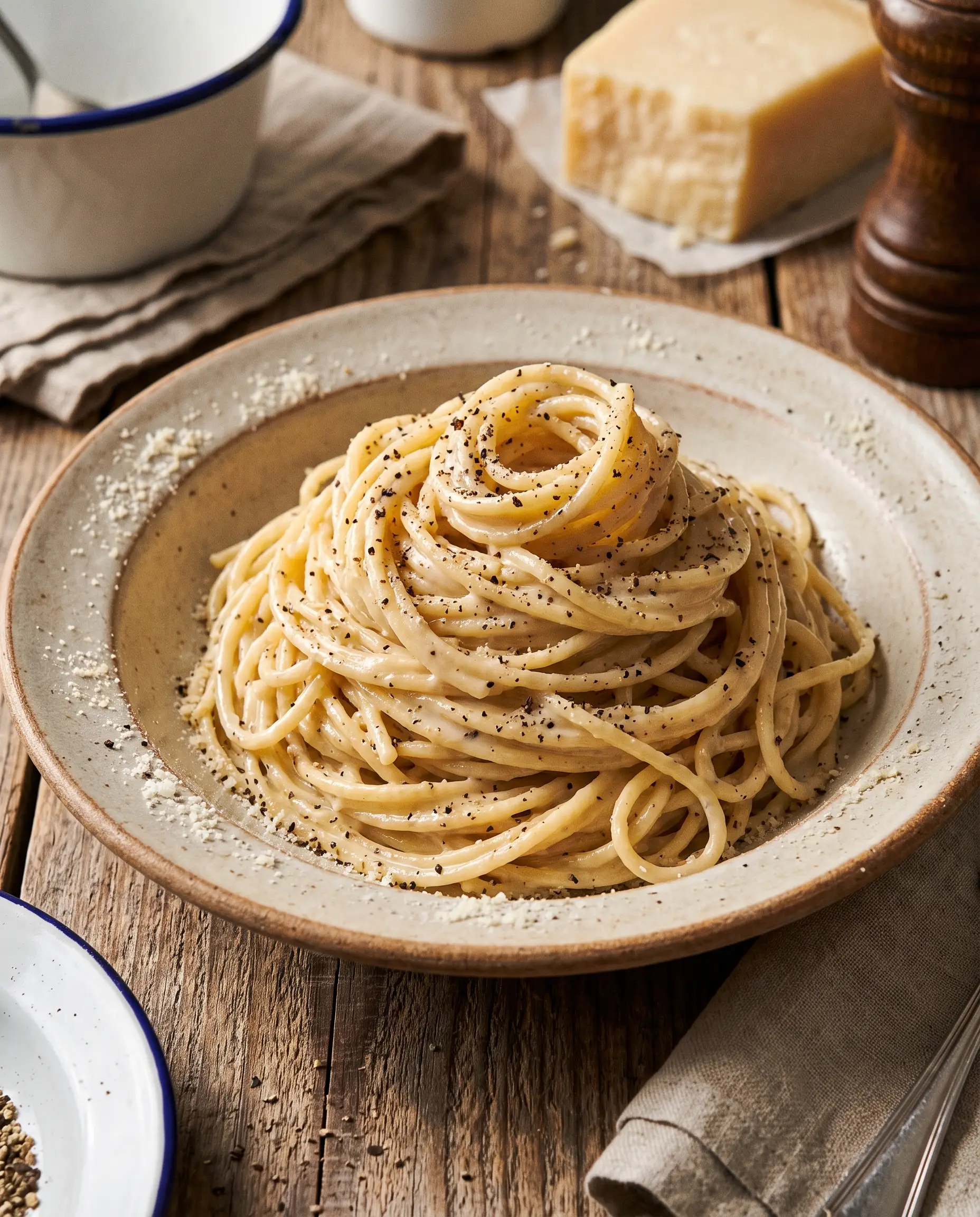
Traditional cacio e pepe can seize when hot cheese meets too little starchy water or excessive heat. This method controls both, producing a glossy pepper-and-pecorino sauce instead of clumps on the pasta.
So let's be honest about what this recipe is: the Roman classic with training wheels — and proud of them. A tablespoon of butter melted with the bloomed pepper gives the pecorino a stable, fatty landing pad, so the sauce turns silky every time instead of one time in three. Roman purists make it without butter, and when your technique is dialed you can too. Until then: six ingredients, twenty minutes, zero tantrums.
Twenty minutes, pantry-only, and the glossy cheese-and-pepper twirl that usually costs eighteen dollars a plate downtown.
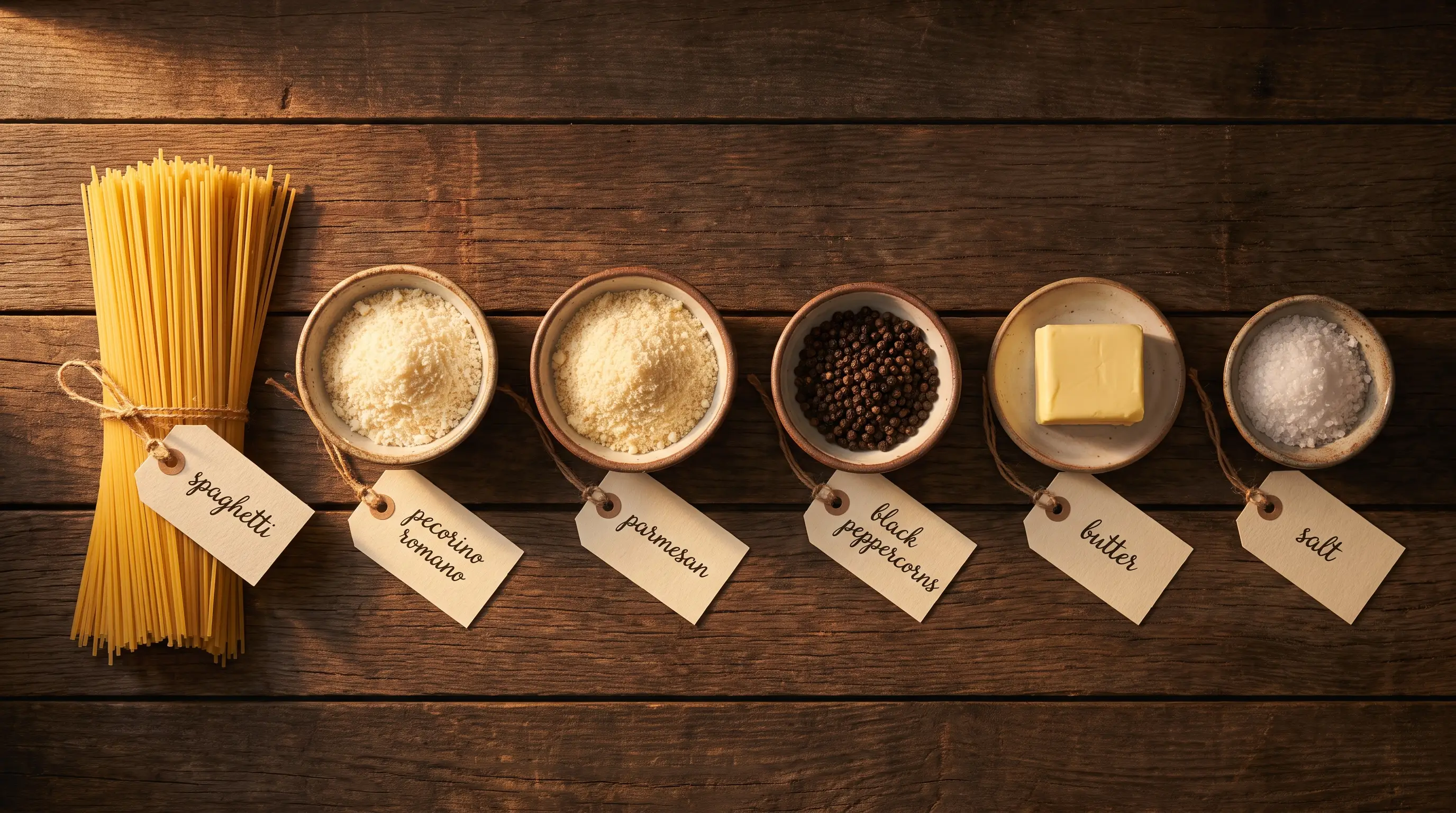
🧺 Everything you need, all in one look🧂 Ingredient notes & easy swaps
Grate the cheese yourself, and grate it fine — pre-grated cheese is coated in anti-caking starch that guarantees the clumping this recipe exists to prevent. The fine holes of the grater or a microplane turn pecorino into snow that melts on contact. Real pecorino romano is the soul here — sharp, salty, sheepy; the parmesan rounds it out. Crush peppercorns fresh if you can (bag + heavy pan = done) — this dish is half about pepper, and pre-ground dust brings heat without the floral crackle. An honest note: the traditional Roman version uses no butter — just cheese and starchy water. This version trades a little purity for total reliability.
🍳 What you actually need (equipment)
One pot, one large skillet, a microplane or fine grater, and a mug for pasta water — which in this recipe is not a helpful tip but a structural ingredient.
Cook the spaghetti in LESS water than usual — about 2 quarts, lightly salted. Less water = starchier water, and starchy water is the sauce's backbone. Cook 2 minutes shy of the box time.
Bloom the pepper. While the pasta cooks, toast the crushed pepper in the dry skillet over medium 60 seconds until fragrant, then add the butter and let it melt and foam with the pepper. Kill the heat.
Bank the water. Scoop out a full mug of pasta water before draining. Guard it.
Marry pasta and pepper butter. Drag the spaghetti into the skillet with a half cup of pasta water and toss over LOW heat 90 seconds — the water and butter emulsify into a light gloss and the pasta finishes cooking.
The critical move: off the heat, wait 30 seconds. Screaming-hot pan = clumped cheese. Then add the pecorino and parmesan in three handfuls, tossing madly between each, splashing in more pasta water as needed, until a glossy, creamy sauce coats every strand.
Serve immediately — twirled high in warm bowls, extra pecorino and one more crack of pepper over the top. Cacio e pepe waits for no one; the table should already be sitting.
✅ How to know it's done
The sauce should be glossy and pourable-thick, clinging to every strand with a little creamy pool at the bowl's bottom — no visible cheese clumps, no oil slick. Too tight? Splash of pasta water and toss. Clumped? Off the heat entirely, a bigger splash of water, and aggressive tossing rescues most of it — the sauce is negotiable until it's eaten.
💡 Practical tips (and what not to do)
Cheese meets pasta OFF the heat — this is the whole game. Pecorino's proteins seize above roughly 150°F, which is why the sauce clumps in a hot pan. Thirty patient seconds after killing the flame is the difference between silk and string cheese.
Less pasta water in the pot = more starch per spoonful. The slightly-too-small pot is, for once, correct — that cloudy water is the emulsifier holding the whole dish together.
Add cheese in waves, tossing like you mean it — three handfuls with real agitation between them lets each round melt before the next arrives. Dumping it all at once is how fondue-rocks are born.
Warm the serving bowls (hot tap water, 30 seconds) — this sauce tightens as it cools, and cold ceramic steals your window.
Salt the water LIGHTLY — breaking the usual rule, because pecorino romano brings enough salt to season the whole dish. Taste at the end; you'll almost never add more.
💛✨ Flavor boost
The butter — the small heresy that makes it work every time. Traditional cacio e pepe emulsifies cheese with nothing but starchy water and technique, and it's genuinely hard; one variable off and it clumps. Butter gives the melting pecorino fat to dissolve into, stabilizing the emulsion like training wheels on a steep hill. Rome does it barehanded. Tuesday night doesn't have to.
A bitter green salad — arugula with lemon — to cut all that salty richness
A fried egg on top for the solo-dinner luxury edition
Crusty bread, though honestly the sauce rarely survives long enough to need mopping
📦 Storage & Freezer Notes
This dish is a live performance — the emulsion holds about 15 minutes and reheats reluctantly. Cook it when forks are ready.
Leftovers anyway? Reheat gently in a skillet with a good splash of water, tossing constantly — it comes back to about 80% glory, which is still better than most dinners.
Prep-ahead move: grate the cheeses and crush the pepper in the morning — then dinner is genuinely 15 minutes of evening work.
🧒 Serving Ideas for Kids
Bill it as 'fancy cheese noodles' — accurate, and an easy yes. Go easy on the pepper for small bowls and crack extra over the grown-ups'.
The cheese-grating mountain is a great big-kid job — whoever grates gets first twirl.
Teach the fork-and-spoon twirl at the table — cacio e pepe is the ideal practice pasta and dinner becomes a skills clinic.
❓ Quick answers
Is this authentic cacio e pepe?
Nearly — and honestly labeled. True Roman cacio e pepe is only pecorino, pepper, and pasta water; no butter, no parmesan. This version adds both for reliability, and we'd rather serve you training wheels that work than authenticity that clumps. When you're ready, try it barehanded — same steps, no butter.
Why did my cheese clump anyway?
Pan too hot when the cheese landed (wait the full 30 seconds off heat), pre-grated cheese (the anti-caking starch fights the sauce), or too little pasta water. All three are fixable; the water splash + mad tossing rescue works mid-crisis.
Can I use only parmesan?
You'll get a delicious, gentler cheese pasta — but pecorino's sharp, salty tang IS the cacio in cacio e pepe. Even half-and-half keeps the identity. All-parm is a fine gateway bowl for kids.
What pasta shapes work?
Spaghetti is classic; tonnarelli is the Roman original; linguine and bucatini are excellent. Short shapes work in emergencies but you lose the twirl, and the twirl is half the joy.
🥗 Nutrition, roughly: about 480 calories per serving with 21g protein, 62g carbs, and 17g fat.