“Miso caramelizes fast. Watch the edges, not your inbox.”
Published by MommyCooking.org · Published September 30, 2026
Separate noodles cannot absorb the roasting glaze, and dividing sauce before it touches raw fish creates a safe bowl dressing.
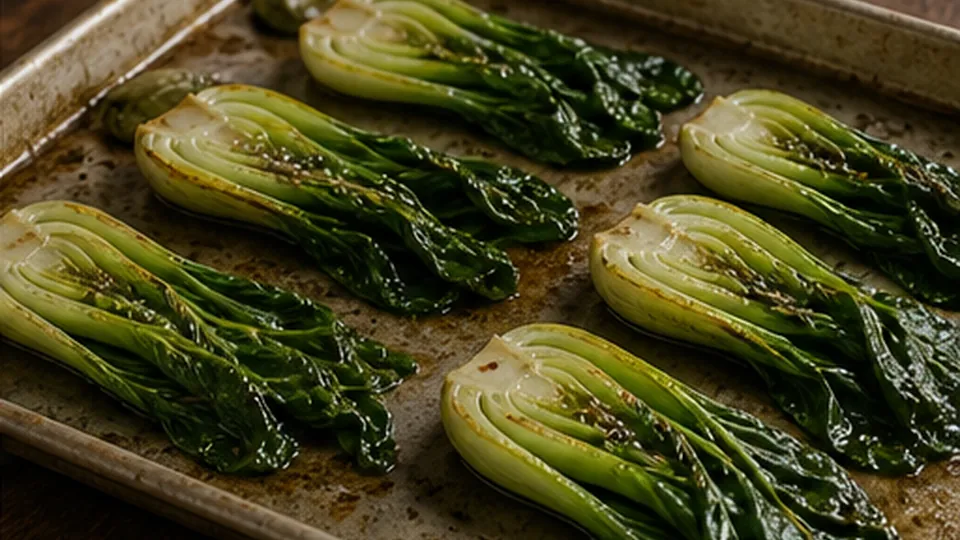
The bok choy goes onto the hot pan six minutes ahead of the fish, so its cut faces brown in exactly the time the salmon needs to cook through. Everything else meets in the bowl at the end rather than in the oven.
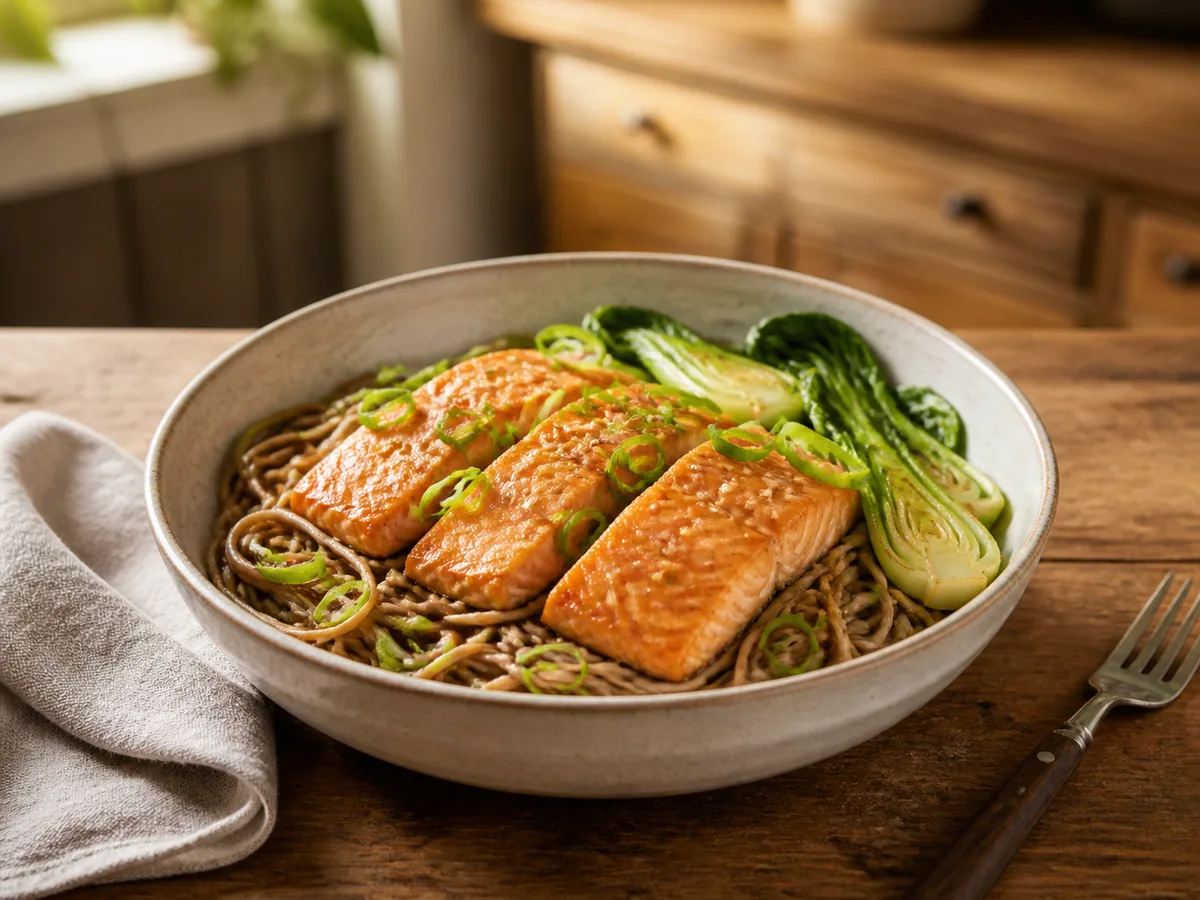
🐟 The promise: Salmon reaches 145°F (63°C), miso glaze is caramelized at the edges, soba remains springy, and bok choy stems are crisp-tender.
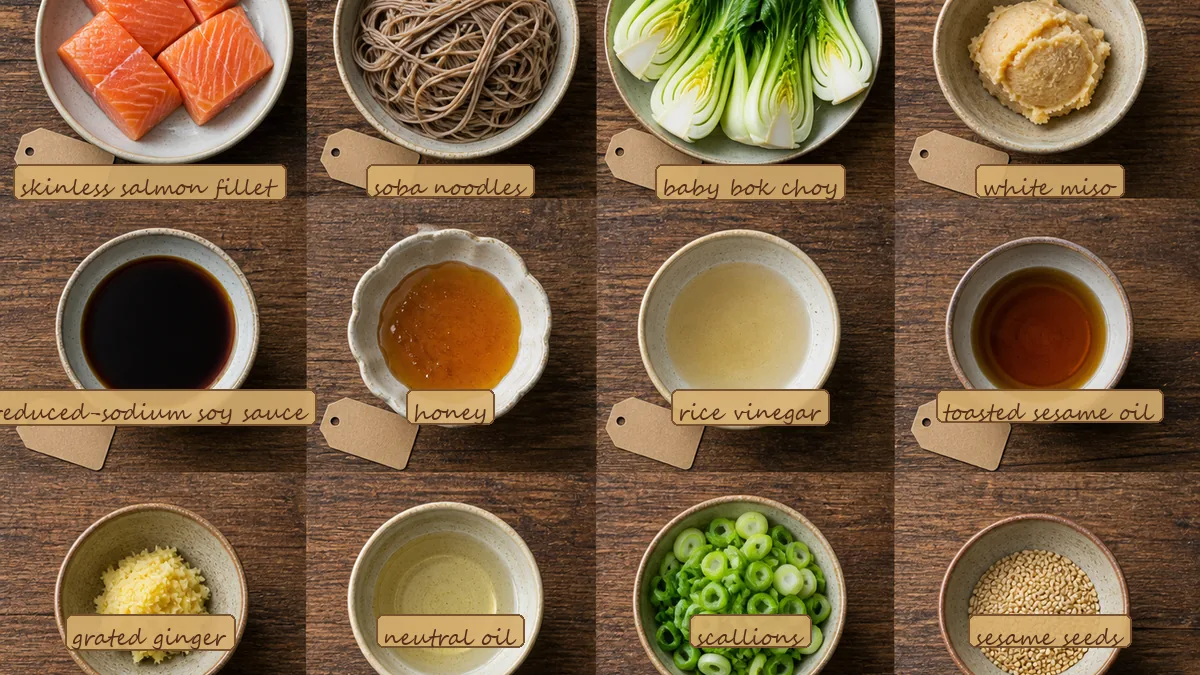
🐟 Everything you need, all in one look🧂 Ingredient notes & easy swaps
Firm tofu can replace salmon; press, cube, roast to browned edges, and use the same separate-sauce procedure.
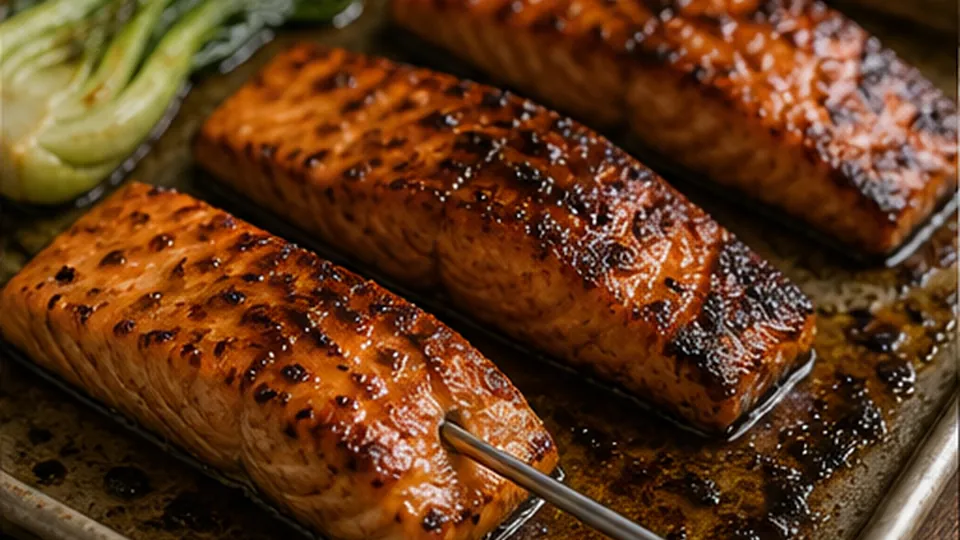
“Mix the miso glaze” starts Salmon Miso Noodle Bowls in the rimmed sheet pan and 4-quart saucepan: heat oven to 425°F (220°C); whisk miso, soy sauce, honey, vinegar, sesame oil, and ginger; place half in a clean serving bowl. During “Check 145°F at the center,” remove each salmon portion when the thickest point reaches 145°F (63°C) and the glaze has caramelized without burning.
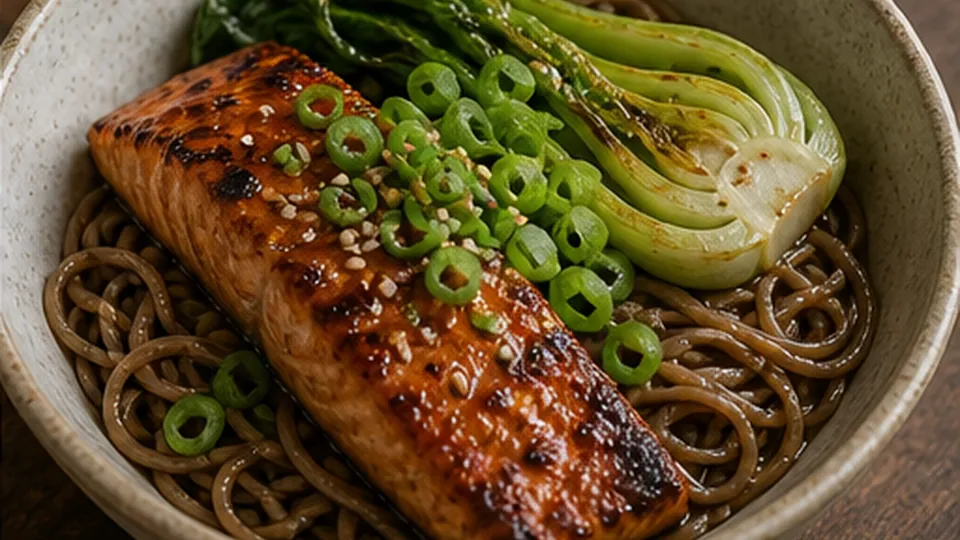
“Assemble with scallions and sesame” closes Salmon Miso Noodle Bowls: whisk 2 tablespoons warm water into reserved glaze, dress noodles lightly, then top with bok choy, salmon, scallions, and sesame; keep assembly late so the noodles, sauce, and fresh elements stay distinct.
🍳 What you actually need (equipment)
rimmed sheet pan, a 4-quart saucepan, two bowls for dividing the glaze, and an instant-read thermometer
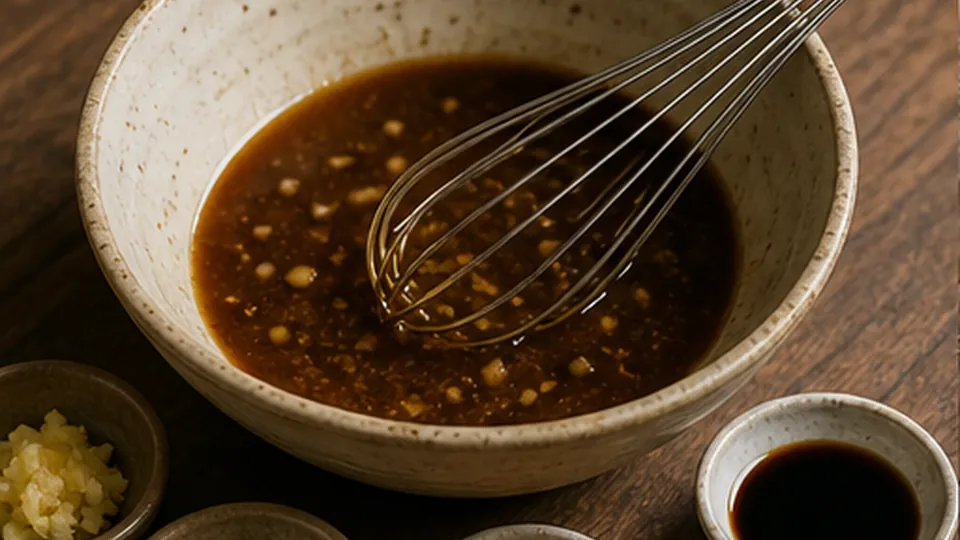
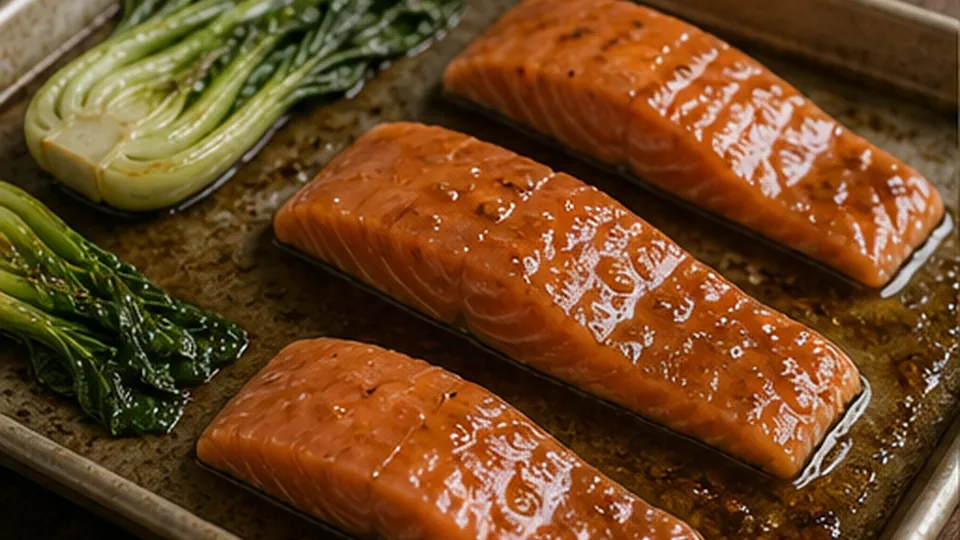
Heat the oven to 425°F (220°C) and whisk ¼ cup (68 g) white miso with 2 tbsp (30 ml) reduced-sodium soy sauce, 1 tbsp (20 g) honey, 1 tbsp (15 ml) rice vinegar, 2 tsp (10 ml) toasted sesame oil, and 1 tbsp (8 g) grated ginger. Set half aside in a clean serving bowl.
Whisk and split the glaze
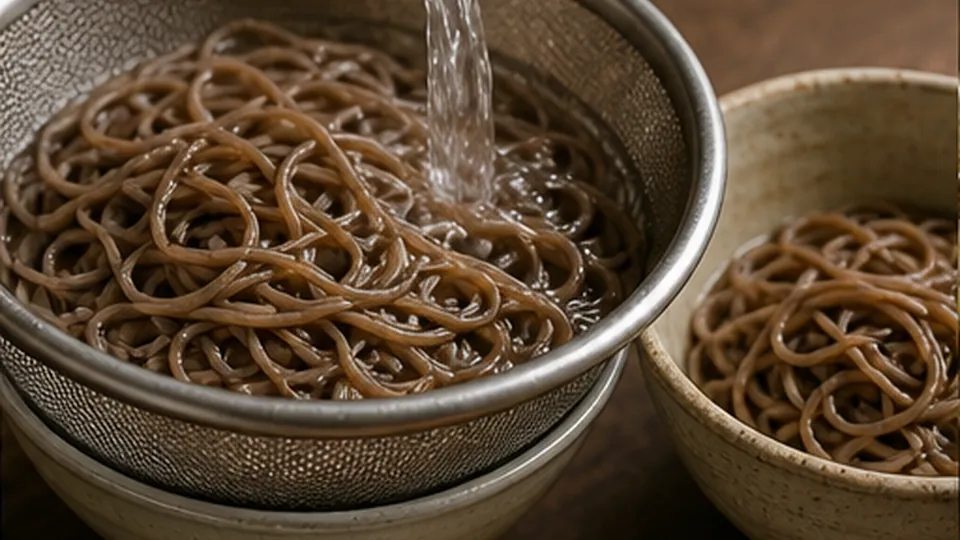
Boil 8 oz (227 g) soba noodles to package directions until just tender, then rinse them under cool water and drain thoroughly. Divide them among four bowls so they cool without sticking together.
Boil and rinse the soba
Toss 4 baby bok choy (400 g), quartered, with 1 tbsp (15 ml) neutral oil and lay them cut-side down on a rimmed sheet pan. Roast 6 minutes so the cut faces start browning before the fish joins them.
Start the bok choy
Pat 1½ lb (680 g) skinless salmon fillet, cut into 4 portions, dry and brush it with the unreserved miso mixture. Set the portions beside the bok choy and roast 9 to 12 minutes.
Glaze and roast the salmon
Lift each salmon portion off the pan as soon as its thickest point reads 145°F (63°C). The glaze should be caramelized and tacky at the edges rather than blackened, so check thin pieces early.
Pull salmon at temperature
Whisk 2 tbsp warm water into the reserved glaze and dress the noodles lightly with it. Top each bowl with bok choy and salmon, then finish with 3 sliced scallions (45 g) and 2 tsp (6 g) sesame seeds.
Dress noodles and assemble
✅ How to know it's done
The salmon reads 145°F (63°C), the glaze caramelizes at the edges, and the soba stays springy. After “Mix the miso glaze,” at “Check 145°F at the center,” loosen dry noodles with a spoonful of reserved cooking water; if the sauce is loose, toss off heat and let it cling before adding more liquid.
💡 Practical tips (and what not to do)
Split the glaze before the fish. Half goes onto raw salmon and half stays clean in its own bowl for dressing the noodles, and the two must never meet.
Rinse the soba under cold water. Buckwheat sheds a great deal of starch, and unrinsed strands weld into one block by the time the fish comes out.
Bok choy gets a six-minute head start. Cut faces need that contact time to brown, and adding them alongside the salmon leaves the stems squeaky.
Miso burns before it looks burnt. Pull the thinner tail pieces first, since the glaze should be tacky and dark amber at the edges rather than black.
Thin the reserved glaze with warm water. Straight from the bowl it is thick enough to clump on the noodles instead of coating them.
Budget: Frozen salmon portions thawed overnight cost noticeably less than fresh and take the glaze identically. Lighter: Halve the soba to 4 oz and add a second bunch of bok choy, so the bowl leans green. Kids: Brush one portion with plain soy sauce and honey, skipping the miso and ginger, and roast it alongside the rest. Extra flavor: Toast the sesame seeds in a dry pan for 2 minutes before they go over the bowls.
💛✨ Flavor boost
Whisk the white miso until the glaze is smooth so no salty pockets remain on the salmon.
🥔 What Goes Well With It
Quick-pickled cucumber in rice vinegar, cold and sharp against the sweet glaze.
Salted edamame in the pod, which people can pick at while the salmon roasts.
Chilled barley tea or plain green tea, both of which suit miso better than anything sweet.
📦 Storage & Freezer Notes
Keep the salmon, noodles and bok choy in separate containers and refrigerate within 2 hours, because an assembled bowl goes soggy overnight. Eat the fish within 2 days.
Reheat the salmon covered at 275°F (135°C) for about 10 minutes to 145°F (63°C), which is gentle enough not to dry it out. The soba comes back better under warm running water than in a pan.
Cold leftovers make a better lunch here than reheated ones. Freeze none of it, since soba turns to mush and the glaze weeps off the fish as it thaws.
Before “Mix the miso glaze” for Salmon Miso Noodle Bowls, mix the sauce and cut the vegetables for “Mix the miso glaze” one day ahead; keep the raw fish sealed separately on the refrigerator’s lowest shelf. After handling the raw fish, wash the board, knife, hands, and counter before touching the ready-to-eat garnish used in “Assemble with scallions and sesame.”
At “Assemble with scallions and sesame,” Salmon Miso Noodle Bowls is ready when salmon reaches 145°F (63°C), miso glaze is caramelized at the edges, soba remains springy, and bok choy stems are crisp-tender. Portion Salmon Miso Noodle Bowls onto clean plates with cucumber and tomato salad.
🧒 Serving Ideas for Kids
Flake a portion of the cooked salmon and run your fingers through it for pin bones before it reaches a small plate.
Keep one bowl of noodles undressed and set the thinned glaze beside it in a cup for dipping.
Cut the bok choy quarters crosswise so the leafy end and the stem end arrive as two smaller pieces.
❓ Quick answers
Can I use skin-on salmon?
Yes. Roast it skin-side down and leave the skin on the pan when you lift the flesh off, or crisp it separately in a dry pan for 3 minutes.
What if I cannot find soba?
Whole-wheat spaghetti or udon both work. Rinse either one the same way, and expect udon to want a heavier hand with the glaze since it is blander than buckwheat.
Is white miso interchangeable with red?
Red miso is roughly twice as salty and much darker. Use 2 tablespoons in place of the ¼ cup and taste before you add the soy sauce.
How do I stop the glaze burning?
Check at 9 minutes and lift out any portion reading 145°F (63°C). A thin tail piece finishes several minutes before a thick center cut, so it comes off first.
🥗 Nutrition, roughly: about 740 calories per serving. Estimates only; brands, cuts and portion sizes change the numbers.
Published by MommyCooking.org. This AI-assisted recipe passed automated checks for page consistency and required image files. A real-kitchen test has not been documented for this dish. The food images are AI-generated illustrations, not photographs of a cooking session. Cooking temperatures should be checked with a food thermometer; nutrition figures are estimates. How we make recipes · Report a problem with this recipe