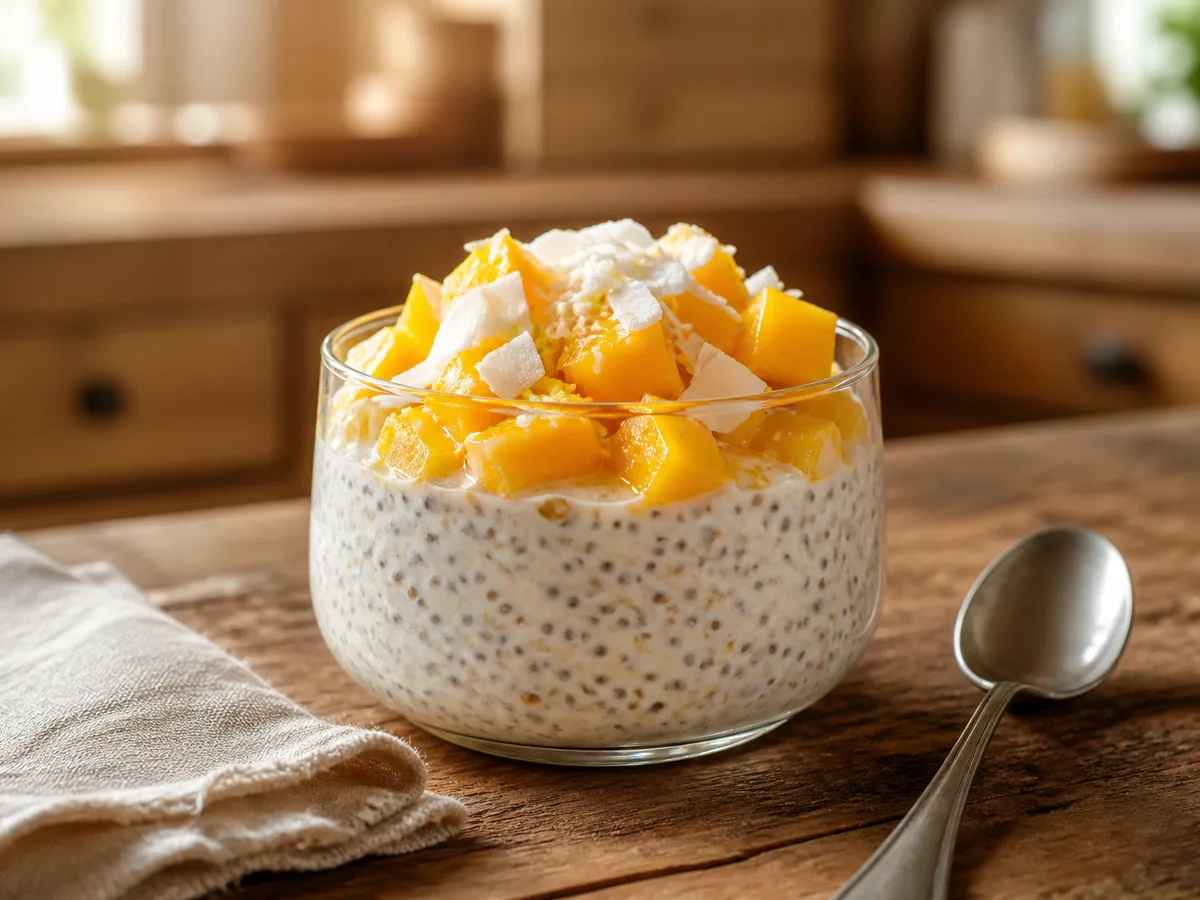
Mango Coconut Chia Oat Pots Creamy chilled pots with bright fruit layers
“A measured oat-to-liquid ratio prevents breakfast from becoming gluey.”
Published by MommyCooking.org · Published September 30, 2026
Eight jars built in fifteen minutes cover breakfast for most of a week, and none of them needs heat or a second thought at seven in the morning. The trade is that you have to think about it the night before, and that the fruit is the one ingredient you cannot economize on without noticing.
Chia seeds clump the instant they meet liquid, and a clump never hydrates in the middle. That is what the ten-minute pause and the second stir are for: the first mix suspends them, the second breaks apart the gel pockets that formed while you were not looking. Skip it and half the jars set thick while half stay soupy.
🥭 The promise: Oats are tender but distinct, chia is evenly hydrated, and mango remains bright without watery separation.
🥭 Everything you need, all in one look🧂 Ingredient notes & easy swaps
Rolled oats stay distinct overnight, where quick oats dissolve into porridge and steel-cut never soften at all without heat. Greek yogurt adds both thickness and tang, and a thick plant-based yogurt swaps in directly. Frozen mango thawed and drained works year-round, though it is softer and better suited to the mashed half. Unsweetened coconut keeps these from tipping into dessert.
To build creamy chilled pots with bright fruit layers, rest 10 minutes, then stir from the bottom to break any chia clumps; from there, divide oats among 8 clean jars and layer with mashed mango, cubes, and remaining coconut. Use the eight 8-ounce lidded jars through “Layer into clean jars” so heat or cold reaches the batch evenly enough for creamy chilled pots with bright fruit layers.
Layer the remaining coconut with the mango before the long chill. Splitting the coconut between the oat base and fruit layer keeps it present from top to bottom without a loose garnish. Toast the coconut only to pale gold and cool it completely; fold half into the oats and layer the rest with mango before the long chill.
🍳 What you actually need (equipment)
eight 8-ounce lidded jars, a large mixing bowl, a flexible spatula, and a fork for mashing the mango
Whisk the milk, Greek yogurt, maple syrup, and kosher salt in a large bowl until the yogurt dissolves completely and no white lumps cling to the whisk. A smooth base is what keeps the finished pots creamy rather than grainy.
Whisk the creamy liquid base
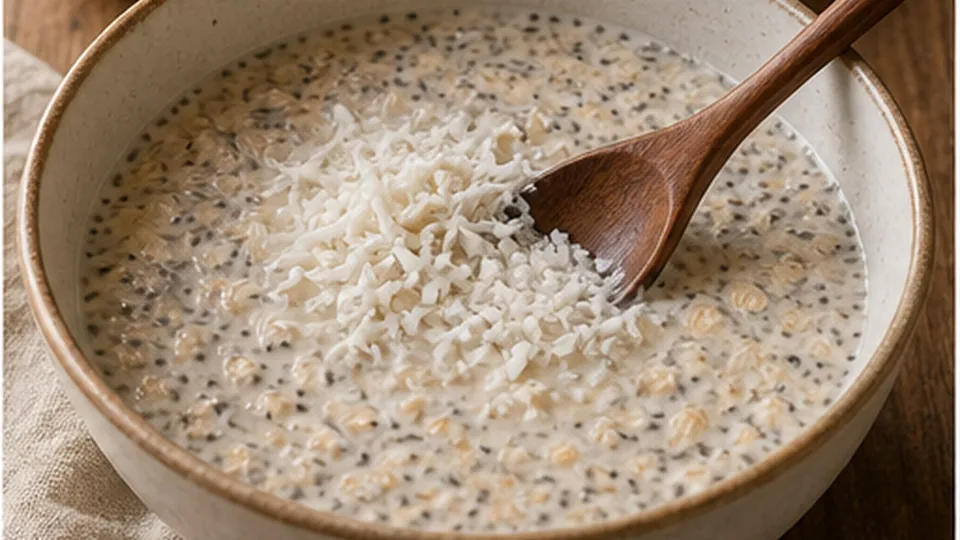
Stir in the rolled oats, chia seeds, and half the unsweetened coconut until everything is suspended evenly and no dry pockets sit at the bottom. The mixture should look loose and soupy at this stage.
Stir in oats and chia
Rest the bowl 10 minutes, then stir again from the bottom with a spatula. Chia seeds clump as they hydrate, and this second pass breaks up the gel pockets so every spoonful sets to the same thickness.
Rest and stir again
Mash half the diced mango with the lime juice until it turns to a loose orange purée, and leave the rest in neat cubes. The purée streaks color through the pots while the cubes give bite.
Mash half the mango
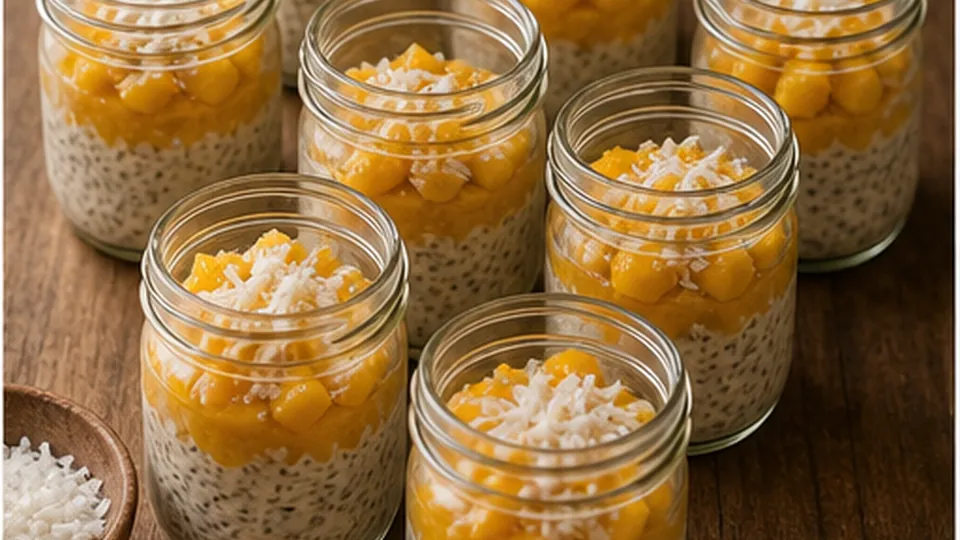
Divide the oat mixture among 8 clean jars, spooning the mango purée and the cubes between layers as you go. Finish each jar with the remaining coconut so it stays dry and toasty on top.
Layer into clean jars
Cover the jars and refrigerate at least 6 hours, or overnight, until the oats have softened and the chia has set the liquid into a soft pudding that holds a spoon mark on its surface.
Chill overnight before serving
✅ How to know it's done
The oats are tender but still distinct, the chia is evenly hydrated with no dry seeds, and the mango stays bright without watery separation. Do not add binder at the first soft set; give Mango Coconut Chia Oat Pots more refrigerator time and check again for creamy chilled pots with bright fruit layers. Return to the normal method once this cue appears: Oats are tender but distinct, chia is evenly hydrated, and mango remains bright without watery separation.
💡 Practical tips (and what not to do)
Toast the coconut topping. Five minutes in a dry pan turns the shreds fragrant and keeps them from going limp on top.
Use wide-mouth jars. A narrow neck makes layering fiddly and makes getting a spoon to the bottom worse.
Mash with a fork. A blender turns the fruit to juice, and what you want is a loose purée that still has texture.
Leave headroom. Oats and chia keep swelling overnight, so filling to the rim means a lid that will not close.
Adjust for your milk. Thicker dairy milk sets firmer than a thin plant milk, so add a splash more if yours is lean.
Budget: Frozen chunks cost far less than fresh fruit and thaw overnight in the jar anyway. Lighter: Use nonfat yogurt and drop the maple syrup, letting ripe fruit carry all the sweetness. Kids: Blend the fruit completely smooth and layer it as a bright stripe rather than mixing cubes through. Extra flavor: Grate a little fresh ginger into the mash, or add a pinch of ground turmeric for color and warmth.
💛✨ Flavor boost
Toast the coconut only to pale gold and cool it completely; fold half into the oats and layer the rest with mango before the long chill.
🥔 What Goes Well With It
A handful of toasted almonds, for something to bite against the soft oats.
Strong black coffee, which suits the sweetness of the mango.
A boiled egg alongside, if a jar on its own is not enough breakfast.
📦 Storage & Freezer Notes
Refrigerate the sealed jars for up to 4 days, after which the fruit starts to weep.
Eat them straight from the cold, since warming turns the chia slippery and the oats pasty.
Freezing is a poor fit, because thawed chia releases water and the layers separate.
Build a smooth path to “creamy chilled pots with bright fruit layers” by readying the eight 8-ounce lidded jars, cooling every warm ingredient, and using a clean serving utensil after “Chill for safe service”.
To preserve creamy chilled pots with bright fruit layers at portioning time, use a clean serving utensil after “Chill for safe service” and serve Mango Coconut Chia Oat Pots cold. The deciding cue is: Oats are tender but distinct, chia is evenly hydrated, and mango remains bright without watery separation. Cover leftover Mango Coconut Chia Oat Pots and return it to 40°F (4°C) or below within 2 hours.
🧒 Serving Ideas for Kids
Build one in a short wide cup so a small spoon can actually reach the bottom layer.
Leave the coconut off a child's jar if shredded texture is a problem and add extra fruit instead.
Put the fruit on top rather than buried, which makes the first spoonful the sweetest one.
❓ Quick answers
Can I use less chia?
Two tablespoons still sets, just more loosely, and the result is closer to overnight oats than pudding. Going below that leaves the milk thin and the layers will separate in the jar within a day.
Why is mine watery at the bottom?
Either the second stir got skipped, leaving dry seeds that never absorbed, or the fruit released juice into the base. Draining thawed mango and giving the bowl that extra pass from the bottom fixes both.
How ripe should the mango be?
Ripe enough to give under gentle pressure at the stem end but not soft all over. Underripe fruit is fibrous and sour and will not mash, while overripe fruit turns stringy and leaks juice into the jar.
Can I make half a batch?
Everything halves cleanly, including the resting time, which does not scale with volume. Four jars is often more realistic anyway, since the fourth day is about where the texture starts to go.
🥗 Nutrition, roughly: about 330 calories per serving. Estimates only; brands, cuts and portion sizes change the numbers.
Published by MommyCooking.org. This AI-assisted recipe passed automated checks for page consistency and required image files. A real-kitchen test has not been documented for this dish. The food images are AI-generated illustrations, not photographs of a cooking session. Cooking temperatures should be checked with a food thermometer; nutrition figures are estimates. How we make recipes · Report a problem with this recipe